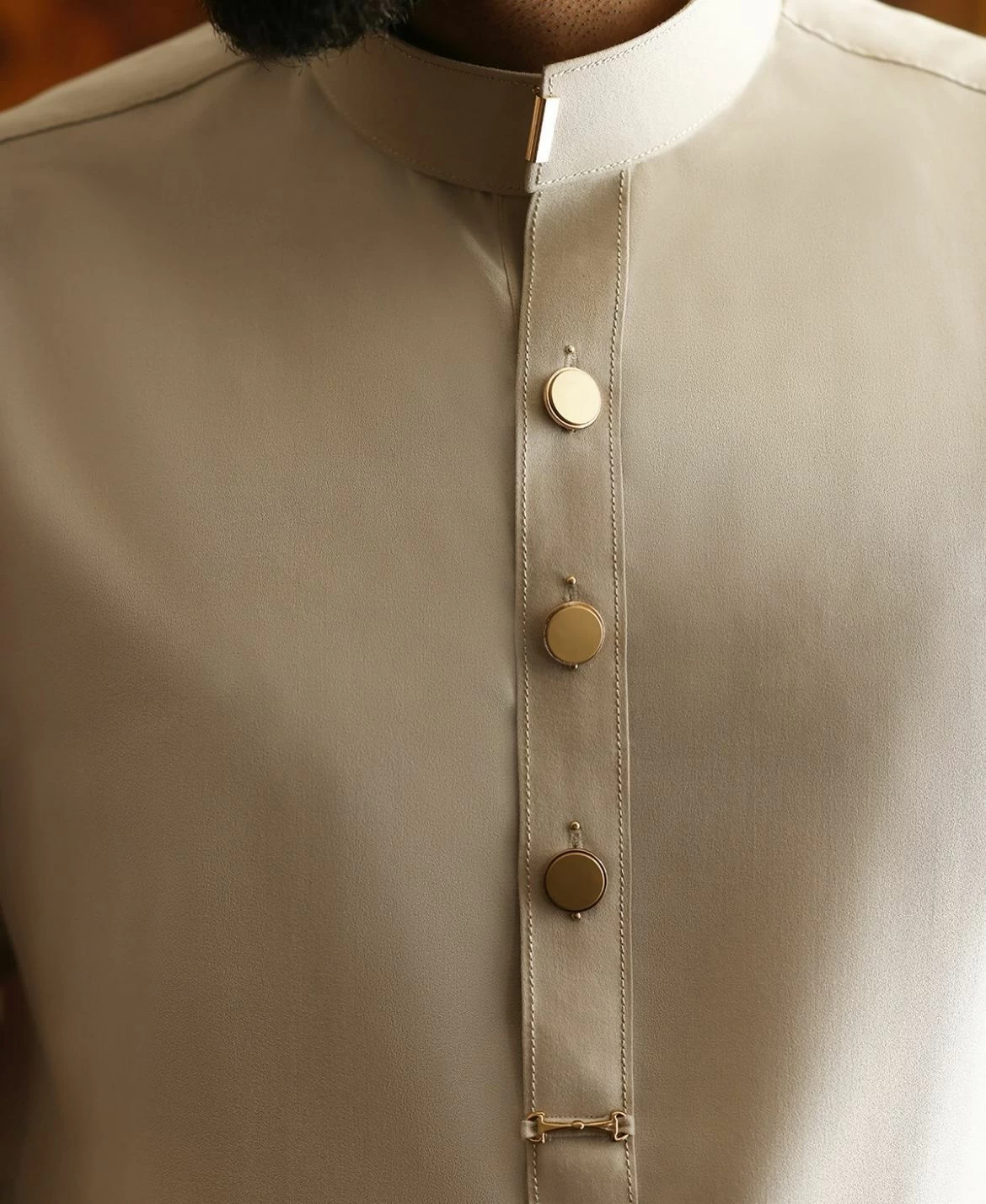
لم تعد أزرار الثياب الرجالية مجرد عنصر وظيفي لإغلاق القطعة، بل تحولت تدريجيًا إلى تفصيلة جمالية تعكس الذوق الشخصي وتضيف بُعدًا أنيقًا للإطلالة. في السنوات الأخيرة، برزت الأزرار كأحد عناصر الإكسسوار الدقيقة التي تمنح الثوب طابعًا مميزًا، خصوصا مع تنوع الخامات والتصاميم التي تتراوح بين الكلاسيكي البسيط والتفاصيل الفاخرة.
تُصنع أزرار الثياب الرجالية من مواد متعددة، مثل اللؤلؤ الصناعي، المعادن، العظم، وحتى الخشب، ويؤثر اختيار الخامة بشكل مباشر على الانطباع العام للمظهر. الأزرار ذات اللمعة الهادئة تمنح إحساسًا بالرقي والهدوء، بينما تضيف الأزرار المعدنية أو المزخرفة لمسة جريئة تلفت الانتباه دون مبالغة. كما تلعب الألوان دورًا مهمًا، إذ يُفضل تنسيقها مع لون القماش أو اختيار تباين مدروس يعزز من حضور التفاصيل دون الإخلال بهوية الثوب.
في السياق الحديث، أصبح استبدال الأزرار التقليدية بأخرى مميزة خيارًا شائعًا لدى المهتمين بالأناقة، حيث تُستخدم هذه التفصيلة كوسيلة للتجديد دون الحاجة إلى تغيير كامل القطعة. كما ظهرت تصاميم مستوحاة من التراث أو النقوش الهندسية الدقيقة، ما يمنح الأزرار قيمة جمالية تتجاوز وظيفتها الأساسية.
Men's clothing buttons are no longer just a functional element for fastening the garment; they have gradually transformed into an aesthetic detail that reflects personal taste and adds an elegant dimension to the look. In recent years, buttons have emerged as one of the subtle accessory elements that give the garment a distinctive character, especially with the variety of materials and designs that range from simple classics to luxurious details.
Men's clothing buttons are made from various materials, such as synthetic pearls, metals, bone, and even wood, and the choice of material directly affects the overall impression of the appearance. Buttons with a subtle shine provide a sense of sophistication and calm, while metallic or decorative buttons add a bold touch that catches the eye without being excessive. Colors also play an important role, as it is preferable to coordinate them with the fabric color or choose a thoughtful contrast that enhances the presence of details without compromising the garment's identity.
In the modern context, replacing traditional buttons with distinctive ones has become a popular choice among those interested in style, as this detail is used as a means of renewal without the need to change the entire piece. Additionally, designs inspired by heritage or intricate geometric patterns have emerged, giving buttons an aesthetic value that transcends their basic function.