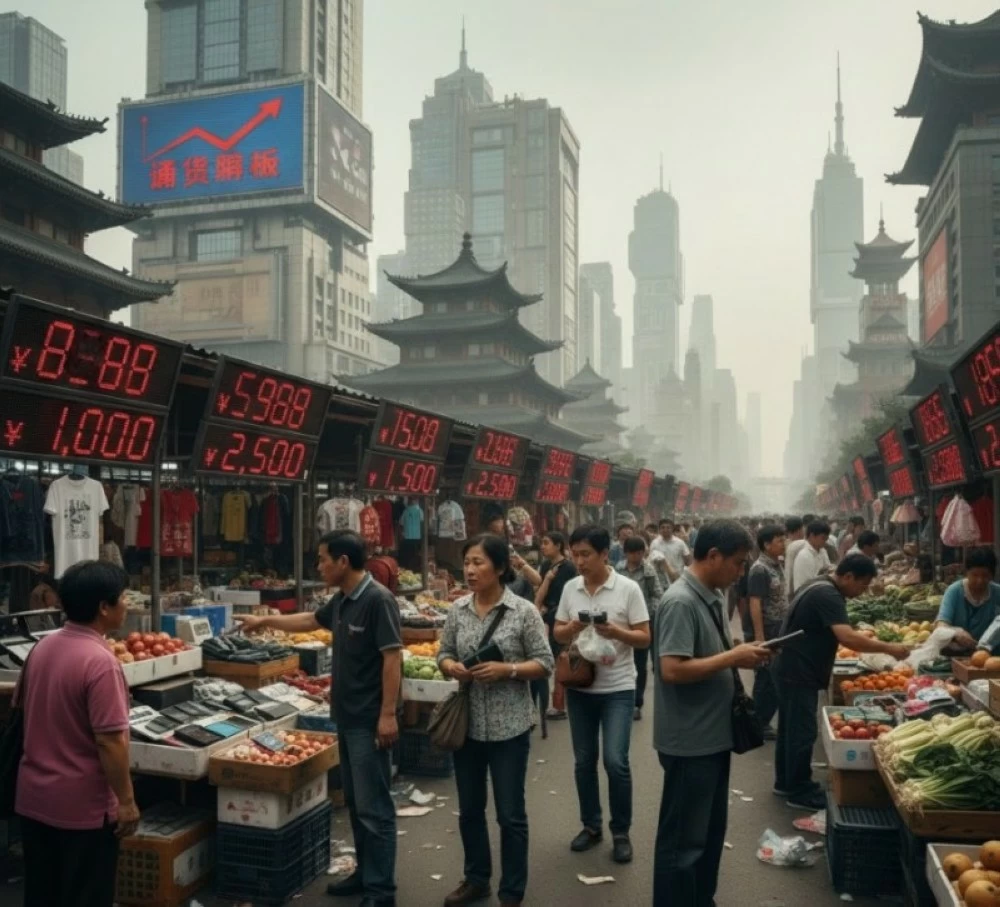
تسارع تضخم أسعار المستهلكين في الصين خلال شهر ديسمبر ليسجل أعلى مستوياته في 3 سنوات، رغم استمرار انكماش أسعار المنتجين، مما يشير إلى استمرار ضعف الطلب الأساسي.
وارتفع مؤشر أسعار المستهلكين بنسبة 0.8% على أساس سنوي، ليسجل أعلى مستوياته منذ شهر فبراير 2023، بعد نموه 0.7% في شهر نوفمبر، أما على أساس شهري، فارتفعت الأسعار 0.2% متجاوزة التوقعات البالغة 0.1%، بناءً على بيانات مكتب الإحصاء الوطني الصادرة اليوم (الجمعة).
وذلك مع ارتفاع أسعار الخضراوات الطازجة 18.2% على أساس سنوي نتيجة لنقص الإمدادات خلال فصل الشتاء القارس.
ووصل معدل التضخم الأساسي (الذي يستبعد أسعار المواد الغذائية والطاقة المتقلبة) إلى 1.2% على أساس سنوي خلال شهر ديسمبر، دون تغيير عن المعدل المسجل في شهر نوفمبر.
وفيما يخص أسعار المنتجين، فانخفضت بنسبة 1.9% في شهر ديسمبر على أساس سنوي، من 2.2% المسجلة في نوفمبر، ورغم أن القراءة أفضل من التوقعات التي أشارت إلى تراجع المؤشر 2%، إلا أنها تطيل أمد فترة انكماش المؤشر لأكثر من ثلاث سنوات.
وأشارت كبيرة الإحصائيين لدى المكتب «ليجوان دونغ» أن أسعار المجوهرات الذهبية ارتفعت 68.5% على أساس سنوي خلال شهر ديسمبر، مدفوعة بالإقبال العالمي على المعدن النفيس، وسط مخاوف من الركود الاقتصادي وعدم استقرار الأسواق.
The acceleration of consumer price inflation in China during December reached its highest level in 3 years, despite the continued contraction of producer prices, indicating ongoing weakness in underlying demand.
The consumer price index rose by 0.8% year-on-year, marking its highest level since February 2023, after a growth of 0.7% in November. On a monthly basis, prices increased by 0.2%, surpassing expectations of 0.1%, based on data released today (Friday) by the National Bureau of Statistics.
This was accompanied by a rise in fresh vegetable prices by 18.2% year-on-year due to supply shortages during the harsh winter season.
The core inflation rate (which excludes volatile food and energy prices) reached 1.2% year-on-year in December, unchanged from the rate recorded in November.
As for producer prices, they fell by 1.9% in December year-on-year, down from 2.2% recorded in November. Although the reading was better than expectations that indicated a decline of 2%, it extends the period of contraction for the index to more than three years.
Senior statistician at the bureau, "Li Juan Dong," noted that gold jewelry prices rose by 68.5% year-on-year in December, driven by global demand for the precious metal amid fears of economic recession and market instability.