


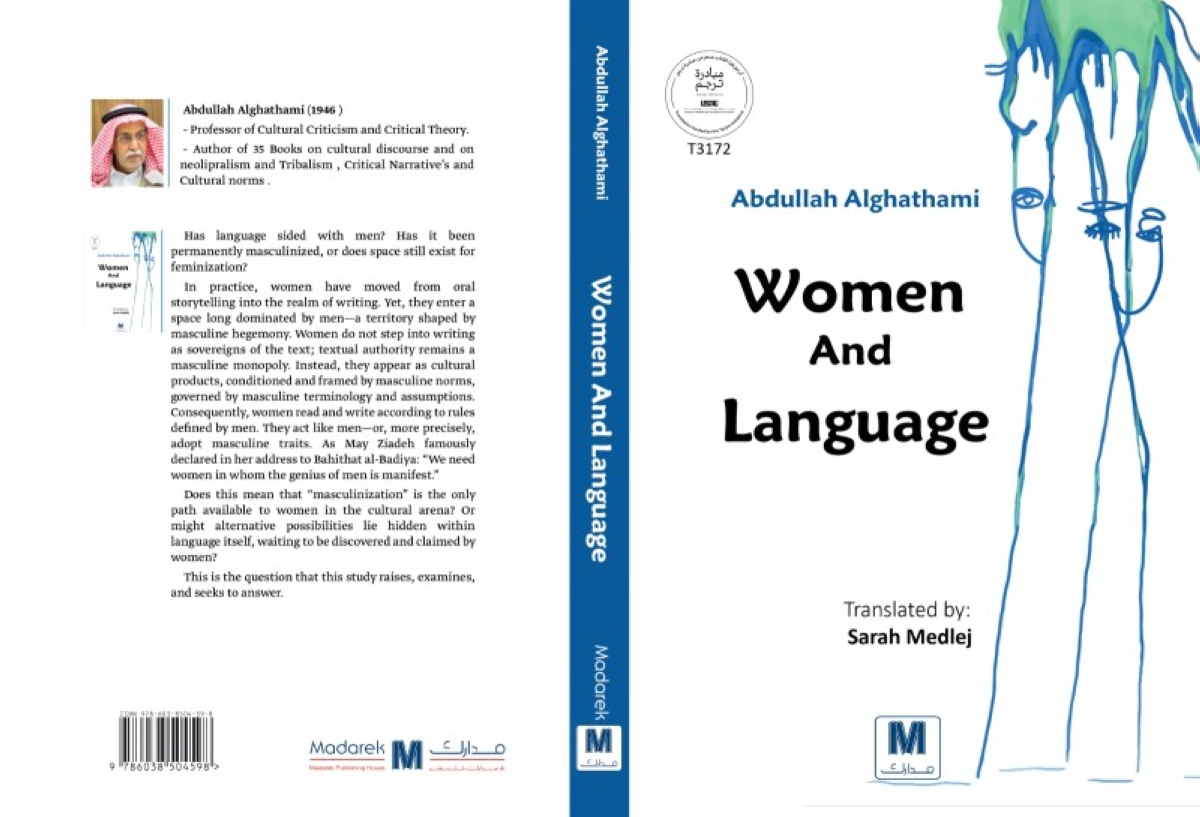

يتسع الحضور النوعي للناقد الثقافي الدكتور عبدالله الغذامي، بترجمة كتابه (المرأة واللغة) إلى اللغة الإنجليزية، وجاءت ترجمة الكتاب على يد أستاذ اللغات في جامعة القديس يوسف الدكتورة سارة مدلج، فيما تمت طباعته بالتعاون بين دار مدارك للنشر والتوزيع، ودار لندن في بريطانيا، وسيتاح للقراء باللغة الإنجليزية عبر المنصة العالمية «ingram» في كل نقاط البيع حول العالم.
ولعل كتاب صاحب (الخطيئة والتكفير) عن المرأة أثار جدلاً واسعاً بين النخبة المثقفة؛ وانقسمت بين مؤيد لما ذهب إليه من أن المرأة منتج ذكوري وتجلياتها تجليات ذكورية، لذا عمدت إلى تقليد المنتج الذكوري، وهي تحكي أو تسرد قصصاً عن بنات جلدتها، إذ لم يتغير شيء في التعامل مع المرأة، أثناء ممارسة الفعل الكتابي، ولم تستطع المرأة الأديبة من بلورة نسق لغوي أنثوي بامتياز. في حين يرى البعض أن الغذامي تعسف في تناول القضية، على أساس أن اللغة قائمة أساساً على فكرة التزاوج بين الذكورة والأنوثة، والكتابة؛ الكتابة الإبداعية سواء كتبت من قبل ذكر أم أنثى هي محاولة لإعادة تأويل العالَم والنظر إليه نظرة جديدة، واختار آخرون وصف كتاب (أبو غادة) باجتراح مقاربة للغة قائمة على أنثوية المرأة، وإمكان تفجير دواخلها الناعمة، إلا أنه مارس المقاربة من عقل ذكوري صِرف، ونعته البعض بفارس القبيلة الذي أراد أن يقدم حلاً للمرأة فوقع في فخ العقل الذكوري.
لفت فيه إلى وقوع الأنثى الكاتبة في الأطر الذكورية
مدلج تنقل كتاب الغذامي «المرأة واللغة» إلى الإنجليزية
17 أكتوبر 2025 - 03:47
|
آخر تحديث 17 أكتوبر 2025 - 05:49


تابع قناة عكاظ على الواتساب
علي الرباعي (الباحة) Al_ARobai@
The qualitative presence of the cultural critic Dr. Abdullah Al-Ghudhami expands with the translation of his book (Women and Language) into English. The translation was done by Dr. Sarah Madlaj, a professor of languages at Saint Joseph University, and the book was published in collaboration between Dar Madarek for Publishing and Distribution and Dar London in Britain. It will be available to English-speaking readers through the global platform "Ingram" at all points of sale around the world.
Perhaps the book by the author of (Sin and Atonement) about women has sparked widespread controversy among the educated elite; opinions were divided between those who support his view that women are a male product and their manifestations are masculine manifestations, thus they tend to imitate the male product while telling or narrating stories about their own kind. Nothing has changed in the treatment of women during the act of writing, and female writers have not been able to formulate a distinctly feminine linguistic system. Meanwhile, some believe that Al-Ghudhami was excessive in addressing the issue, based on the idea that language is fundamentally based on the concept of the marriage between masculinity and femininity, and writing—creative writing, whether done by a male or a female—is an attempt to reinterpret the world and view it from a new perspective. Others chose to describe the book of "Abu Ghada" as proposing an approach to language based on the femininity of women and the potential to unleash their soft interiors; however, he approached it from a purely masculine mindset, and some labeled him as the tribal knight who sought to offer a solution for women but fell into the trap of masculine reasoning.
Perhaps the book by the author of (Sin and Atonement) about women has sparked widespread controversy among the educated elite; opinions were divided between those who support his view that women are a male product and their manifestations are masculine manifestations, thus they tend to imitate the male product while telling or narrating stories about their own kind. Nothing has changed in the treatment of women during the act of writing, and female writers have not been able to formulate a distinctly feminine linguistic system. Meanwhile, some believe that Al-Ghudhami was excessive in addressing the issue, based on the idea that language is fundamentally based on the concept of the marriage between masculinity and femininity, and writing—creative writing, whether done by a male or a female—is an attempt to reinterpret the world and view it from a new perspective. Others chose to describe the book of "Abu Ghada" as proposing an approach to language based on the femininity of women and the potential to unleash their soft interiors; however, he approached it from a purely masculine mindset, and some labeled him as the tribal knight who sought to offer a solution for women but fell into the trap of masculine reasoning.


