


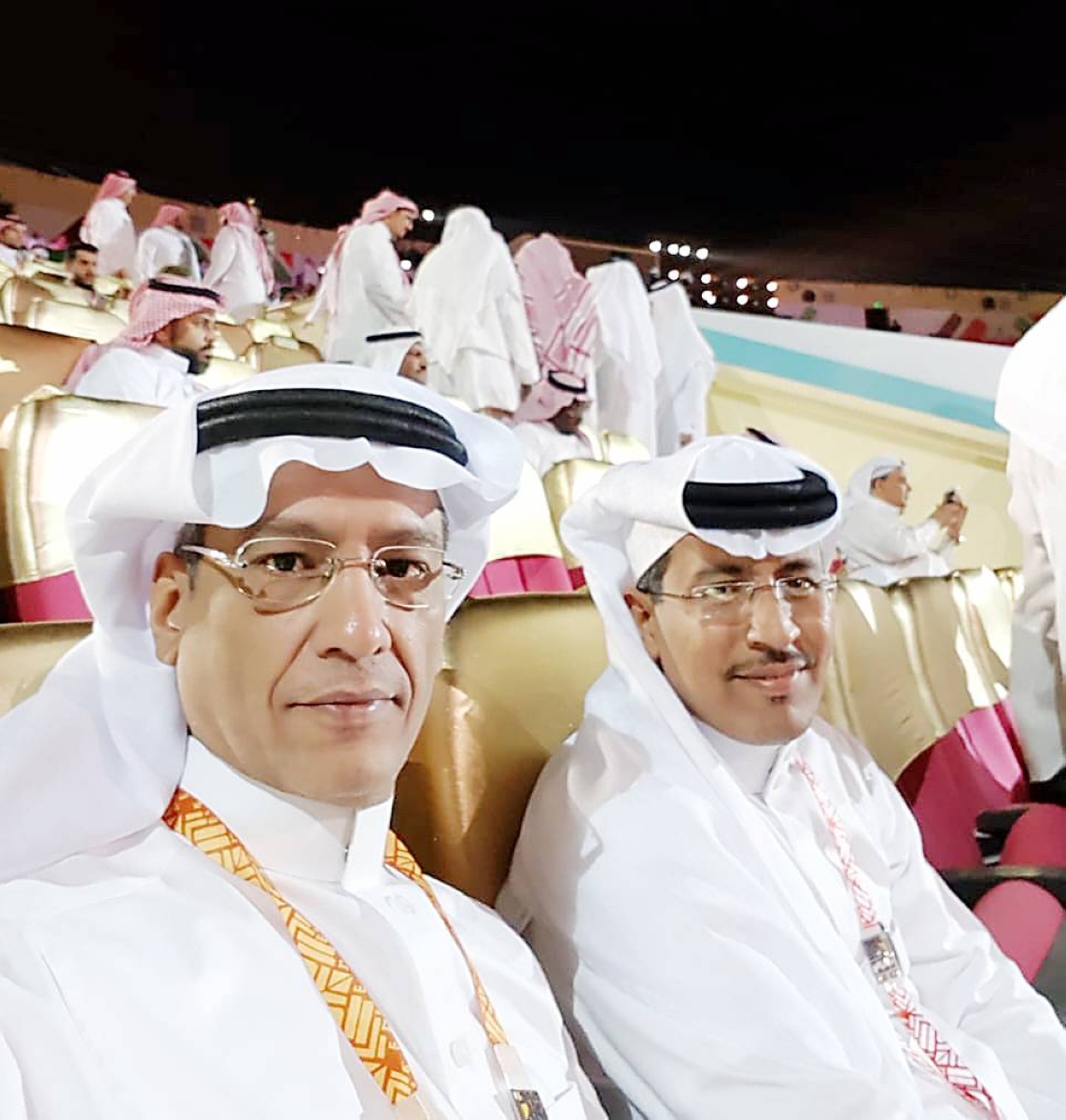
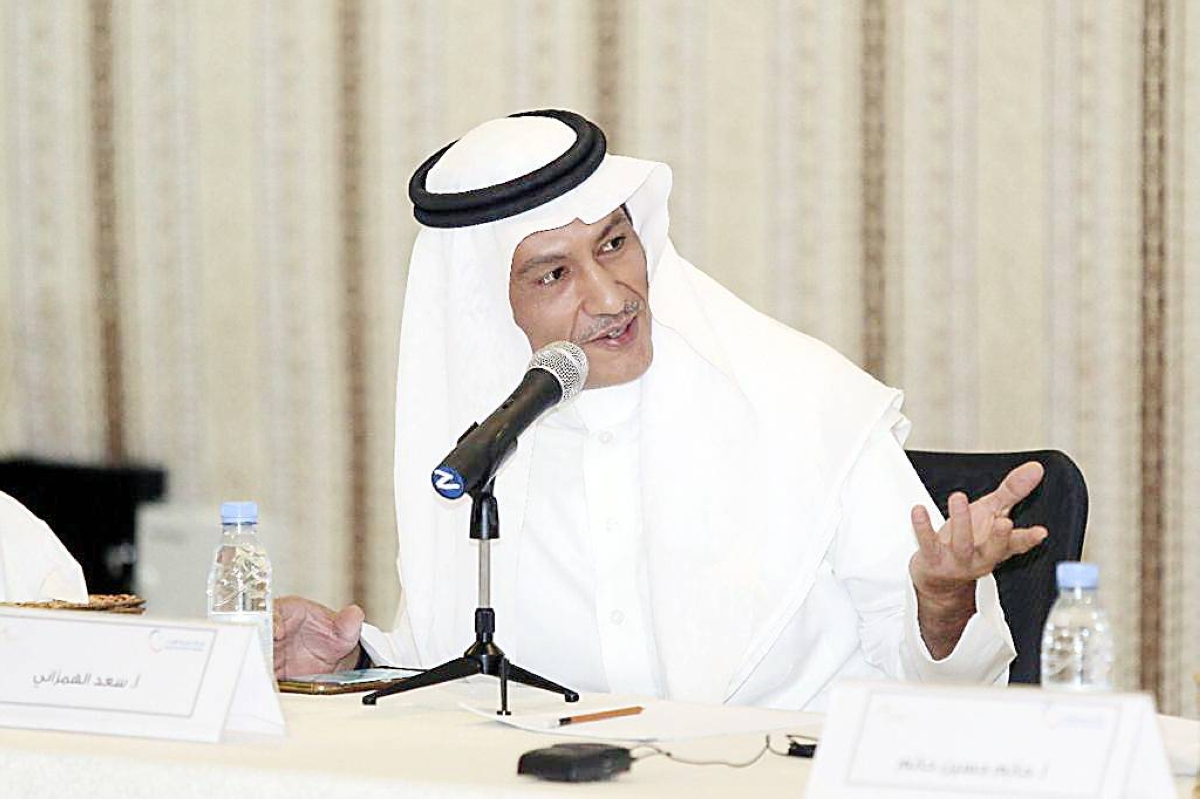

للشاعر سعد الهمزاني حضوره الإبداعي والثقافي والصحفي، فيما لشخصيته المتدفقة بالمحبّة، وحميمية الصداقة، أثر في كل عارفيه ومحبيه، فيه من حائل شموخ أجا، ومن الرياض إيقاع التاريخ، ومن بريدة وشوَشة النخيل في أماسي الصيف، وهنا مثاقفة مع تجربة شاعر وكاتب وشاهد عيان يفتح صدره ليتيح لنا التعرف إليه عن قُرب، فإلى نصّ الحوار:
• من أين اندفق النبع الأول للتجربة والوعي؟
•• من الصعب تذكّر بداية النبع الأول لأنه في الطفولة وبواكير الشباب لا يلحظ الإنسان نفسه، لكن أتذكر أنني في المرحلة الابتدائية كنت شبه أمين لمكتبة المدرسة وشبه رئيس تحرير للإذاعة المدرسية، وقرأت ما في المكتبة من كتب بسيطة، وقرأت ما يُعلق على جدران المدرسة من صحف كتبت عليها الأبيات الشعرية والحكم والأمثال. وفي المرحلتين المتوسطة والثانوية كنت مشاركاً بارزاً في المناسبات والأنشطة المدرسية، أما في المرحلة الجامعية فكنت أكتب في الصحف منها الجزيرة والرياض في صفحات القراء.
والأهم من كل هذا أن والدي أدخلني في «تحفيظ القرآن» عقب صلاة العصر طيلة المرحلة الابتدائية، فحفظت قرابة 20 جزءاً، وكان لهذا تأثير حميد على لغتي وأسلوبي.
• أين كانت مرابع التشكُّل الأولى؟
•• في الرياض درست المرحلة الابتدائية، ثم عدنا إلى مسقط رأسي مدينة حائل فدرست المتوسطة والثانوية، ثم درست الجامعة في مدينة بريدة، ثم استقررت في الرياض إلى اليوم، وفي هذه المدن كان يتشكل وعيي متفاعلاً مع المكان والناس. وفي كل مكان جديد أسافر إليه تعود لي حالة التشكُّل الطفولية والبدايات المندهشة من معرفة الجديد.
• ما الذي يسكن الذاكرة من مراحل عمريّة مبكرة وله أثره في مشوارك الثقافي والأدبي والصحفي؟ •• جبال أجا وتضاريس حائل الجميلة، عندما كنا نقضي إجازة الصيف فيها، ثم حزني الشديد على فراقها عند العودة إلى الرياض لها أثر عميق في شخصيتي، وفي ما بعد صرت أشعر أن مسكني الشعري هو جبال أجا وسلمى وصرت أتحاور من خلالها مع جدي الذي جاء إليها قبل ألفَي سنة، كما في نص (أجا) في ديوان «جد سابع للصمت»:
في الليل
كنت بين قممه
أبحث عن العش الذي ينام فيه القمر
بينما تحت رأسه بيضة ترتجف
كنت على سطح بيتنا
عندما فقست
أشاهد جدي يخرج منها
شلالاً مع المصب
متعرجاً بين ألفَي سنة
حتى يخرج أبي من صوته
• هل تناغم تخصصك الدراسي مع ميولك الإبداعية؟
•• أبداً لم يكن متناغماً بل منافراً؛ لأن دراستي الشريعة الإسلامية تتطلب -كما يفترض البعض- الالتزام والعقلانية والرزانة، بينما موهبتي الأدبية تحرّض على كسر القيود والنمطية، وأعتقد أن كثيراً من الأدباء في العالم الذين كانوا يدرسون الدَّين أو العلم اللاهوتي كانوا يعانون من صعوبة التوازن بين الشخصيتين أمام الناس وليس أمام أنفسهم، فالفئة التي تزعم أنها تمثّل الدين صممت أنماطاً وقوالب للمنتمين إلى علماء وطلاب العلم الديني لعل أكثرها شيوعاً عندنا عدم لبس العقال عند العلماء والقضاة والإئمة والمؤذنين... إلخ.
• من أبرز مثقفي وشعراء الوطن الذين لفتوا انتباهك؟
•• هناك شاعر مبدع منسي أظنه محمد الخواجة، حدثني عنه مراراً عبدالله نور (رحمه الله)، وهناك غازي القصيبي، ومحمد الثبيتي وهناك من الكتّاب الدكتور سعد الصويان (شفاه الله)، وسعيد السريحي، وحسين بافقيه، ومحمد العلي، وصولاً إلى جاسم الصحيح، وسلطان السبهان في الشعر العمودي، وأحمد الملا في النثر، وهيفاء الجبري، ونادية السالمي في الشعر أيضاً، وشيمة الشمري في القصة القصيرة جداً، ومحمد الراشدي في القصة.. ومن ذكرتهم للتمثيل وليس الحصر.
• ما أثر الراحل عبدالله نور في الحركة الحداثية في المملكة؟
•• عبدالله نور (رحمه الله) كان مُعلّماً بالمجان لكثير من الشعراء والأدباء والنقاد، من خلال احتكاكه الشفهي بهم في المنتديات والمجالس، وبالنسبة لي فإني أشهد أنني كنت محظوظاً بعلاقتي القوية به، لأنه كان يقوم بعملية التعليم والصقل بأسلوب نادر، ولأنه كان ملك الإلقاء بلا منازع، ويحفظ الشعر القديم والحديث، وهو لا يحفظ من الشعر إلا أجوده، وكنت أنهل من مخزونه الشعري واللغوي والفكري على مدى أعوام، واكتشفت أنه صاحب الفضل على كثيرين قبلي في تشكيل وعيهم بالشعر الحديث، لا سيما شاعره المفضل فواز عيد صاحب دواوين (في شمسي دوار) و(من فوق أنحل من أنين) و(أعناق الجياد النافرة) و(بباب البساتين والنوم). ومع الأسف لا يرغب معظمهم الحديث عن فضل عبدالله نور، أما أنا فأحمد الله على وجوده في حياتي وتشكُّل ذائقتي الشعرية على يدي أستاذ مثله.
• ما سرّ ارتباطك الوثيق بتجربة مهندس الكلمة الأمير بدر بن عبدالمحسن؟
•• استضفت في منزلي الشاعر والصحفي في جريدة «القبس» مؤسس مجلة «الغدير» نايف الحربي، أسابيع عدة وكان الأمير بدر (رحمه الله) قد كلّفه بمراجعة ديوانه الأول (ما ينقش العصفور في تمرة العذق)، فأوكلني نايف بالمهمة عندما رأى اهتمامي بالشعر الحديث، وخلال مراجعتي الديوان سحرتني عوالم بدر الشعرية، وفُتنت بعبقريته في ابتكار الصورة الشعرية، ثم كتبت عن ذلك في مجلة «الغدير»، فلما قرأ الأمير كتابتي، أُعجب بها وأعطاني البروفات الأخيرة للديوان، وما زلت أحتفظ بها، ثم كتبت حلقات مفصلة عن الديوان في جريدة «الجزيرة»، وتبين لي أن الخلود هو المحور الذي تدور عليه قصائد الأمير بدر. ولفت نظري أن الأمير بدر يكتب القصيدة العمودية والقصيده الحرة وفي كلتيهما هو مبدع عظيم ومتمكن قدير، فكتبت عن الصورة الشعرية عند بدر في النبطي والحر. ولا يزال بوسعي كتابة الكثير الحديث عن شاعرية البدر الخارقة. والمؤسف أن عدداً من الشعراء استعاروا صوره وعوالمه بشكل مشوّه لا ينتبه إليهم أحد، وعند بدر الكثافة والتوالد الخيالي؛ بدر بن عبدالمحسن هو شاعر الظمأ وفارس الصحراء الحقيقي، أما الآخرون فنسخ باهتة منه.
• أين وجدت نفسك عقب رحلة كتابية، وصحفية في صحف «الجزيرة» و«الشرق الأوسط» و«الحياة»؟
•• وجدت نفسي في البيت، ولولا أنه البيت الشعري لأسفت على نفسي التي لم تقدم إلا جزءاً بسيطاً مما لديها لأسباب تتعلق بالخصومات غير الشريفة بين زملاء المهنة. لكن خروجي من معمعة الإعلام أعادني بهدوء إلى ذاتي لأراجع قناعاتي، فمثلي لا تصلح له إلا القناعات الأصيلة النابعة منه وهكذا كان، راجعت مسألة الشعر والشاعرية، ومسألة العلاقة بين الفكر الحر والإيمان، ومسألة الحب والصداقة ومسائل كثيرة أخرى.
اليوم يعذبني التساهل في إعداد الصحفيين السعوديين، والتغافل عن تمكينهم في الصحف والقنوات الفضائية بالاعتماد المزمن على كوادر من العالم العربي، ليس لها حق أو مزية في تشغيل وسائلنا الإعلامية. فالإعلام هو الكتابة الحاضرة للتاريخ، تاريخنا وروايتنا له ووجهة نظرنا وهو ما يجب أن نكتبه نحن ونبثه نحن بأصواتنا ووجوهنا.
• من رفيق الدرب الذي افتقدته؟
•• لم أشعر بفقدان رفيق درب أدبي؛ لأني أولاً نشأت وحدي أدبياً ولم أحظَ بدعم من البداية لا من الأهل ولا من الأصدقاء، وثانياً لأن الموهبة الأدبية هي في الأصل ذاتية فردية تأتي من نتاج العزلة وتفضي إلى عالم العزلة، وأما من اختفوا من حياتي فأتعامل معهم على طريقة المتنبي حين قال:
إذا ترحلت عن قوم وقد قدروا *** ألا تفارقهم فالراحلون همو
ومن أصعب الأشياء التي لا أطيقها في مثل هذه العلاقات أن تتعامل كما يفعل البعض مع صديق قديم كتعاملك مع خردة سيارة قديمة أو آلة متعطلة توضع في منفى (التشليح)، إلى أن تستعير منها قطعة أو مسماراً، فهذا الصديق يحمل ذكريات مشتركة وأرقام أصدقاء مشتركين وبعض الأمور المرتبطة بماضٍ مشترك وقد تحتاج شيئاً منها فتتصل به للحصول عليه.
• كيف كانت أماسي الرياض الثقافية في التسعينيات؟ وبماذا يمكن تعويضها اليوم؟
•• لا بأس بها مقارنة مع أمسيات اليوم، فعلى الأقل كانت تقام في مؤسسات أدبية رسمية كالأندية الأدبية، وتعويضها ممكن بإقامتها على الهواء عبر منصة رسمية في فضاء الإنترنت والقنوات التلفزيونية.
لكن إن سألتني عن تجربة الشراكة الأدبية مع المقاهي سأجيبك أنني تخلصت من دعوتين والحمد لله، لأن الجو والحضور بائسان جداً، فأصحاب المقهى لا يعرفون حق المعرفة القيمة الحقيقية للضيف فيخلطون الغث مع السمين.
• هل نحن في عصر تعويم الثقافة الصلبة؟
•• لو قلت إغراق الثقافة الصلبة لفهمت السؤال أكثر، فالصلب يغرق ولا يطفو بالعوم، أما كيف تغرق الثقافة الصلبة فالأمر بسيط.
• أي فترة ترى أنها كانت ذروة سنام التجربة الإبداعية الشعرية في المملكة؟
•• الفترة الحالية هي ذروة السنام، لأن الشعراء تخلصوا من الأوهام التي فرضتها أكاذيب الحداثة على الشعر، وأخصّ تجربة القصيدة العمودية الحديثة التي أعادت الشاعر العربي السعودي إلى سيادته الشعرية على القصيدة العربية، مستأنفاً شاعرية أسلافه شعراء المعلقات والشنفرى الأزدي وجرير والفرزدق التميميين وأبو تمام والبحتري الطائيين وغيرهم من شعراء قبائل الجزيرة العربية التي تجمع المملكة العربية السعودية معظمها في وطن واحد.
• لو فكّرتَ في قراءة تجربة الحداثة في بلادنا، بماذا يمكنك أن تلخّصها؟
•• تجربة الحداثة الشعرية في الماضي عندنا كانت فاقدة لهويتها وذاتيتها وتابعة لما يحدث في الوطن العربي، لذلك لم تُحدث أثراً يذكر، ولولا الشاعر محمد الثبيتي لما كان لدينا شاعر نفاخر به، والسبب أن الثبيتي شاعر أصيل يعي من أي قوم هو، وعلى أي أرض هو، لذلك أبدع ونجح.
أما اليوم فهي تجربة ثرية لأنها أكثر أصالة وثقة بالنفس.
التجربة الماضية كانت عرجاء لا تسير إلا بقدم الشعر، بينما كانت الرواية نادرة، أما التجربة اليوم فتشهد توازناً بين الشعر والرواية.
• هل شعرتَ في وقتٍ ما بالقلق من «الصحوة» على مستوى فردي ومجتمعي وثقافي؟
•• في إحدى الأمسيات في التسعينيات الميلادية في مدينة حائل قاطعني بأعلى صوته أحد الزملاء من المرحلة الثانوية، وكان مشاركاً متطفلاً على أمسيتي عندما سمع المقطع الأول من قصيدتي، فقال للجمهور بكل ثقة سوف أقرأ في نهاية الأمسية حكم الله فيه (يقصدني) وكان يحمل بيده كتاب (الحداثة في ميزان الإسلام)، لكنني تعاملت معه بقسوة وسخرية حتى ضحك من في القاعة عليه. وفي كل المواقف التي حدثت لي من دهماء «الصحوة» كنت أنتهج معهم الأسلوب نفسه، لكنني كنت أشاهد وأخشى من ضعف الآخرين أمامهم وتسليمهم لهم بما يقولون ويفرضون، ففي إحدى أمسيات الجنادرية أواخر الثمانينيات لم يستطع الدكتور سعد البازعي الذي كان يدير أمسية شارك فيها الثبيتي ومحمد زايد الألمعي (رحمهما الله) أن يوقفهم عن محاكمة الثبيتي، فكان أن تدّخل بذكاء وشجاعة محمد الألمعي قائلاً إنه يجب أخذ إذن من الجهة المنظمة وهي «الحرس الوطني» ليشاركوا في الأمسية بالتحقيق مع الشاعر.
كنت أخشى دائماً من ضعف الآخرين أمامهم، وإلى اليوم هناك بقايا لهذا الضعف. هذا الضعف سببه عدم مجاراة أهل «الصحوة» في العلم الشرعي والتاريخي. ولذلك فإن الدكتور عبدالله الغذامي استمر في الكتابة برغم هجومهم المستمر عليه، وأحياناً من إمام الجمعة الذي يصلي الغذامي خلفه، لأن الغذامي مثقف شجاع يستطيع الرد عليهم بالحجة.
• ما الذي يقلقك اليوم في عالم التواصل الاجتماعي؟
•• يقلقني غياب الجهة الضامنة للمصداقية في حدها الأدبي، فكما أن النادي الأدبي والملحق الثقافي في الجريدة أو المجلة ودار النشر تعطي ضماناً يفترض أن يكون كافياً لجودة العمل الفكري أو الأدبي فإن وسائل التواصل يمارس الكل فيها ضمان نفسه، والمعيار فيها كثرة المتابعين أو قلّتهم، ناهيك عن أن وسائل التواصل أمست وسيلة للتملّق والمجاملة وتبادل المنفعة بين المثقفين والأدباء، ويندر فيها أن تجد نقداً أو رأياً جاداً في عمل ما.
• ما المفقود ثقافياً ونحن بحاجة إليه؟
•• النقد ثم النقد ثم النقد. الكل يحتاج إلى النقد ولا أحد يهتم بالبدعة الجديدة المسماة بالنقد الثقافي الذي هو نسخة متذاكية من مفهوم الأدب الإسلامي الذي أضر بالأدب. الناس تريد نقداً جمالياً وشحذاً للذائقة الفنية وهذا غير موجود. ولا تريد محاكمة المبدع ولا إصدار أحكام عليه بأنه ضد النسوية، أو عنصري منحاز لقبيلته أو عرقه، أو دموي يمجد السيف، أو عاشق متعدد الحبيبات، أو هجاء يذم غيره. الشعر شيء آخر وسياق زمني آخر معياره الجمال فقط. والناس عموماً في الأمور الأخرى يريدون نقداً فكرياً وواقعياً لكل حدث أو فكرة لكن غابت الأقلام الفاحصة. ومن دون النقد المتفاعل الفعّال لا يمكن أن يستمر التطور. وبالمناسبة ما أحوج الحركة الإبداعية الجديدة في الشعر في المملكة اليوم إلى النقد قبل أن يصيبها داء التكرار والتشابه والرتابة.
• أصدرت ديوان (منتصف الحدس) من شعر التفعيلة وديوان (جدّ سابع للصمت) الذي هو عبارة عن قصائد نثر، ثم انقلبت على قصيدة النثر واتجهت إلى الشعر العمودي. ما سبب هذا التحول؟ وماذا استجد لديك؟
•• كما قلت سابقاً -واسمح لي بالتوضيح- فإني راجعت نفسي في أمور كثيرة لأكون أنا الذي يفكر ويقرر، والشعر طبعاً كان له النصيب الكبير من المراجعة، وحسمت أمري في اتخاذ الغناء معياراً ثابتاً للحكم فاكتشفت أن الغناء حاجة إنسانية لا يمكن الاستغناء عنها، وأن هذه الحاجة هي التي جعلت للشاعر أهمية وقيمة، فلولاه لما كان هناك غناء، وهذا الغناء يعتمد على إيقاع مطّرد متناسق ومتوازن، وعلى موسيقى توازي الحركات والسكنات المتعاقبة، ويجدلهما الشاعر ببراعة في معنى ذهني وصور حسية وتجريدية ليحدث التلاقي المنسجم بين السامع والشاعر، ومع الغناء يرقص الجسد على حروف الزمن الإيقاعي وفواصله، ويتمايل الجسد مع انحناءات الموسيقى وتموجاتها.. إذن الشعر أساس الغناء والرقص، وهذا الإيقاع المجدول بالموسيقى وفق وحدات منضبطة تُضاف إليه القافية كبصمة للقصيدة فيولد مشهد خيالي وانفعالي وحالة مشتركة تستدعي طقساً جماعياً؛ أي جمهوراً يمارس الشعور المشترك تجاه ما يسمع، ومن هنا كانت الحاجة للمنبر للشاعر والمسرح والقاعة للمطرب.. هذا هو ما يسمى الشعر منذ آلاف السنين وفي كل العالم، فهل يمكن أن يحدث هذا مع قصيدة النثر؟ بالطبع لا. وحتى لو قيل إن قصيدة النثر جميلة ومذهلة في صورها ودلالاتها وأبعادها فإن ذلك لا يعني أنها من نوع الشعر الذي يُغنّى ويُلقى من المنابر فتتحد نبضات الجمهور على إيقاعه، وتتواتر الانفعالات من دلالاته المدهشة، حتى لو أوجعت أو أحزنت أو حتى كذبت.. وأشفقت على نفسي وعلى أقراني كتّاب النثر أثناء مشاركتهم في الأمسيات الشعرية وهم يلوون ويمدون كلماتهم متعثرين بحفر الآهات الوهمية؛ سعياً لتوليد الإيقاع والموسيقى المستحيلتين لجذب الجمهور وتوحيده في طقس جماعي، وزاد عتبي وغضبي وعجبي من حيلتهم بتضليل الناس بمصطلح الموسيقى الداخلية الغيبية كقصص الجن.
• ما جديدك؟
•• كتبت العشرات من القصائد، ومع الأسف قبل سنوات قليلة جمعت عدداً كبيراً منها على الكمبيوتر لتكون ديواناً، فأصابه فايروس دمرها وليست لدي نسخ ورقية منها، وما زلت إلى اليوم أحاول التعافي من تلك الخسارة، ما سبب لي حالة من التأجيل في الإصدار وزهداً في النشر. لكن سأفعل إن شاء الله فالقصائد كثيرة، ولي عودة لنشر النصوص النثرية القديمة تحت مسمى ديوان نثر.
أكد أن سفره لأي مكان يعيد حالة التشكُّل الطفولية
سعد الهمزاني: لولا محمد الثبيتي لما كان لدينا شاعر نفاخر به.. وعبدالله نور معلّم بالمجان
3 أكتوبر 2025 - 04:07
|
آخر تحديث 3 أكتوبر 2025 - 04:07


تابع قناة عكاظ على الواتساب
حاوره: علي الرباعي Al_ARobai@
The poet Saad Al-Hamzani has a creative, cultural, and journalistic presence, and his personality, overflowing with love and the warmth of friendship, has an impact on all who know and love him. He embodies the pride of Hail, the rhythm of history from Riyadh, and the rustle of palm trees in Buraidah during summer evenings. Here, we engage with the experience of a poet, writer, and eyewitness who opens his heart to allow us to get to know him closely. So, here is the text of the interview:
• Where did the first spring of experience and awareness flow from?
•• It is difficult to remember the beginning of the first spring because, in childhood and early youth, one does not notice oneself. However, I remember that in elementary school, I was almost the librarian and the editor-in-chief of the school radio. I read what was in the library of simple books and what was posted on the school walls, including newspapers that featured poetry verses, proverbs, and sayings. In middle and high school, I was a prominent participant in school events and activities. As for university, I wrote for newspapers such as Al-Jazeera and Al-Riyadh in the readers' sections.
Most importantly, my father enrolled me in "Quran memorization" after the afternoon prayer throughout elementary school, during which I memorized about 20 parts, and this had a positive effect on my language and style.
• Where were the first formative places?
•• I studied elementary school in Riyadh, then we returned to my birthplace, Hail, where I studied middle and high school. I then attended university in Buraidah and settled in Riyadh until today. In these cities, my awareness was shaped in interaction with the place and people. In every new place I travel to, I return to that childhood formative state and the astonished beginnings of discovering the new.
• What memories from early life stages linger in your mind and have an impact on your cultural, literary, and journalistic journey? •• The mountains of Aja and the beautiful landscapes of Hail, especially when we spent summer vacations there, and my deep sadness at leaving them upon returning to Riyadh had a profound effect on my personality. Later, I began to feel that my poetic dwelling was in the mountains of Aja and Salma, and I started to converse through them with my grandfather, who came there two thousand years ago, as in the text (Aja) in the collection "Seventh Grandfather of Silence":
At night
I was among its peaks
Searching for the nest where the moon sleeps
While beneath its head a trembling egg
I was on the roof of our house
When it hatched
I watched my grandfather emerge from it
A waterfall with the outlet
Winding between two thousand years
Until my father emerges from his voice
• Did your field of study harmonize with your creative inclinations?
•• Not at all; it was rather conflicting. My study of Islamic law requires— as some assume— commitment, rationality, and sobriety, while my literary talent urges breaking constraints and stereotypes. I believe that many writers around the world, who studied religion or theological science, struggled to balance the two personalities in front of people, not just in front of themselves. The group that claims to represent religion has designed patterns and molds for those affiliated with religious scholars and students of religious knowledge, the most common of which among us is the prohibition of wearing the agal among scholars, judges, imams, and callers to prayer... etc.
• Who are the prominent intellectuals and poets of the nation that caught your attention?
•• There is an overlooked creative poet whom I believe is Muhammad Al-Khawaja; Abdullah Noor (may God have mercy on him) spoke to me about him several times. There is also Ghazi Al-Qusaibi, Muhammad Al-Thubaiti, and among the writers, Dr. Saad Al-Suwayan (may God grant him health), Saeed Al-Surayhi, Hussein Ba-Faqih, Muhammad Al-Ali, reaching Jassim Al-Sahih and Sultan Al-Sabhan in classical poetry, and Ahmad Al-Mulla in prose, and Haifa Al-Jabri, and Nadia Al-Salmi in poetry as well, and Shaima Al-Shammari in very short stories, and Muhammad Al-Rashidi in storytelling... The ones I mentioned are for representation, not limitation.
• What was the impact of the late Abdullah Noor on the modernist movement in the Kingdom?
•• Abdullah Noor (may God have mercy on him) was a free teacher for many poets, writers, and critics through his oral interactions with them in forums and gatherings. As for me, I can attest that I was fortunate to have a strong relationship with him because he conducted the process of teaching and refinement in a rare style. He was the undisputed king of recitation, memorizing both old and modern poetry, and he only memorized the best poetry. I drew from his poetic, linguistic, and intellectual reservoir over the years and discovered that he was instrumental in shaping the awareness of many before me regarding modern poetry, especially his favorite poet, Fawaz Eid, the author of the collections (In My Sun a Rotation), (From Above I Melt from Moaning), and (Necks of the Galloping Horses) and (At the Gates of Gardens and Sleep). Unfortunately, most of them do not wish to speak about Abdullah Noor's contributions, while I thank God for his presence in my life and for shaping my poetic taste under the guidance of a master like him.
• What is the secret of your close connection to the experience of the word engineer, Prince Badr bin Abdul Mohsen?
•• I hosted the poet and journalist at "Al-Qabas" newspaper, the founder of "Al-Ghadir" magazine, Naif Al-Harbi, for several weeks. Prince Badr (may God have mercy on him) had tasked him with reviewing his first collection (What the Bird Engraves on the Date Palm), so Naif entrusted me with the task when he saw my interest in modern poetry. During my review of the collection, I was enchanted by Badr's poetic worlds and captivated by his genius in creating poetic imagery. I then wrote about it in "Al-Ghadir" magazine. When the prince read my writing, he was impressed and gave me the final proofs of the collection, which I still keep. I then wrote detailed episodes about the collection in "Al-Jazeera" newspaper, and it became clear to me that immortality is the axis around which the prince's poems revolve. I noticed that Prince Badr writes both classical and free verse poetry, and in both, he is a great and capable creator. I wrote about the poetic imagery in Badr's nabati and free verse. I can still write much more about Badr's extraordinary poetic talent. Unfortunately, some poets have borrowed his images and worlds in a distorted manner that goes unnoticed by anyone. Badr possesses density and imaginative proliferation; Badr bin Abdul Mohsen is the poet of thirst and the true knight of the desert, while others are pale copies of him.
• Where did you find yourself after a writing and journalistic journey in the newspapers "Al-Jazeera," "Al-Sharq Al-Awsat," and "Al-Hayat"?
•• I found myself at home, and if it weren't for the poetic home, I would regret that I had only presented a small part of what I have due to unfair rivalries among colleagues in the profession. However, my exit from the media turmoil quietly returned me to myself to reassess my convictions, for someone like me can only be guided by original convictions that stem from within. Thus, I reviewed the issues of poetry and poeticity, the relationship between free thought and faith, love and friendship, and many other matters.
Today, I am troubled by the leniency in preparing Saudi journalists and the neglect of empowering them in newspapers and satellite channels by relying chronically on cadres from the Arab world, who have no right or advantage in operating our media. Media is the writing present for history, our history, our narrative of it, and our perspective, which we must write and broadcast ourselves in our voices and faces.
• Who is the companion of the road that you miss?
•• I have not felt the loss of a literary companion; firstly, because I grew up alone in literature and did not receive support from the beginning, neither from family nor friends, and secondly, because literary talent is inherently individual and arises from the product of isolation, leading to a world of isolation. As for those who have disappeared from my life, I deal with them in the manner of Al-Mutanabbi when he said:
If I departed from a people who have the power *** Not to part with them, then the departed are they
One of the hardest things I cannot bear in such relationships is to treat an old friend as one would treat scrap from an old car or a broken machine placed in exile (junkyard), until you borrow a piece or a screw from it. This friend carries shared memories and numbers of mutual friends and some matters related to a shared past, and you may need something from them, so you call them to obtain it.
• How were the cultural evenings in Riyadh during the nineties? And how can they be compensated today?
•• They were not bad compared to today's evenings, as at least they were held in official literary institutions like literary clubs. They can be compensated by holding them live via an official platform in the realm of the internet and television channels.
However, if you ask me about the experience of literary partnership with cafes, I would respond that I have freed myself from two invitations, thank God, because the atmosphere and attendance are very miserable. The café owners do not truly understand the real value of the guest, mixing the worthless with the valuable.
• Are we in an era of floating solid culture?
•• If I say drowning solid culture, you would understand the question better. Solid things drown and do not float. As for how solid culture drowns, the matter is simple.
• Which period do you see as the peak of the poetic creative experience in the Kingdom?
•• The current period is the peak of the summit because poets have freed themselves from the illusions imposed by the lies of modernity on poetry. I specifically refer to the experience of modern classical poetry that has restored the Saudi Arabian poet to his poetic sovereignty over Arabic poetry, resuming the poetic legacy of his ancestors, the poets of the Mu'allaqat, Al-Shanfarah Al-Azdi, Jarir, Al-Farazdaq Al-Tamimi, Abu Tammam, Al-Buhturi Al-Tai, and others from the poets of the tribes of the Arabian Peninsula, most of which are gathered in the Kingdom of Saudi Arabia in one homeland.
• If you were to think about reading the experience of modernity in our country, how would you summarize it?
•• The poetic modernity experience in the past was lacking in identity and selfhood and was subordinate to what was happening in the Arab world. Therefore, it did not have a significant impact. Were it not for poet Muhammad Al-Thubaiti, we would not have a poet to boast about, because Al-Thubaiti is an authentic poet who knows from which people he is and on which land he stands, thus he excelled and succeeded.
Today, it is a rich experience because it is more authentic and self-confident.
The past experience was limping, moving only with the foot of poetry, while the novel was rare. The current experience witnesses a balance between poetry and the novel.
• Have you ever felt anxious about the "Awakening" on an individual, societal, and cultural level?
•• At one of the evenings in the nineties in Hail, one of my high school colleagues interrupted me loudly while he was an intrusive participant in my evening when he heard the first line of my poem. He confidently told the audience that he would read at the end of the evening God's judgment on it (referring to me) while holding a book titled (Modernity in the Balance of Islam). However, I dealt with him harshly and mockingly until those in the hall laughed at him. In every situation I faced from the commoners of the "Awakening," I adopted the same approach, but I watched and feared for the weakness of others before them and their submission to what they say and impose. In one of the Janadriyah evenings in the late eighties, Dr. Saad Al-Bazai, who was managing an evening attended by Al-Thubaiti and Muhammad Zayed Al-Alma'i (may God have mercy on them), could not stop them from judging Al-Thubaiti. It was then that Muhammad Al-Alma'i intervened with intelligence and courage, saying that permission must be obtained from the organizing body, which is the "National Guard," for them to participate in the evening by interrogating the poet.
I always feared the weakness of others before them, and to this day, there are remnants of this weakness. This weakness is caused by the inability to keep pace with the people of the "Awakening" in religious and historical knowledge. Therefore, Dr. Abdullah Al-Ghudaimi continued to write despite their continuous attacks on him, sometimes even from the Friday prayer imam behind whom Al-Ghudaimi prays, because Al-Ghudaimi is a brave intellectual who can respond to them with reason.
• What worries you today in the world of social media?
•• I am concerned about the absence of a guarantor of credibility in its literary sense. Just as the literary club, the cultural supplement in the newspaper or magazine, and the publishing house provide a guarantee that is supposed to be sufficient for the quality of intellectual or literary work, social media allows everyone to guarantee themselves, and the criterion here is the number of followers or their lack. Not to mention that social media has become a means for flattery, courtesy, and mutual benefit among intellectuals and writers, and it is rare to find serious criticism or opinion on any work.
• What is culturally missing that we need?
•• Criticism, then criticism, then criticism. Everyone needs criticism, and no one cares about the new fad called cultural criticism, which is a clever version of the concept of Islamic literature that has harmed literature. People want aesthetic criticism and a sharpening of artistic taste, which is not present. They do not want to judge the creator or issue judgments against him for being anti-feminist, or biased towards his tribe or race, or bloody glorifying the sword, or a lover with multiple partners, or a satirist who disparages others. Poetry is something else and belongs to a different temporal context, where its only criterion is beauty. In general, people want intellectual and realistic criticism of every event or idea, but the scrutinizing pens have disappeared. Without interactive and effective criticism, development cannot continue. By the way, the new creative movement in poetry in the Kingdom today desperately needs criticism before it succumbs to the disease of repetition, similarity, and monotony.
• You published the collection (Midway of Intuition) of rhythmic poetry and the collection (Seventh Grandfather of Silence), which consists of prose poems, then you turned against prose poetry and shifted to classical poetry. What caused this transformation? What is new for you?
•• As I said earlier— and allow me to clarify— I reviewed myself on many matters to be the one who thinks and decides. Poetry, of course, had a significant share of this review, and I made up my mind to adopt singing as a fixed criterion for judgment. I discovered that singing is a human necessity that cannot be dispensed with, and that this need is what gives the poet importance and value; without it, there would be no singing. This singing relies on a consistent, harmonious, and balanced rhythm, and on music that parallels the successive movements and pauses, which the poet skillfully weaves into mental meanings and sensory and abstract images to create a harmonious connection between the listener and the poet. With singing, the body dances to the rhythmic temporal letters and their pauses, swaying with the curves and waves of music. Thus, poetry is the foundation of singing and dancing, and this rhythm woven with music according to regulated units is complemented by rhyme as a fingerprint of the poem, creating a fantastical, emotional scene and a shared state that calls for a collective ritual; that is, an audience that practices a shared feeling towards what they hear. Hence, the need for a platform for the poet and a stage and hall for the singer arises. This is what poetry has been called for thousands of years and in every part of the world. Can this happen with prose poetry? Of course not. Even if it is said that prose poetry is beautiful and amazing in its images and meanings, that does not mean it is of the kind of poetry that is sung and recited from platforms, uniting the pulses of the audience to its rhythm, and the emotions resonate from its astonishing meanings, even if they hurt or sadden or even lie... I felt pity for myself and my fellow prose writers during their participation in poetry evenings as they twisted and extended their words, stumbling over the pits of imaginary sighs, seeking to generate the impossible rhythm and music to attract the audience and unify them in a collective ritual, and my reproach, anger, and astonishment increased at their trickery in misleading people with the term "internal music" as if it were stories of jinn.
• What is new for you?
•• I have written dozens of poems, and unfortunately, a few years ago, I collected a large number of them on the computer to form a collection, but a virus destroyed them, and I do not have paper copies of them. I am still trying to recover from that loss, which has caused me a state of postponement in publishing and a reluctance to publish. However, I will do so, God willing, as there are many poems, and I plan to return to publish the old prose texts under the title of a prose collection.
• Where did the first spring of experience and awareness flow from?
•• It is difficult to remember the beginning of the first spring because, in childhood and early youth, one does not notice oneself. However, I remember that in elementary school, I was almost the librarian and the editor-in-chief of the school radio. I read what was in the library of simple books and what was posted on the school walls, including newspapers that featured poetry verses, proverbs, and sayings. In middle and high school, I was a prominent participant in school events and activities. As for university, I wrote for newspapers such as Al-Jazeera and Al-Riyadh in the readers' sections.
Most importantly, my father enrolled me in "Quran memorization" after the afternoon prayer throughout elementary school, during which I memorized about 20 parts, and this had a positive effect on my language and style.
• Where were the first formative places?
•• I studied elementary school in Riyadh, then we returned to my birthplace, Hail, where I studied middle and high school. I then attended university in Buraidah and settled in Riyadh until today. In these cities, my awareness was shaped in interaction with the place and people. In every new place I travel to, I return to that childhood formative state and the astonished beginnings of discovering the new.
• What memories from early life stages linger in your mind and have an impact on your cultural, literary, and journalistic journey? •• The mountains of Aja and the beautiful landscapes of Hail, especially when we spent summer vacations there, and my deep sadness at leaving them upon returning to Riyadh had a profound effect on my personality. Later, I began to feel that my poetic dwelling was in the mountains of Aja and Salma, and I started to converse through them with my grandfather, who came there two thousand years ago, as in the text (Aja) in the collection "Seventh Grandfather of Silence":
At night
I was among its peaks
Searching for the nest where the moon sleeps
While beneath its head a trembling egg
I was on the roof of our house
When it hatched
I watched my grandfather emerge from it
A waterfall with the outlet
Winding between two thousand years
Until my father emerges from his voice
• Did your field of study harmonize with your creative inclinations?
•• Not at all; it was rather conflicting. My study of Islamic law requires— as some assume— commitment, rationality, and sobriety, while my literary talent urges breaking constraints and stereotypes. I believe that many writers around the world, who studied religion or theological science, struggled to balance the two personalities in front of people, not just in front of themselves. The group that claims to represent religion has designed patterns and molds for those affiliated with religious scholars and students of religious knowledge, the most common of which among us is the prohibition of wearing the agal among scholars, judges, imams, and callers to prayer... etc.
• Who are the prominent intellectuals and poets of the nation that caught your attention?
•• There is an overlooked creative poet whom I believe is Muhammad Al-Khawaja; Abdullah Noor (may God have mercy on him) spoke to me about him several times. There is also Ghazi Al-Qusaibi, Muhammad Al-Thubaiti, and among the writers, Dr. Saad Al-Suwayan (may God grant him health), Saeed Al-Surayhi, Hussein Ba-Faqih, Muhammad Al-Ali, reaching Jassim Al-Sahih and Sultan Al-Sabhan in classical poetry, and Ahmad Al-Mulla in prose, and Haifa Al-Jabri, and Nadia Al-Salmi in poetry as well, and Shaima Al-Shammari in very short stories, and Muhammad Al-Rashidi in storytelling... The ones I mentioned are for representation, not limitation.
• What was the impact of the late Abdullah Noor on the modernist movement in the Kingdom?
•• Abdullah Noor (may God have mercy on him) was a free teacher for many poets, writers, and critics through his oral interactions with them in forums and gatherings. As for me, I can attest that I was fortunate to have a strong relationship with him because he conducted the process of teaching and refinement in a rare style. He was the undisputed king of recitation, memorizing both old and modern poetry, and he only memorized the best poetry. I drew from his poetic, linguistic, and intellectual reservoir over the years and discovered that he was instrumental in shaping the awareness of many before me regarding modern poetry, especially his favorite poet, Fawaz Eid, the author of the collections (In My Sun a Rotation), (From Above I Melt from Moaning), and (Necks of the Galloping Horses) and (At the Gates of Gardens and Sleep). Unfortunately, most of them do not wish to speak about Abdullah Noor's contributions, while I thank God for his presence in my life and for shaping my poetic taste under the guidance of a master like him.
• What is the secret of your close connection to the experience of the word engineer, Prince Badr bin Abdul Mohsen?
•• I hosted the poet and journalist at "Al-Qabas" newspaper, the founder of "Al-Ghadir" magazine, Naif Al-Harbi, for several weeks. Prince Badr (may God have mercy on him) had tasked him with reviewing his first collection (What the Bird Engraves on the Date Palm), so Naif entrusted me with the task when he saw my interest in modern poetry. During my review of the collection, I was enchanted by Badr's poetic worlds and captivated by his genius in creating poetic imagery. I then wrote about it in "Al-Ghadir" magazine. When the prince read my writing, he was impressed and gave me the final proofs of the collection, which I still keep. I then wrote detailed episodes about the collection in "Al-Jazeera" newspaper, and it became clear to me that immortality is the axis around which the prince's poems revolve. I noticed that Prince Badr writes both classical and free verse poetry, and in both, he is a great and capable creator. I wrote about the poetic imagery in Badr's nabati and free verse. I can still write much more about Badr's extraordinary poetic talent. Unfortunately, some poets have borrowed his images and worlds in a distorted manner that goes unnoticed by anyone. Badr possesses density and imaginative proliferation; Badr bin Abdul Mohsen is the poet of thirst and the true knight of the desert, while others are pale copies of him.
• Where did you find yourself after a writing and journalistic journey in the newspapers "Al-Jazeera," "Al-Sharq Al-Awsat," and "Al-Hayat"?
•• I found myself at home, and if it weren't for the poetic home, I would regret that I had only presented a small part of what I have due to unfair rivalries among colleagues in the profession. However, my exit from the media turmoil quietly returned me to myself to reassess my convictions, for someone like me can only be guided by original convictions that stem from within. Thus, I reviewed the issues of poetry and poeticity, the relationship between free thought and faith, love and friendship, and many other matters.
Today, I am troubled by the leniency in preparing Saudi journalists and the neglect of empowering them in newspapers and satellite channels by relying chronically on cadres from the Arab world, who have no right or advantage in operating our media. Media is the writing present for history, our history, our narrative of it, and our perspective, which we must write and broadcast ourselves in our voices and faces.
• Who is the companion of the road that you miss?
•• I have not felt the loss of a literary companion; firstly, because I grew up alone in literature and did not receive support from the beginning, neither from family nor friends, and secondly, because literary talent is inherently individual and arises from the product of isolation, leading to a world of isolation. As for those who have disappeared from my life, I deal with them in the manner of Al-Mutanabbi when he said:
If I departed from a people who have the power *** Not to part with them, then the departed are they
One of the hardest things I cannot bear in such relationships is to treat an old friend as one would treat scrap from an old car or a broken machine placed in exile (junkyard), until you borrow a piece or a screw from it. This friend carries shared memories and numbers of mutual friends and some matters related to a shared past, and you may need something from them, so you call them to obtain it.
• How were the cultural evenings in Riyadh during the nineties? And how can they be compensated today?
•• They were not bad compared to today's evenings, as at least they were held in official literary institutions like literary clubs. They can be compensated by holding them live via an official platform in the realm of the internet and television channels.
However, if you ask me about the experience of literary partnership with cafes, I would respond that I have freed myself from two invitations, thank God, because the atmosphere and attendance are very miserable. The café owners do not truly understand the real value of the guest, mixing the worthless with the valuable.
• Are we in an era of floating solid culture?
•• If I say drowning solid culture, you would understand the question better. Solid things drown and do not float. As for how solid culture drowns, the matter is simple.
• Which period do you see as the peak of the poetic creative experience in the Kingdom?
•• The current period is the peak of the summit because poets have freed themselves from the illusions imposed by the lies of modernity on poetry. I specifically refer to the experience of modern classical poetry that has restored the Saudi Arabian poet to his poetic sovereignty over Arabic poetry, resuming the poetic legacy of his ancestors, the poets of the Mu'allaqat, Al-Shanfarah Al-Azdi, Jarir, Al-Farazdaq Al-Tamimi, Abu Tammam, Al-Buhturi Al-Tai, and others from the poets of the tribes of the Arabian Peninsula, most of which are gathered in the Kingdom of Saudi Arabia in one homeland.
• If you were to think about reading the experience of modernity in our country, how would you summarize it?
•• The poetic modernity experience in the past was lacking in identity and selfhood and was subordinate to what was happening in the Arab world. Therefore, it did not have a significant impact. Were it not for poet Muhammad Al-Thubaiti, we would not have a poet to boast about, because Al-Thubaiti is an authentic poet who knows from which people he is and on which land he stands, thus he excelled and succeeded.
Today, it is a rich experience because it is more authentic and self-confident.
The past experience was limping, moving only with the foot of poetry, while the novel was rare. The current experience witnesses a balance between poetry and the novel.
• Have you ever felt anxious about the "Awakening" on an individual, societal, and cultural level?
•• At one of the evenings in the nineties in Hail, one of my high school colleagues interrupted me loudly while he was an intrusive participant in my evening when he heard the first line of my poem. He confidently told the audience that he would read at the end of the evening God's judgment on it (referring to me) while holding a book titled (Modernity in the Balance of Islam). However, I dealt with him harshly and mockingly until those in the hall laughed at him. In every situation I faced from the commoners of the "Awakening," I adopted the same approach, but I watched and feared for the weakness of others before them and their submission to what they say and impose. In one of the Janadriyah evenings in the late eighties, Dr. Saad Al-Bazai, who was managing an evening attended by Al-Thubaiti and Muhammad Zayed Al-Alma'i (may God have mercy on them), could not stop them from judging Al-Thubaiti. It was then that Muhammad Al-Alma'i intervened with intelligence and courage, saying that permission must be obtained from the organizing body, which is the "National Guard," for them to participate in the evening by interrogating the poet.
I always feared the weakness of others before them, and to this day, there are remnants of this weakness. This weakness is caused by the inability to keep pace with the people of the "Awakening" in religious and historical knowledge. Therefore, Dr. Abdullah Al-Ghudaimi continued to write despite their continuous attacks on him, sometimes even from the Friday prayer imam behind whom Al-Ghudaimi prays, because Al-Ghudaimi is a brave intellectual who can respond to them with reason.
• What worries you today in the world of social media?
•• I am concerned about the absence of a guarantor of credibility in its literary sense. Just as the literary club, the cultural supplement in the newspaper or magazine, and the publishing house provide a guarantee that is supposed to be sufficient for the quality of intellectual or literary work, social media allows everyone to guarantee themselves, and the criterion here is the number of followers or their lack. Not to mention that social media has become a means for flattery, courtesy, and mutual benefit among intellectuals and writers, and it is rare to find serious criticism or opinion on any work.
• What is culturally missing that we need?
•• Criticism, then criticism, then criticism. Everyone needs criticism, and no one cares about the new fad called cultural criticism, which is a clever version of the concept of Islamic literature that has harmed literature. People want aesthetic criticism and a sharpening of artistic taste, which is not present. They do not want to judge the creator or issue judgments against him for being anti-feminist, or biased towards his tribe or race, or bloody glorifying the sword, or a lover with multiple partners, or a satirist who disparages others. Poetry is something else and belongs to a different temporal context, where its only criterion is beauty. In general, people want intellectual and realistic criticism of every event or idea, but the scrutinizing pens have disappeared. Without interactive and effective criticism, development cannot continue. By the way, the new creative movement in poetry in the Kingdom today desperately needs criticism before it succumbs to the disease of repetition, similarity, and monotony.
• You published the collection (Midway of Intuition) of rhythmic poetry and the collection (Seventh Grandfather of Silence), which consists of prose poems, then you turned against prose poetry and shifted to classical poetry. What caused this transformation? What is new for you?
•• As I said earlier— and allow me to clarify— I reviewed myself on many matters to be the one who thinks and decides. Poetry, of course, had a significant share of this review, and I made up my mind to adopt singing as a fixed criterion for judgment. I discovered that singing is a human necessity that cannot be dispensed with, and that this need is what gives the poet importance and value; without it, there would be no singing. This singing relies on a consistent, harmonious, and balanced rhythm, and on music that parallels the successive movements and pauses, which the poet skillfully weaves into mental meanings and sensory and abstract images to create a harmonious connection between the listener and the poet. With singing, the body dances to the rhythmic temporal letters and their pauses, swaying with the curves and waves of music. Thus, poetry is the foundation of singing and dancing, and this rhythm woven with music according to regulated units is complemented by rhyme as a fingerprint of the poem, creating a fantastical, emotional scene and a shared state that calls for a collective ritual; that is, an audience that practices a shared feeling towards what they hear. Hence, the need for a platform for the poet and a stage and hall for the singer arises. This is what poetry has been called for thousands of years and in every part of the world. Can this happen with prose poetry? Of course not. Even if it is said that prose poetry is beautiful and amazing in its images and meanings, that does not mean it is of the kind of poetry that is sung and recited from platforms, uniting the pulses of the audience to its rhythm, and the emotions resonate from its astonishing meanings, even if they hurt or sadden or even lie... I felt pity for myself and my fellow prose writers during their participation in poetry evenings as they twisted and extended their words, stumbling over the pits of imaginary sighs, seeking to generate the impossible rhythm and music to attract the audience and unify them in a collective ritual, and my reproach, anger, and astonishment increased at their trickery in misleading people with the term "internal music" as if it were stories of jinn.
• What is new for you?
•• I have written dozens of poems, and unfortunately, a few years ago, I collected a large number of them on the computer to form a collection, but a virus destroyed them, and I do not have paper copies of them. I am still trying to recover from that loss, which has caused me a state of postponement in publishing and a reluctance to publish. However, I will do so, God willing, as there are many poems, and I plan to return to publish the old prose texts under the title of a prose collection.


