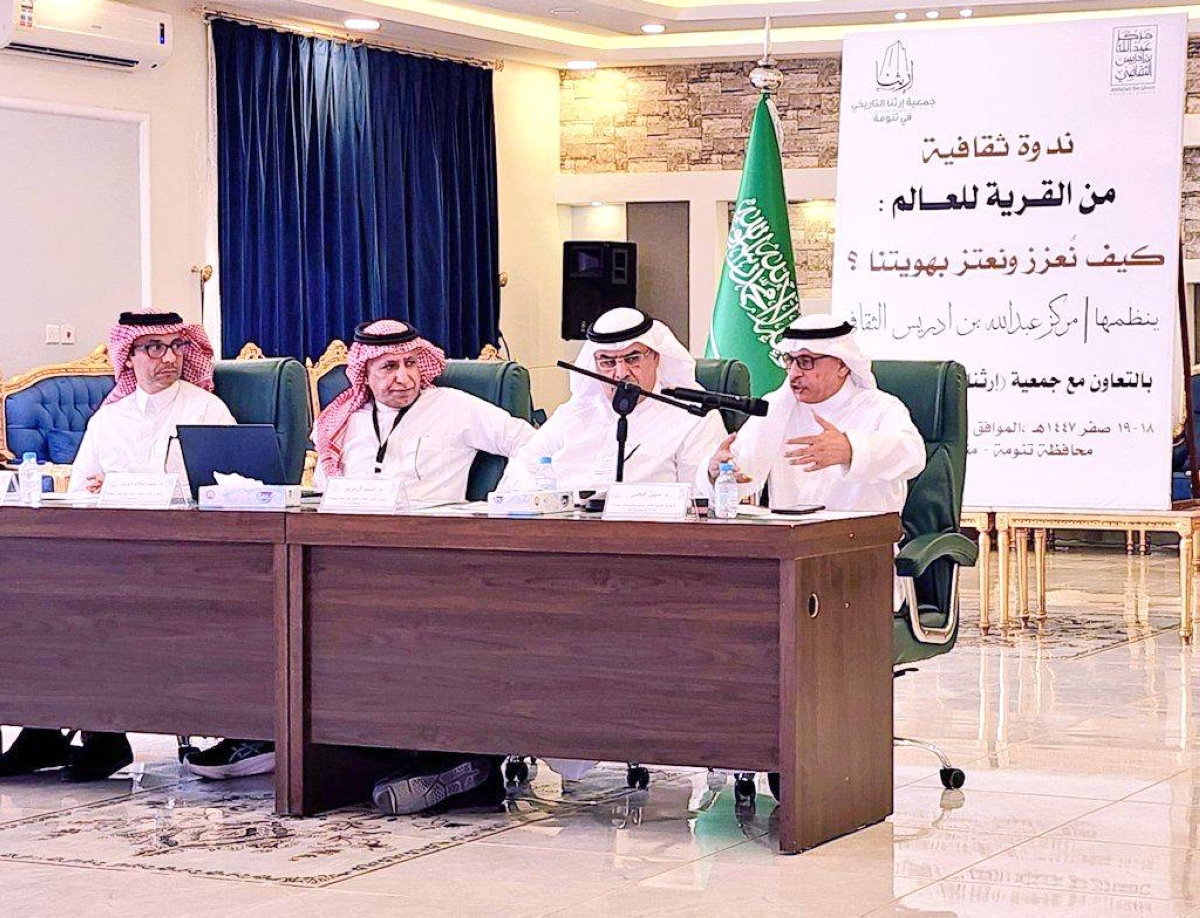
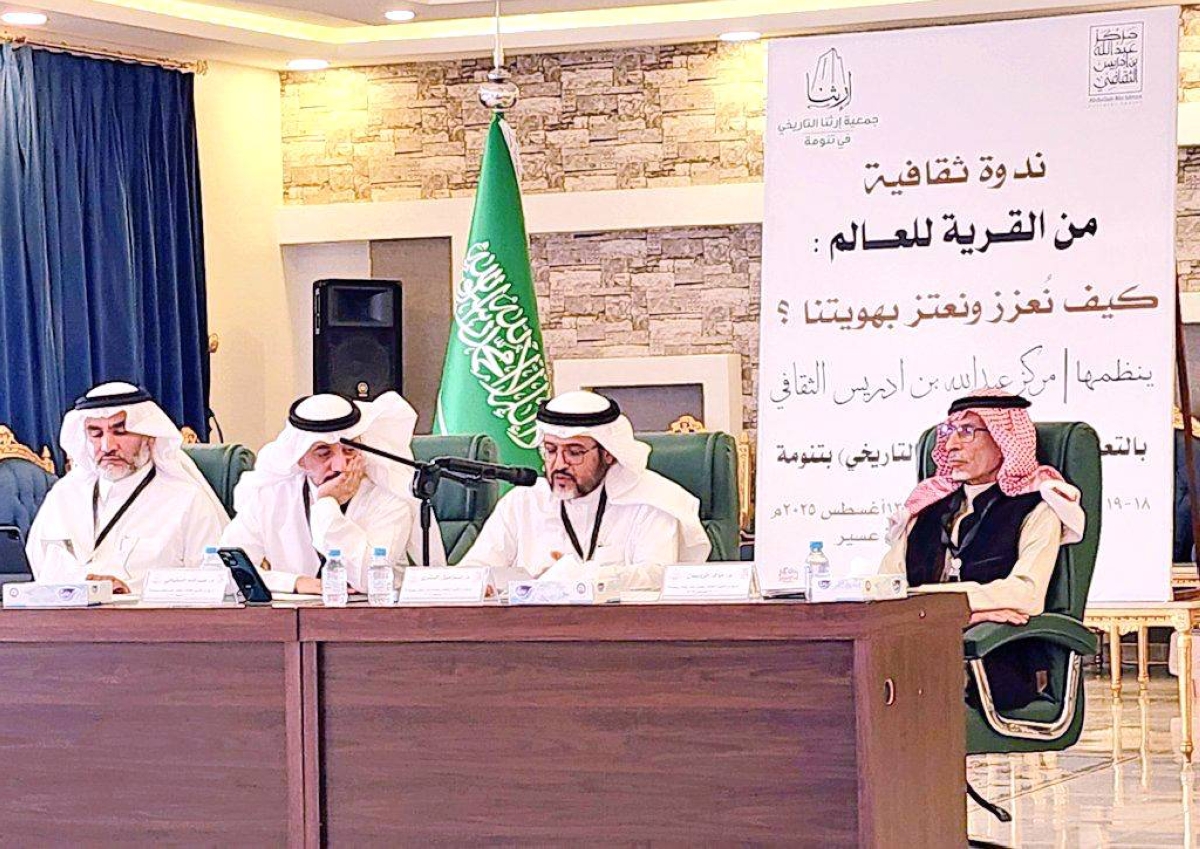
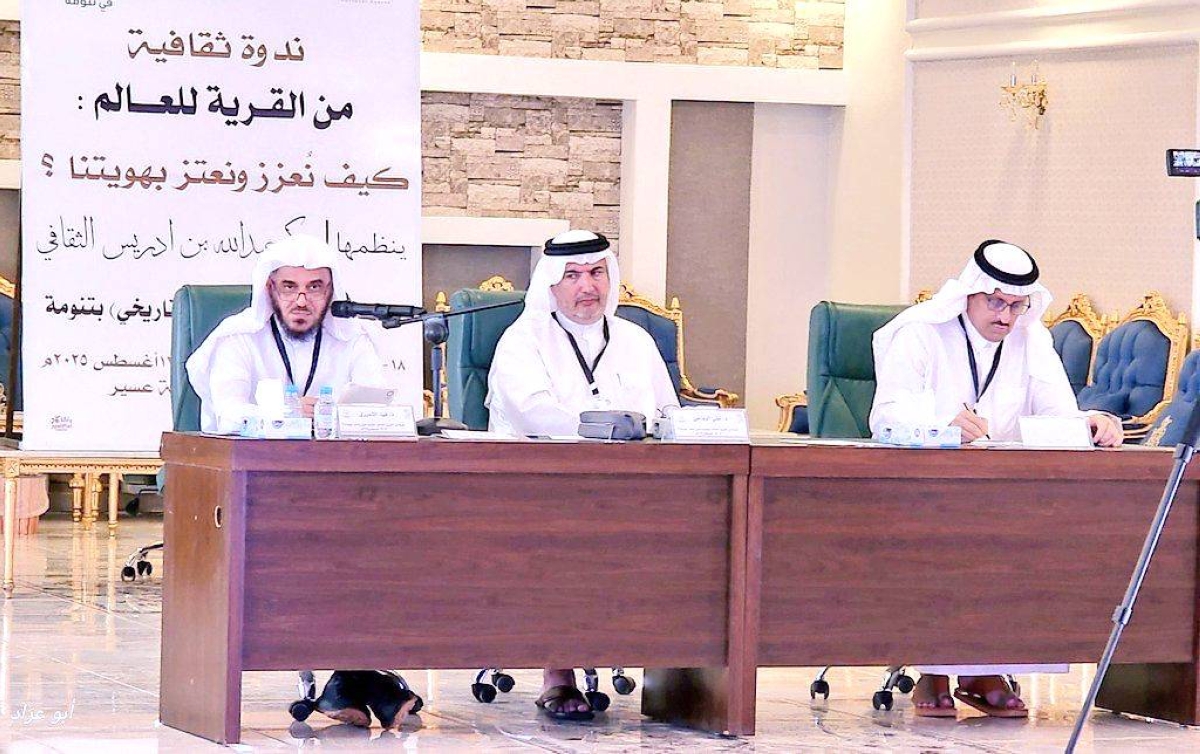
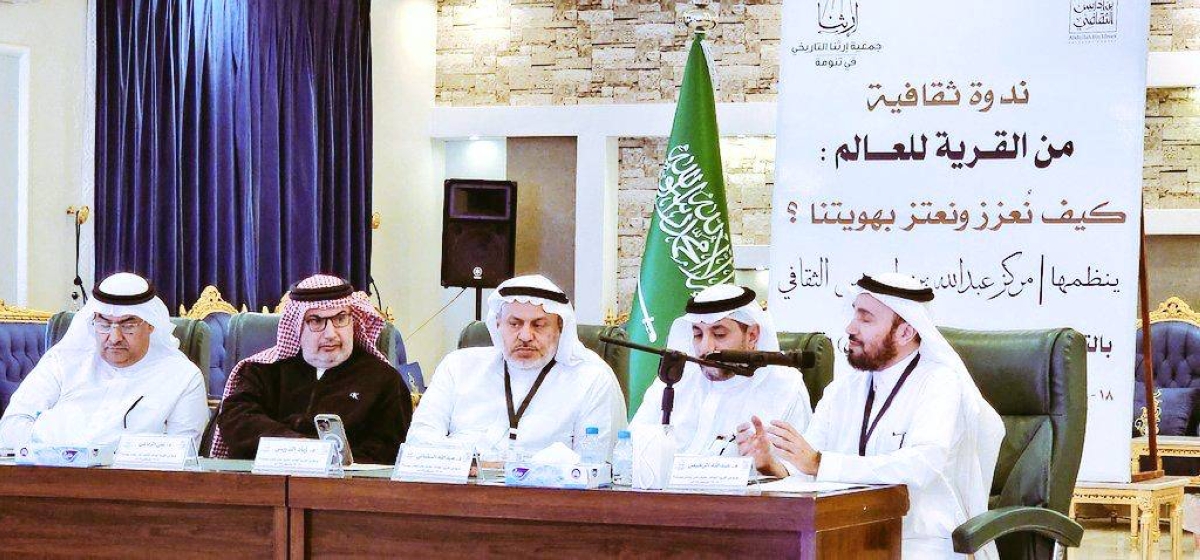
اختتمت في محافظة تنومة، أمس الأول، ندوة «تعزيز الهوية من القرية للعالم»؛ التي نظّمها مركز عبدالله بن إدريس الثقافي، بالتعاون مع جمعية إرثنا في تنومة، واستمرت فعالياتها على مدى يومي الثلاثاء والأربعاء الماضيين، وشارك فيها نخبة من الأكاديميين والكُتّاب، ركزوا في أربع جلسات عمل، بواقع 12 ورقة عمل، تناولت مستجدات وتحديات تتجاذب الهويّات، في ظلّ التحولات المتسارعة، وتقارب العالم، وعبّرت النخبة عن قلقها على هويّات الشباب الرقمي من التسييل والمحو والإذابة.
وتناول رئيس جامعة الجوف سابقاً الدكتور إسماعيل البشري، تاريخ الهويّات البشرية، وتعامل الإسلام مع الهوية منذ وثيقة المدينة المنورّة، باعتبارها منطلق الاعتداد بالهويّة الإسلامية، واستيعابها كافة الهويّات، دون تصادم ولا إلغاء ولا ذوبان، وعدّها وثيقة حقوق إنسان. فيما استعرض أستاذ علم الاجتماع في جامعة الملك سعود، الدكتور خالد الرديعان، أثر مواقع التواصل الاجتماعي، وتأثير التقنية والرقمنة، في المفاهيم والهويّة، ولفت إلى حضور ما يُسمى بالهويّة الافتراضية، بظهور مجموعات يعرفون بعضهم بعضاً من خلال مواقع التواصل، وينشأ فيما بينهم سمات مشتركة، تشبه عناصر ومكونات الهوية، وعدّها هويّات سائلة ويمكن التحلل من التزاماتها والتخلي عنها عندما تغدو عبئاً على أصحابها.
وأكد أستاذ العلوم الإنسانية في جامعة البترول الدكتور مسفر القحطاني، أن سؤال الهوية من أهم الموضوعات المطروحة في مجتمعاتنا العربية خلال العقود الماضية، مشيراً إلى أن الواقع العربي منذ خروج الاستعمار العسكري لا يزال يبحث عن هويته في انتمائه الديني المتعدد، أو عرقه القومي المتنوع، أو بطاقة جنسيته الوطنية، لا باعتبارها هويات متكاملة، بل لكونها هويات متناقضة ومتشظية لا يمكن اجتماعها في مجتمع فضلاً عن فرد، لافتاً إلى اشتعال حروب هويّات في عدد من مجتمعاتنا العربية، لم تخمد نيرانها إلى اليوم، وعدّ بحث الهوية من أولويات النظر على كافة المستويات الأمنية والسياسية والدينية والثقافية والاجتماعية، كونه معقداً وشائكاً جدّاً، ومحمّلاً بإرث فكري وأطروحات مفخخة، كلها تدعي الحقيقة المطلقة في شأن الهوية الفردية والمجتمعية، ومعجونة بالدين والقيم والأعراف والأفكار حدّ تكاثر الهويات على الذات الواحدة؛ بسبب سعة الفضاءات وتعدد المجالات التي يعيشها الفرد المعاصر، فيمكن أن يتميز أي شخص بعدد من الهويات تجعله مختلفاً عن الآخر، منها على سبيل المثال: مواطن مسلم، وعربي، وسعودي، وشمالي أي من شمال السعودية، وشمري، وحائلي، ومعلم، ودرّاج، ويشجع نادي...، وحضري، وربما ترسم هويته في كل مكان وزمان يوجد فيه، وتمتد معه فترة من حياته وتتغير بذهاب بعضها وحلول صفات أخرى محلها لتعيد رسم الهوية في كل مرة، لافتاً إلى المواجهة بين الصفات والعلامات الفارقة للفرد أو المجتمع، بما تحمل معها من نزعة التفوق والتفاضل، ما يجعل المواجهة تتخذ الطابع النفسي والتحدي الاجتماعي لإثبات التميز والعلو على الآخر، ويراها حاضرة بقوة، بتوفر وسائل التعبير في مواقع التواصل الاجتماعي، والقدرة على التحشيد والتجييش بشكل أسهل في العالم الافتراضي. وعدّد المستشار الثقافي الدكتور فهد الثميري، مقوّمات الهوية الوطنية، ومنها العقيدة الإسلامية، واللغة العربية، والثقافة، والأسرة، والمدرسة. وركّز عضو مجلس الشورى سابقاً الدكتور فايز الشهري، على تجليّات الهويّة، ووحدة الوطن التي لا يختلف عليها اثنان، بخلاف الاجتهادات الفقهية، والآراء السياسيّة، التي يمكن أن تنقسم المجتمعات عليها، وتختلف حولها. وشارك أستاذ علم الاجتماع الدكتور عبدالسلام الوايل بورقة عن الهويّة بين الفرص والتحديات، لفت من خلالها إلى مكونات الشخصية السعودية عبر التاريخ، بدءاً من تكيّف الإنسان في الجزيرة العربية مع التحولات الطقسية والمناخية، من 6,000 آلاف عام، وابتكاره أدوات ونظماً منها نظام البداوة للتكيّف مع بيئته القاسية، وعدّ التكيّف والمرونة، من سمات الإنسان السعودي، الذي نجح في التعامل مع المتغيرات إضافةً إلى طبيعة التديّن وكانت مصدّرة ثقافات تلهمنا المقاربة مع تأثيرات سعودية اليوم على مختلف الصّعد.
وقدم الدكتور عبدالله المطيري أطروحة عن كيفية الموازنة بين الانفتاح على التعددية الثقافية والحفاظ على الهوية من خلال التأمل في حدث ثقافي وقع عام 1996م، إذ طبع النادي الأدبي بالرياض برئاسة عبدالله بن إدريس كتاب «ما بعد البنيوية» للدكتور ميجان الرويلي، كتب مقدمته «ابن إدريس» محتفياً ومرحباً. ويرى المطيري أنه رغم حساسية اللحظة ورمزية المؤسسة الرسمية للنادي الأدبي إلا أن ابن إدريس رحّب بكتاب الرويلي، معبراً عن قيمة انفتاح وثقة وضيافة جعلت من هذا الكتاب ممكناً، وعدّ رمزية الضيافة تعبيراً عن ذات قوية وفاعلة إلا أنها ليست مرتابة من الغريب والجديد بل تنطلق من ترحيب.
وأكد الدكتور عبدالرحمن الصامل، في ورقته، ضرورة المحافظة على هويات القُرى، وعدم الانتشاء بغزو «برندات المدن» وعدّ الدكتور عبدالعزيز الحرقان الآلة الاجتماعية في عالمنا المعاصر، قوة رقمية تعمل على إعادة هندسة حياتنا اليومية، ويمكن وصفها بـ«الآلة الاجتماعية»، ذات منظومة متكاملة من المستخدمين والمنصات والخوارزميات، التي تتغذى على البيانات لبناء مجتمعات افتراضية تتجاوز الحدود الجغرافية، وتفرض هذه الآلة تحديات عميقة على الهوية والثقافة والسيادة الفردية.
موضحاً أن أبرز التحديات تتمثّل في «الاستعمار الخوارزمي»، إذ إن الخوارزميات التي تدير تجاربنا الرقمية ليست محايدة، بل هي مصممة في بيئات ثقافية محددة، وغالباً ما تكون في وادي السيليكون، وتحمل معها قيم ومعايير بلد المنشأ. وبتطبيقها وتفعيلها تفرض منظومة قيمية ربما لا تتوافق مع المجتمعات المحلية، ما يخلق تبعية رقمية جديدة، ترتبط ارتباطاً وثيقاً بـ «استعمار البيانات»، إذ يتم التعامل مع السلوك البشري باعتباره مادة خام، تُستخلص وتُحلل لتحقيق أرباحاً تجارية، مؤكداً أن التحديات التي تطرحها «الآلة الاجتماعية» ليست مؤقتة، بل سمة أساسية للعصر الرقمي. فيما يزداد الاندماج بين الواقعي والافتراضي بتطور تقنيات المستقبل كالميتافيرس، وتتعاظم هذه المخاطر.
وتناول الدكتور حسن النعمي الهويّة المتغيرة في علاقتها مع الواقع، واختار رواية عبدالعزيز مشري «الوسمية»، التي تناولت قلق القرية من تغوّل المدينة.
من جهته، أوضح رئيس مركز ابن إدريس الثقافي، الدكتور زياد الدريس أن الهوية ليست شيئاً واحداً أو كتلة واحدة، كون الإنسان يحمل هويات متعددة، صغرى وكبرى، ثابتة ومتحولة، صلبة وسائلة، مؤكداً أنه لا ينبغي للهويات الصغرى أن تعلو فوق الهويات الكبرى، إلا في حالات استثنائية ينبغي أن تكون مؤقتة، وإلا عُدّ هذا خللاً في الانتماء الهوياتي، موضحاً أنه تمت مناقشة تحولات الهوية مع الإنسان في انتقاله من القرية إلى العالم، أكان انتقالاً حسياً جسدياً أو معنوياً افتراضياً؟ وعدّ أوراق العمل حارثة في الجذور، لمواجهة التحديات، وتقاسم الحصص مع الانفتاح، واستشراف المستقبل من دون أن نستعيب ماضينا، كون الهوية عجينة من الماضي والحاضر والمستقبل.
تبادلية الافتراضي والواقعي من القرية إلى العالم
ندوة «مركز ابن إدريس» تحذّر من اختطاف هويات الشباب الرقمي
15 أغسطس 2025 - 02:31
|
آخر تحديث 15 أغسطس 2025 - 02:31


تابع قناة عكاظ على الواتساب
علي الرباعي (تنومة) Al_ARobai@
The seminar "Enhancing Identity from the Village to the World" concluded in the province of Tanumah the day before yesterday; it was organized by the Abdullah bin Idris Cultural Center in collaboration with the Irthna Association in Tanumah. The events lasted for two days, Tuesday and Wednesday of last week, and featured a select group of academics and writers who focused on four working sessions, comprising 12 working papers that addressed the latest developments and challenges facing identities amid rapid transformations and global convergence. The elite expressed their concern about the identities of digital youth being commodified, erased, and dissolved.
The former president of Al-Jouf University, Dr. Ismail Al-Bushri, discussed the history of human identities and how Islam has dealt with identity since the Constitution of Medina, considering it a starting point for valuing Islamic identity and encompassing all identities without conflict, cancellation, or dissolution, and regarded it as a document of human rights. Meanwhile, Dr. Khalid Al-Rudai'an, a sociology professor at King Saud University, reviewed the impact of social media, technology, and digitization on concepts and identity. He pointed out the presence of what is called virtual identity, where groups know each other through social media, developing shared traits resembling elements and components of identity. He classified these as liquid identities that can be dissolved and abandoned when they become burdensome to their holders.
Dr. Musfer Al-Qahtani, a professor of humanities at the Petroleum University, emphasized that the question of identity is one of the most important topics raised in our Arab societies over the past decades. He noted that the Arab reality, since the departure of military colonialism, is still searching for its identity in its diverse religious affiliations, ethnic backgrounds, or national citizenship, not as integrated identities but as contradictory and fragmented identities that cannot coexist in a society, let alone in an individual. He highlighted the ongoing identity wars in several of our Arab societies, whose flames have not been extinguished to this day. He considered the search for identity a priority for consideration at all security, political, religious, cultural, and social levels, as it is very complex and fraught with intellectual legacies and loaded propositions, all claiming absolute truth regarding individual and societal identity, intertwined with religion, values, customs, and ideas to the extent that identities multiply on a single self due to the vast spaces and multiple domains in which the contemporary individual lives. Thus, any person can be distinguished by several identities that make them different from others, such as: a Muslim citizen, an Arab, a Saudi, a Northerner from Northern Saudi Arabia, a Shammari, a Ha'ili, a teacher, a cyclist, a fan of a club..., and urban, perhaps drawing their identity in every place and time they exist, extending with them throughout their life and changing as some traits fade and others take their place, reshaping identity each time. He pointed to the confrontation between the traits and distinguishing marks of an individual or society, carrying with them a tendency towards superiority and differentiation, making the confrontation take on a psychological character and a social challenge to prove distinction and superiority over others. He sees this strongly present, with the availability of means of expression on social media and the ability to mobilize and rally more easily in the virtual world. Cultural advisor Dr. Fahd Al-Thumairi listed the components of national identity, including Islamic belief, the Arabic language, culture, family, and school. Former Shura Council member Dr. Fayez Al-Shahri focused on the manifestations of identity and the unity of the homeland, which is not disputed by two, unlike jurisprudential efforts and political opinions that societies can divide over and differ about. Sociology professor Dr. Abdul Salam Al-Wail presented a paper on identity between opportunities and challenges, in which he pointed out the components of the Saudi personality throughout history, starting from how humans in the Arabian Peninsula adapted to climatic and environmental changes 6,000 years ago, inventing tools and systems, including the nomadic system to adapt to their harsh environment. He considered adaptation and flexibility as traits of the Saudi individual, who has succeeded in dealing with changes in addition to the nature of religiosity, which has been a source of cultures that inspire us to engage with the Saudi influences today on various levels.
Dr. Abdullah Al-Mutairi presented a thesis on how to balance openness to cultural pluralism while preserving identity by reflecting on a cultural event that took place in 1996, when the Literary Club in Riyadh, chaired by Abdullah bin Idris, published the book "Post-Structuralism" by Dr. Mejan Al-Ruwaili, with a preface written by "Ibn Idris," celebrating and welcoming it. Al-Mutairi believes that despite the sensitivity of the moment and the symbolic nature of the official institution of the Literary Club, Ibn Idris welcomed Al-Ruwaili's book, expressing a value of openness, trust, and hospitality that made this book possible. He regarded the symbolism of hospitality as an expression of a strong and active self that is not suspicious of the strange and new but rather starts from a welcoming stance.
Dr. Abdul Rahman Al-Samel emphasized in his paper the necessity of preserving village identities and not being swept away by the invasion of "city brands." Dr. Abdul Aziz Al-Harqan described the social machine in our contemporary world as a digital force that works to re-engineer our daily lives, which can be referred to as the "social machine," with a comprehensive system of users, platforms, and algorithms that feed on data to build virtual communities that transcend geographical boundaries. This machine imposes profound challenges on identity, culture, and individual sovereignty.
He clarified that the most significant challenges are represented in "algorithmic colonialism," as the algorithms that manage our digital experiences are not neutral; they are designed in specific cultural environments, often in Silicon Valley, carrying with them the values and standards of their country of origin. By applying and activating them, they impose a value system that may not align with local communities, creating a new digital dependency closely linked to "data colonialism," where human behavior is treated as raw material, extracted and analyzed for commercial profits. He affirmed that the challenges posed by the "social machine" are not temporary but a fundamental characteristic of the digital age. As the integration between the real and virtual worlds increases with the development of future technologies like the metaverse, these risks are magnified.
Dr. Hassan Al-Nami discussed the changing identity in relation to reality, choosing Abdulaziz Mushri's novel "Al-Wasmiya," which addressed the village's anxiety over the encroachment of the city.
For his part, Dr. Ziad Al-Drees, head of the Ibn Idris Cultural Center, explained that identity is not a single entity or a solid block, as a person carries multiple identities, both minor and major, fixed and fluid, solid and liquid. He emphasized that minor identities should not overshadow major identities, except in exceptional cases that should be temporary; otherwise, this would be considered a flaw in identity belonging. He clarified that the transformations of identity with the individual in their transition from the village to the world were discussed, whether it was a physical or a virtual transition. He regarded the working papers as rooted in addressing challenges, sharing shares with openness, and anticipating the future without disregarding our past, as identity is a mixture of the past, present, and future.
The former president of Al-Jouf University, Dr. Ismail Al-Bushri, discussed the history of human identities and how Islam has dealt with identity since the Constitution of Medina, considering it a starting point for valuing Islamic identity and encompassing all identities without conflict, cancellation, or dissolution, and regarded it as a document of human rights. Meanwhile, Dr. Khalid Al-Rudai'an, a sociology professor at King Saud University, reviewed the impact of social media, technology, and digitization on concepts and identity. He pointed out the presence of what is called virtual identity, where groups know each other through social media, developing shared traits resembling elements and components of identity. He classified these as liquid identities that can be dissolved and abandoned when they become burdensome to their holders.
Dr. Musfer Al-Qahtani, a professor of humanities at the Petroleum University, emphasized that the question of identity is one of the most important topics raised in our Arab societies over the past decades. He noted that the Arab reality, since the departure of military colonialism, is still searching for its identity in its diverse religious affiliations, ethnic backgrounds, or national citizenship, not as integrated identities but as contradictory and fragmented identities that cannot coexist in a society, let alone in an individual. He highlighted the ongoing identity wars in several of our Arab societies, whose flames have not been extinguished to this day. He considered the search for identity a priority for consideration at all security, political, religious, cultural, and social levels, as it is very complex and fraught with intellectual legacies and loaded propositions, all claiming absolute truth regarding individual and societal identity, intertwined with religion, values, customs, and ideas to the extent that identities multiply on a single self due to the vast spaces and multiple domains in which the contemporary individual lives. Thus, any person can be distinguished by several identities that make them different from others, such as: a Muslim citizen, an Arab, a Saudi, a Northerner from Northern Saudi Arabia, a Shammari, a Ha'ili, a teacher, a cyclist, a fan of a club..., and urban, perhaps drawing their identity in every place and time they exist, extending with them throughout their life and changing as some traits fade and others take their place, reshaping identity each time. He pointed to the confrontation between the traits and distinguishing marks of an individual or society, carrying with them a tendency towards superiority and differentiation, making the confrontation take on a psychological character and a social challenge to prove distinction and superiority over others. He sees this strongly present, with the availability of means of expression on social media and the ability to mobilize and rally more easily in the virtual world. Cultural advisor Dr. Fahd Al-Thumairi listed the components of national identity, including Islamic belief, the Arabic language, culture, family, and school. Former Shura Council member Dr. Fayez Al-Shahri focused on the manifestations of identity and the unity of the homeland, which is not disputed by two, unlike jurisprudential efforts and political opinions that societies can divide over and differ about. Sociology professor Dr. Abdul Salam Al-Wail presented a paper on identity between opportunities and challenges, in which he pointed out the components of the Saudi personality throughout history, starting from how humans in the Arabian Peninsula adapted to climatic and environmental changes 6,000 years ago, inventing tools and systems, including the nomadic system to adapt to their harsh environment. He considered adaptation and flexibility as traits of the Saudi individual, who has succeeded in dealing with changes in addition to the nature of religiosity, which has been a source of cultures that inspire us to engage with the Saudi influences today on various levels.
Dr. Abdullah Al-Mutairi presented a thesis on how to balance openness to cultural pluralism while preserving identity by reflecting on a cultural event that took place in 1996, when the Literary Club in Riyadh, chaired by Abdullah bin Idris, published the book "Post-Structuralism" by Dr. Mejan Al-Ruwaili, with a preface written by "Ibn Idris," celebrating and welcoming it. Al-Mutairi believes that despite the sensitivity of the moment and the symbolic nature of the official institution of the Literary Club, Ibn Idris welcomed Al-Ruwaili's book, expressing a value of openness, trust, and hospitality that made this book possible. He regarded the symbolism of hospitality as an expression of a strong and active self that is not suspicious of the strange and new but rather starts from a welcoming stance.
Dr. Abdul Rahman Al-Samel emphasized in his paper the necessity of preserving village identities and not being swept away by the invasion of "city brands." Dr. Abdul Aziz Al-Harqan described the social machine in our contemporary world as a digital force that works to re-engineer our daily lives, which can be referred to as the "social machine," with a comprehensive system of users, platforms, and algorithms that feed on data to build virtual communities that transcend geographical boundaries. This machine imposes profound challenges on identity, culture, and individual sovereignty.
He clarified that the most significant challenges are represented in "algorithmic colonialism," as the algorithms that manage our digital experiences are not neutral; they are designed in specific cultural environments, often in Silicon Valley, carrying with them the values and standards of their country of origin. By applying and activating them, they impose a value system that may not align with local communities, creating a new digital dependency closely linked to "data colonialism," where human behavior is treated as raw material, extracted and analyzed for commercial profits. He affirmed that the challenges posed by the "social machine" are not temporary but a fundamental characteristic of the digital age. As the integration between the real and virtual worlds increases with the development of future technologies like the metaverse, these risks are magnified.
Dr. Hassan Al-Nami discussed the changing identity in relation to reality, choosing Abdulaziz Mushri's novel "Al-Wasmiya," which addressed the village's anxiety over the encroachment of the city.
For his part, Dr. Ziad Al-Drees, head of the Ibn Idris Cultural Center, explained that identity is not a single entity or a solid block, as a person carries multiple identities, both minor and major, fixed and fluid, solid and liquid. He emphasized that minor identities should not overshadow major identities, except in exceptional cases that should be temporary; otherwise, this would be considered a flaw in identity belonging. He clarified that the transformations of identity with the individual in their transition from the village to the world were discussed, whether it was a physical or a virtual transition. He regarded the working papers as rooted in addressing challenges, sharing shares with openness, and anticipating the future without disregarding our past, as identity is a mixture of the past, present, and future.