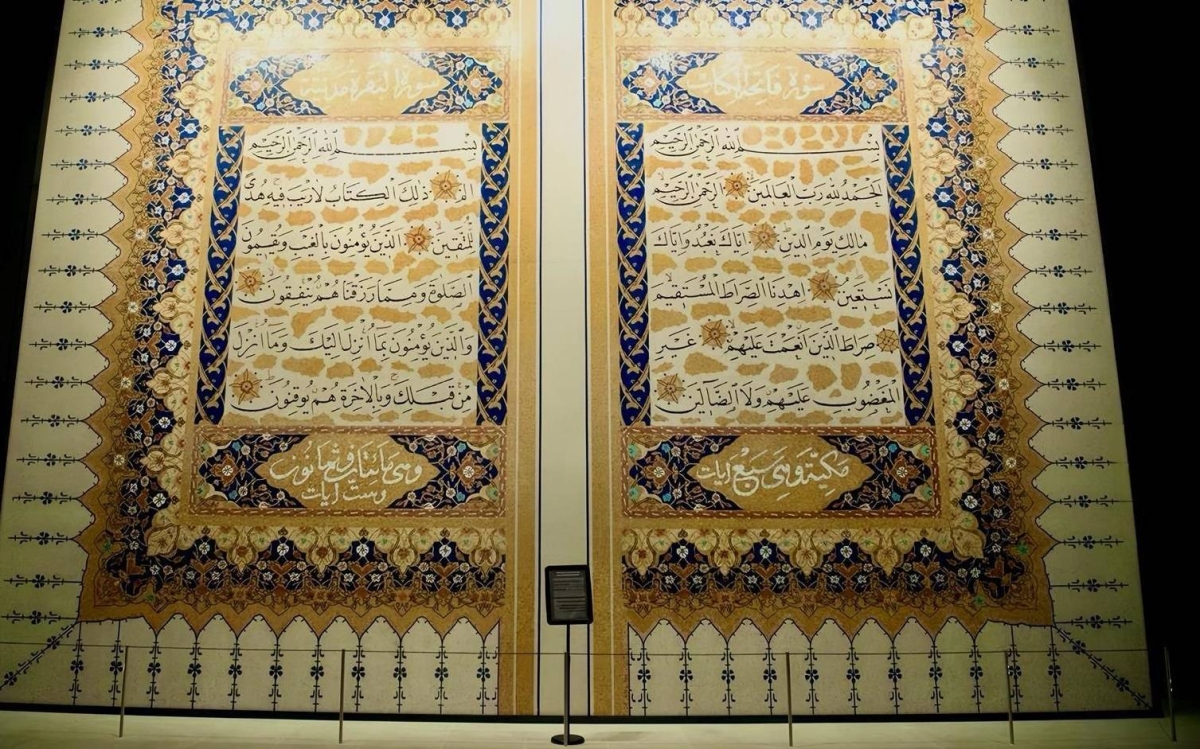
يحتوي متحف القرآن الكريم بحي حراء الثقافي بمكة المكرمة على العديد من المقتنيات الفريدة والنادرة، ومنها لوحة فسيفسائية لسورة الفاتحة ومطلع سورة البقرة بمساحة (76.67م2) تضم أكثر من مليون قطعة فسيفساء مصنوعة من البورسلين، وهي أحد أنواع الفنون التي تتكون عبر صف عدد من المكعبات الصغيرة الملونة بجانب بعضها.
ويعود أصل هذه التحفة الفنية إلى مصحف كتبه الخطاط مصطفى ذو الفقار بخط النسخ بمقاس (29×19 سم) سنة 1066هـ - 1656م، والأصل المكتوب موجود في مجمع الملك عبدالعزيز للمكتبات الوقفية بالمدينة المنورة، ويُعدُّ متحف القرآن الكريم بحي حراء الثقافي شاهداً حضارياً وثقافياً للعاصمة المقدسة، كما أنه أول متحف متخصص في القرآن الكريم في مكة المكرمة بجوار جبل حراء.
ويضم المتحف مجموعة من المقتنيات النادرة، ومخطوطات القرآن الكريم التي كتبت في العصور الإسلامية المختلفة، ومصاحف أثرية مكتوبة بخطوط متنوعة من مختلف الأزمنة، ومجسمات تعليمية تعرض تطور كتابة المصحف الشريف، وتقنيات تفاعلية حديثة للتعريف بعظمة القرآن الكريم، وعروضاً بصرية تسلط الضوء على تاريخ تدوين القرآن الكريم عبر العصور.
ويحتوي المتحف على أكبر مصحف وأكبر حامل مصحف في العالم، مسجلين في موسوعة غينيس للأرقام القياسية باسم متحف القرآن الكريم.
The Quran Museum in the Cultural District of Hira in Mecca contains many unique and rare artifacts, including a mosaic panel of Surah Al-Fatiha and the beginning of Surah Al-Baqarah, covering an area of (76.67 m²) and consisting of more than a million pieces of porcelain mosaic. This is one of the art forms that is created by arranging a number of small colored cubes next to each other.
The origin of this artistic masterpiece dates back to a Quran written by the calligrapher Mustafa Dhul-Faqar in Naskh script, measuring (29×19 cm) in the year 1066 AH - 1656 AD. The original manuscript is located in the King Abdulaziz Complex for Endowment Libraries in Medina. The Quran Museum in the Cultural District of Hira is considered a cultural and civilizational witness to the holy capital, and it is the first museum specialized in the Quran in Mecca, located next to Mount Hira.
The museum includes a collection of rare artifacts, manuscripts of the Quran written in various Islamic eras, ancient Qurans written in diverse scripts from different times, educational models showcasing the evolution of writing the Holy Quran, modern interactive technologies to introduce the greatness of the Quran, and visual displays highlighting the history of the Quran's transcription throughout the ages.
The museum houses the largest Quran and the largest Quran stand in the world, both recorded in the Guinness World Records under the name of the Quran Museum.