


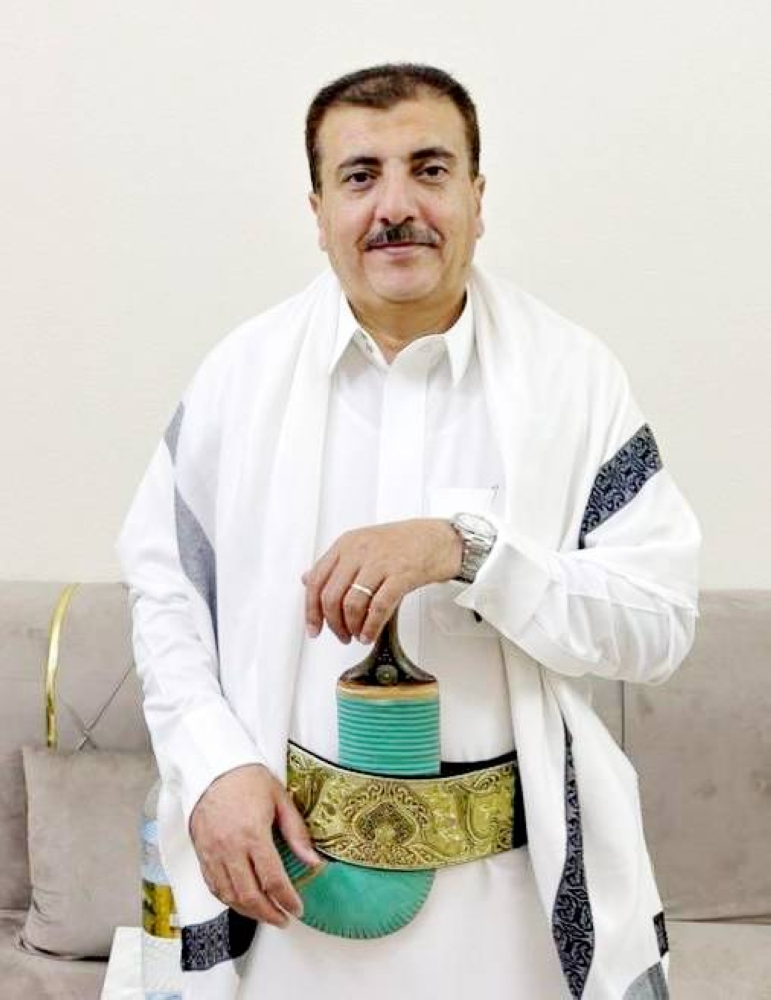
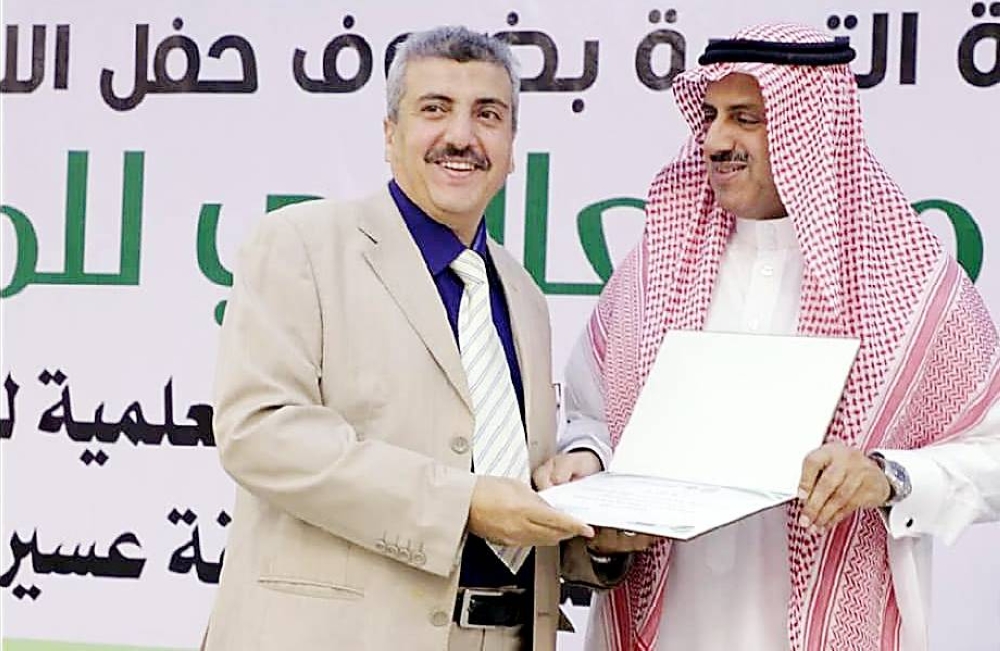
يرى ضيفنا أنّ الربع الأخير من القرن الماضي في اليمن كان من أخصب المراحل، وأنّ وعيه الأدبي تشكّل في بيئة مستقرة؛ في أسرة علمية كان جدّه لأبيه فيها علاّمة وشخصية علمية واجتماعية مبجَّلة.
نشأ ضيفنا في «الحيمة الخارجية» التي يصفها بأنها ذات طبيعة ريفية نقية، وهدوء ساحر، ويعيد ضيفنا الفضل في تشكُّل وعيه الأدبي والثقافي إلى التربية والتعليم والكتب الدينية والأدبية، وخبرات المدرسين المصريين في التعليم العام، إضافة إلى أثر جامعة صنعاء في بداية التسعينيات بإدارة رئيسها الأكاديمي والشاعر الدكتور عبدالعزيز المقالح التي كان لها أثر كبير عليه، فقد كانت وجهة لكبار الأكاديميين من الوطن العربي، وللأسماء الكبيرة التي درّسَت فيها. الكثير من الموضوعات والقضايا نفتحها في هذا الحوار مع ضيف «عكاظ» الدكتور إبراهيم أبو طالب.. فإلى التفاصيل:
• نود أن نبدأ من البدايات، كيف تشكّل الوعي الثقافي والأدبي عند إبراهيم أبو طالب؟
•• من خلال البيئة التي عشتُ تفاصيلها في اليمن، ومرحلة الاستقرار أثناء الربع الأخير من القرن الماضي كانت مرحلة خصبة لليمن، فبدأ تشكُّلي في بيئة مستقرة نسبياً، في إطار أسرة علمية عميدها الجد العلامة عبدالرحمن أبو طالب (رحمه الله)، وكان شخصية علمية واجتماعية مبجَّلة في الحيمة الخارجية، ذات الطبيعة الريفية النقية، والهدوء الساحر، فكان للجدّ أثر كبير في زرع الكثير من القيم بطريقة مباشرة وغير مباشرة، المباشرة في الإشراف على التعليم، والمتابعة الدقيقة، وغير المباشرة في تمثُّل القدوة والأنموذج في شخصية مهابة جليلة لا يغادر الكتاب تفاصيل حياته اليومية ومكتبته العامرة بالكثير من الكتب الدينية والأدبية، ثم نظرة المجتمع لشخصيته، والانتفاع بعلمه، إذ كان مجلسه اليومي لا يخلو من أصحاب الحاجات من مُستفتٍ أو صاحب قضية يريد حلَّها، أو زائر يريد الاستزادة من علمه وأدبه، ثم يأتي دور المدرسة فقد كانت تضمُّ عدداً من الأساتذة المصريين، وكلُّهم من أصحاب الخبرة الطويلة في التدريس ممن اشتغل لما لا يقل عن عقدين من الزمان في تخصُّصه، ولهذا كان لهم فضلٌ لا يُنكر في تشكيل الوعي العلمي بحسب المرحلة العمرية، ثم كانت جامعة صنعاء مصدر إشعاع حضاري في بداية التسعينيات، بإدارة رئيسها الأكاديمي والشاعر و«البوابة الثامنة» لصنعاء كما أسميه أستاذنا عبدالعزيز المقالح، وكانت وجهة لكبار الأكاديميين من الوطن العربي، وللأسماء الكبيرة التي قامت بالتدريس فيها، وهم كثرٌ وقد أفردتُ لهم حديثا طويلاً في كتابي (من هؤلاء تعلَّمت: سيرة ذاتغيرية). فكان للجميع أثرٌ كبير في تشكيل الوعي المعرفي والثقافي والجمالي.
• ما الأثر الذي أحدثه أستاذك عبدالمنعم تليمة في حياتك؟
•• هو مدرسة أخرى على المستويين الإنساني والمعرفي، فعلى المستوى الإنساني كان أنموذجاً رائعاً للأستاذ المتواضع، وللمثقف المفكر، وعلى المستوى المعرفي كان لكتابيه: (مقدمة في نظرية الأدب) 1973، ذلك الكتاب الذي لا تكاد تخلو رسالة من الاستعانة به، والإشارة إلى بعض فقراته، وكذا كتابه (مدخل إلى علم الجمال الأدبي) 1978، إضافة إلى العديد من المقالات المهمّة والمقدمات الدقيقة كما في تقديمه للطبعة الأخيرة من كتاب (طه حسين في الشعر الجاهلي)، والعشرات من اللقاءات والحوارات والمقالات كلّها قرأتُها، وتمثّل طريقتَه في الكتابة، تلك الطريقة السهلة الممتنعة، والدقيقة الموجزة، فهو تلميذٌ للمدرسة المصرية العريقة التي منها سهير القلماوي، وأمين الخولي، وكان يسميهما شيخيَّ الجليلين غير مفرِّق بينهما في الإجلال سوى إجلاله الأكبر لأستاذه (طه حسين).
وتأثرتُ كثيراً واستفدتُ من مجلسه العامر، وصالونه الأسبوعي كلَّ خميس، في ذلك المجلس تعلمتُ ما لم أقرأه في كتابٍ، ولا يمكن أن أحصل عليه في مدوَّنة، وكان التنزّه في عقول الناس من مبدعين ومفكرين وأدباء وكتاب وفنانين وأكاديميين من مصر ومن الوطن العربي كان لنا بهم لقاء، وللحوار معهم فائدة، والاستماع إليهم مدرسة فكرية وعلمية وأدبية، في بساطةِ طرحٍ، مع الانضباط الشديد في المداخلات، إذ كانت طريقة أستاذنا المتَّبعة هي بدء الحديث في المجال الذي سيدور حوله النقاش من خلال الضيف، وكان لا يعدم في كل مرة أن يأتي بضيف من الوطن العربي يجعل وجهته الثقافية (صالون تليمة الأسبوعي)، فكان يتحدث أستاذنا عن الضيف أولاً، ثم يترك له الحديث بحرية كاملة، ثم تأتي المداخلات وإشباع الموضوع المطروح في تلك الأمسية، وإن لم يكن هناك ضيف، فإمَّا كتاب جديد صدر، أو مقال رأي مهم، أو حدث سياسي أو اجتماعي يكون مدار اللقاء، وأما الفنُّ فكان في لقاءات قليلة، إذ استمعنا مرة لمؤلفات الفنان العراقي نصير شمَّة، ومرة أخرى للموسيقار اليمني أحمد فتحي، وقد أكرمني بالحضور بعد مناقشتي للدكتوراه، وما تعلمناه من أساليب الحوار، واحترام الرأي، وطرح وجهات النظر كان هو زبدة ما يمكن أن يفتح الآفاق للمعرفة، وللاطلاع على الكثير من التجارب وتقبُّل الآخر أيّاً كان نوعه أو جنسه، وبالمناسبة فقد أجمعَ الجميع من الشخصيات التي كانت على اختلاف توجهاتها ما بين يسار ويمين، ووسط، على محبَّته واحترامه، وهو يرحب بهم بكل تقدير واحترام، وكان صنيعه ذلك هو ما يسع الجميع.
• علاقتك بالببليوغرافيا.. كيف بدأت؟ وإلامَ انتهت؟
•• علاقتي بالببليوغرافيا كان سببها ودافعها الأوَّل الاحتياج، إذ كنتُ في القاهرة مطلع الألفية، وأردتُ أن أسجِّل موضوعاً للماجستير في جامعة القاهرة، فلم أجد ما يدلّني على الدراسات السابقة -ولم يكن الأمر مثل اليوم من خلال البحث في منصات وغيرها- فبدأت في الاطلاع على ما سبق دراسته لأختار موضوعاً جديداً للدراسة، فما وجدتُ من أدبيات في مكتبات الجامعات سوى الببليوغرافيا عن الرواية العربية التي أعدها الدكتور حمدي السكوت، ووجدت أن ما رصده عن اليمن والروايات أو القصة عموماً قليل جداً، والسبب عدم وصول الإصدارات وانتشارها، أضفْ إلى ذلك طبيعة الشمولية التي سعى إليها مشروعه، ووجدت اليمن أقلها حضوراً وبيانات، فبدأتْ فكرة الجمع والتوثيق للببليوغرافيا في ما أنا بصدده، وهو السرد، فجمعتُ ما استطعتُ جمعه، ثم صار الأمر هاجساً ملحّاً في ملاحقة كل ما يخصُّ اليمن في مجال السرد إبداعاً ونقداً، واستمر الجمعُ والبحث، وحين سافرتُ لجمع المادة العلمية من اليمن زرتُ الكثير من المكتبات في صنعاء وفي عدن، فكانت حصيلتها الكثير من البيانات عن القصص المنشورة في المجلات والدوريات، وكذا الجانب النقدي، وبعد أن أنجزتُ رسالتي للدكتوراه ألحقتُ بها ببليوغرافيا عن القصة، ومن قبلها في الماجستير ببليوغرافيا عن الرواية، ثم طورتُها، وفصلتها عن الرسالتين وأضفتُ إليها ببليوغرافيا عن الأدب الموجَّه للطفل إبداعاً ونقداً، وصدر في كتاب عام 2010، ثم تابعتُ الإصدارات بعد ذلك، واستعنتُ بالإنترنت والمنصات والمجلات وغيرها فطورتُ المشروع حتى صار في ثلاثة أجزاء مستوفياً مسيرة الرواية والقصة القصيرة والقصيرة جداً وأدب الطفل في اليمن خلال قرن من الزمان تقريباً، وصدرت موسوعة ببليوغرافيا الأدب اليمني عن دار عناوين Books في القاهرة، عام 2022، في أكثر من 1100 صفحة.
تلك هي حكايتي مع الببليوغرافيا التي بدأتِ احتياجاً للمعرفة، واستمرت شغفاً في الجمع والتوثيق والرصد، وانتهت مسؤولية في عرض ذلك كله للباحثين والمهتمين لمعرفة مسيرة السرد في اليمن خلال قرن من الزمن تقريباً.
• لديك رحلة في أدب الطفل.. حدثنا عنها.
•• نعم، بدأتُ في الكتابة للأطفال منذ تخرجت من الجامعة، إذ كنتُ معلِّماً للغة العربية في (ثانوية عمَّار بن ياسر) في صنعاء، ومشرفاً على النشاط الطلابي الصَّباحي، ومتابعة طابور الصباح، فوجدت الكثير من المواهب لدى طلاب المدرسة، وقمنا بنشاط مدرسي سُمِّي (اليوم المفتوح)، فكتبتُ أوبريتاً لذلك اليوم المفتوح، لحَّنه زميلٌ لنا اسمه طارق السعدي (فلسطيني الجنسية) كان يعمل في المدرسة، ثم عُرض أمام وزير التربية حينها (الدكتور أبو بكر القربي) وعدد من المسؤولين، فنال الاستحسان، وطلب منَّا التلفزيون تسجيله في برنامج (جيل الغد)، وتم بثُّه، فشكَّل ذلك دافعاً مؤثراً، ثم شاركنا مع الطاقم ذاته في مهرجان المسرح المدرسي الأول لأمانة العاصمة، وفازت مسرحيتنا (إنا نحن من يهواكِ) عام 1995 من إخراج العراقي علي نجم جدّوع بالمرتبة الثالثة على مستوى الأمانة، وبشهادة شكر وتقدير، ثم بدأتُ أدركُ أهمية هذا الميدان، ومدى الفراغ النسبي فيه، فحين كان الإعلان عن الاحتياج لنصوص لمسابقة رمضان للأطفال في إذاعة صنعاء، في عام 1997، قررتُ خوض التجربة، فتقدَّمتُ بمقترح لخمس حلقات، بعنوان (عالم المعرفة) يحتوي على حكايات وأناشيد، فقُبلتْ، وأكملتُ 30 حلقة، أنتجتها الإذاعة في شهر رمضان، من إخراج طاهر الحرازي، ومثَّلت فيها المذيعة المتألقة مها البريهي، ومثَّل معها الكثير من فناني المسرح الوطني على رأسهم المبدع نبيل حزام وآخرون، ولحَّن أغانيها الفنان فؤاد الشرجبي، ولاقت نجاحاً كبيراً وصدى مؤثراً، فكانت دافعاً آخر للاستمرار، وبالفعل في العام التالي تعاقدت معي الإذاعة في عمل جديد لمسابقة الأطفال لشهر رمضان، بعنوان (حكايات) في 30 حلقة مسجلة، قُدِّمت في حلقات مسلسلة في إذاعة صنعاء، من إخراج سمير المذحجي، عام 1998.
ثم حين انتقلتُ إلى القاهرة للدراسات العليا مع نهاية عام 1999 وبداية الألفية الثالثة، وجدتُ في معرض الكتاب بالقاهرة الكثير من دور النشر المتخصِّصة في الأدب الموجَّه للطفل، فتواصلتُ مع إحداها، وهي شركة مكة للبرمجيات، وكانت نتيجة ذلك عدداً من الأعمال؛ أهمها: (أناشيد الطفولة) في مجسمات، ولحنت بعد ذلك في أشرطة وسيديهات بعنوان (عصفورتي المغردة)، و(أدواتي المدرسية)، ثم كتبتُ للشركة (قصص الأنبياء: حكايات وأناشيد)، وقد أُخرجت تلك الأعمال جميعها بأكثر من وسيلة وطريقة ابتداءً بالمجسمات، ثم أشرطة الكاسيت، ثم الأقراص المدمجة (CD) ثم أخيراً على القنوات الفضائية ملحنة ومؤدَّاة بأصوات أطفال الأوبرا المصرية، وأدائهم الجميل، ومن ألحان أحمد رمضان، وصار لها رواج وتناقل في الكثير من القنوات الفضائية، ولم تقف التجربة عند ذلك فقد استمرَّت الكتابة، وأخرجتُ عدداً من الأعمال الشعرية، منها: ديوان (أنا أحبُّ عملي) صدر عن (مجلة العربي الصغير) في الكويت عام 2013، وديوان (هيا نغنِّي يا صغار) عن دائرة الثقافة والإعلام بالشارقة عام 2013، ثم ديوان (أغاريد وأناشيد للبراءة) عن نادي أبها الأدبي عام 2016، وهو الديوان الذي كان أصلُه فائزاً بجائزة السعيد الثقافية في اليمن سنة 2004، في مجال أدب الطفل، وبه حقَّق ذلك الديوان وصاحبُه الريادة في أدب الأطفال في اليمن، بوصفه أوَّل ديوان يكون موجّهاً للطفل وخاصّاً به، ثم أخيراً صدر ديوان (وطني العربي: 22 سنبلة في بستان واحد)، عن الهيئة المصرية العامة للكتاب ضمن سلسلة (سنابل)، عام 2022.
وبالنسبة للنقد والدراسات الخاصَّة بالأدب الموجه للأطفال فقد سار الاهتمامُ به متوازياً مع الكتابة الإبداعية؛ إذ صدرت في هذا الحقل الكتب الآتية: (النص والبراءة، قراءات في الأدب الموجة للطفل)، صادر عن نادي المدينة المنورة الأدبي، ودار سطور عربية، جدة، 2021، وكتاب (تحولات اللغة وفاعلية التقنيَّة في إنتاج المعنى.. دراسة في الأدب الموجه للطفل)، مشترك مع الأستاذ الدكتور عبدالحميد الحسامي، والدكتور فوزي صويلح، صادر عن مركز التميز البحثي في اللغة العربية، جامعة الملك عبدالعزيز، جدة، 2020، وكتاب (حَجَرَه بَجَره.. مقاربات في الأدب الموجه للطفل)، صادر عن دار ديوان العرب، بورسعيد، ط، 1، 2025.
• هل لدينا مفهوم خاطئ للنقد؟
•• هو ليس مفهوماً خاطئاً بقدر ما هو ممارسة للنقد غير صائبة، والنقدُ في تصوري يمكن أن نقسِّمه إلى ثلاثة أنواع: نقد أكاديمي منهجي مدرسي بمعنى أنَّه يخضع للمناهج النقدية، ويلتزمها حرفياً، ويسير في مفاهيمها المهيمنة ومداراتها ورموزها الصَّارمة، وفي لغتها النخبوية التي تكاد تفصله عن الأدب، وتحوِّله في بعض الأحيان إلى رموزٍ لا يفقهها إلا الراسخون، وقليلٌ ما هم! والنقد الثاني: نقد يوازي الإبداع ويسيرُ في مداره موضحاً أو دالاً على مواطن الجمال فيه وجوانب القصور، ولا يخلو من منهج، ولكنَّه لا يشرِّح الوردةَ إلى عناصرها الأولية، بل يعيد التأمل فيها، ويقرأ جمالها من زوايا عدَّة لا تُفقِدها روحها، وإنما تضيف إليها روحاً أخرى، هي روحُ الناقد وخبرته، وزوايا نظره الحادة والثاقبة ذات الأفق الأوسع التي تساعد على فهمه، وما كان للنص أن يصل إلى مستواه اللائق إلا بها. والنوع الأخير: هو النقد الانطباعي الترحيبي الصحفي القائم في أغلبه على «الترندات» -إن جاز التوصيف بلغة الإعلام الجديد- إذ يقوم على موجة الترويج للشائع أصلاً، ويعتمد عليها أو يساير مَن قد حقَّق وصولاً نوعيّاً أو جماهيريّاً معيناً.
ولهذا فعلى الناقد الحقيقي أن يكون قبل كلِّ قراءةٍ مثقفاً كبيراً، ومبدعاً متذوقاً في ما يقوم بنقده، وليس بالضرورة أن ينتج نصوصاً أدبية، ولكن بالضرورة أن ينتج نقداً جماليّاً وفكراً ورؤية، ولهذا سيظلُّ الناقد الكبير والقارئ الحقيقي مثل الإبريز الأصفر أو كالذهب المصفَّى يحتاج إلى الكثير من الوقت والتجربة والثقافة والقراءة ليحقِّق حضوره النوعي وصوته الخاص.
• ماذا عن الأدب في اليمن قديماً وحديثاً؟
•• الأدبُ في اليمن قديماً حاضرٌ بقوَّة على كل المستويات، وقد لخَّص وجوده وحضوره قديماً وحتى تاريخه أبو عمر بن العلاء (ت.154هـ) بقوله: «كادتِ اليمنُ أن تذهب بالشعر كلِّه» إذ كان الشعرُ ديوانُ العرب. ولا يخفَى ما لكتاب (التيجان في ملوك حمير) لوهب بن منبِّه و(كتاب الملوك وأخبار الماضين) لعبيد بن شرية، وغيرهما، من حضور على مستوى التأسيس السَّردي والتاريخي. وقد رافق الأدب الإنسان في كل مراحله حتَّى شكَّل تراثاً كبيراً، وأمَّا عن الأدب حديثاً، فهو حاضرٌ في مفاصل المجتمع اليمني بتقلباته الكثيرة وآلامه وآماله المتعددة، وسط ما يعانيه من واقع مرٍّ وتقلبات مريرة، لكنَّه يظل هو الصوت الأنقى والمعبِّر الأرقى، ومن أراد أن يتعرَّف على اليمن فلديه نافذتان: طبيعته الساحرة وأدبه الحقيقي الذي يكتبه إنسانه البسيط بعيداً عن السياسة ووجع القلب.
• في عام 1999 كان للدكتور إبراهيم أبو طالب رأي في قصيدة «النثر» وأنها لا تنتمي لـ«القصيدة» وكما قلتَ في وقتها: يجب علينا ألّا ندرجها ضمن دائرة «الشعر»، لكنك عدت في 2015 لتقول إنها «قصيدة» مدهشة ورائعة! ما الذي تغيّر؟
•• الوعي بالأنواع والقراءة في الأشكال الأدبية وآفاقها هو الذي تغيَّر، ربما ظهر في الحكم السابق نزقُ الشباب واندفاعُ الرغبة في الكتابة والقناعة بما أكتب حينها وما أقرأ، كذلك دور المحيط الذي كان يُعلِي من شعر التفعيلة عند جيل التسعينيات أو شعر العمود عند من قبلهم، أمثال الأساتذة: البردوني، والشامي، والحضراني، والموشكي، والزبيري، والمقالح... والقائمة تطول ممن شكَّل لدينا ذائقة الشعر وجمالياته، وشكله، كما أن أكثر الأصوات القادمة في جيلنا التسعيني كانت من ثقافة تراثية، وقراءة نموذجية، ذلك أمرٌ، والأمر الآخر هو عدم وجود النماذج المميَّزة في تجارب الشباب حينها، وعدم وجود الصوت الأقوى أو الأبرز في كتَّابها.
ولكن ربما مع قراءاتي اللاحقة في التجارب العربية الناضجة أمثال تجربة محمد الماغوط، وأدونيس، وأنسي الحاج، ومحمود درويش، وسليم بركات، وحلمي سالم، وغيرهم، وكذا التجارب اليمنية الجديدة الشابة التي استوعبت فكرة النثرية وطبيعة اعتمادها على الصورة التي تُغني عمَّا فقدته من إيقاع، وخصوصاًعند من يجرِّبها بعد أن خاض الكثير من المحاولات الناجحة -إلى حد كبير- في القصيدة الموزونة، وإن كانت القصيدة النثرية ليست ذات حضور كبير كما حققته «ق ق ج» مثلاً أو بقية أنواع القصيدة اليوم، لكن تظل محاولة من حقِّها المنافسة والعيش والدفاع عن نفسها، ليس بالإعلام أو التكتلات الشللية النوعية، ولكن بما يحقق حضورها الفني والجمالي، وفكرتها وفلسفتها الخاصّة التي تنبعُ من المجتمع العربي وتعود إليه، وليس من خلال الاستزراع أو الانبهار بالغريب، ومحاولة التجريب فقط، ولذلك أظن أنَّ أي نوع أدبي من حقِّه، ومن حقِّ مبدعيه ومتابعيه مراجعته، ومساءلته، وتأمّله، والحكم عليه، ولكن يجب أن يكون ذلك الحكم بمعايير نقدية وموضوعية ومنهجية مُنْصفة.
• هل تجارب قصيدة النثر العربية ما زالت كما تَرَى مخاضاً؟
•• عند بعض الشباب المتعجِّل الذي لا يشتغلُ على موهبته تنمية وتجويداً ورعاية هي كذلك، ولكن مَن يُخلص لها، ويوقفُ تجربته بكلِّ أبعادها للعناية بفهمها أولاً، ثم بإبداعها وفق شروطها ثانياً سيصلُ، وربما يُنافس، ولكن من يأخذها دون قوَّة، تظلُّ مثل غيرها تجارب مخاضيَّة، ولمَّا نجد المبدع الحقيقي، وليس ببعيد عنَّا أنَّ من يُخلص لأيِّ نوع، ويعطيه كلَّ حياته ربما يعطيه ذلك النوع جزءاً من الخلود الحقيقي، ألا نتأمل في تجارب المبدعين العرب من حولنا، ممَّن يسيرُ لعقود طويلة يكتب ويكتب لهذا وصل، وأمَّا من يأتي ببيضة الديك، فذلك يكون أثرُه عابراً، وعمله غابراً.
• لماذا كُتّاب اليمن، اليوم، يفضّلون كتابة الرواية على القصة؟
•• ربما لأنَّ الرواية صوتُ المجتمع والأكثر تعبيراً عنه وعن مشاكله وقضاياه وظروفه ومتغيراته أكثر من صوت القصة المجبولة على أنها صوتُ الفرد، ولهذا فهو كالشعر يعبِّر في الغالب عن قضايا جزئية وغنائية (ذاتية)، في حين الرواية تستوعب ذلك الكم الكبير من التناقضات والصراعات، وما يمرُّ به اليمنُ أكبر من أن تعبِّر عنه القصيدة أو القصة -مع أنهما تفعلان، وتكافحان في التعبير- ولكن السعة التي تمتلكها الرواية، والحرية، والتجريب الذي يتيح لكلِّ صاحب تجربة خاصَّة أو مقدرة على التعبير أن يخوض غمارها، ويدلي بدلوه، ولكن البعض من تلك الروايات قد نجح، والبعض الآخر ظل محاولات في الكتابة السّردية، ولهذا فقد تعدَّدت الروايات، وكثرت من حيث الكم، وربما أتاحت لها المطابع -بحسب الموضة السَّارية- الكثير من الفرص، أضف إلى ذلك الجوائز المغرية لكتَّاب الرواية، وعلى العموم فإن الرواية في اليمن تعيشُ أخصب مراحلها النوعية والكمية.
• علاقتك بالأدب في السعودية، كيف تقرأها بعد سنوات من العمل أكاديمياً في جامعة الملك خالد، ومشاركتك في العديد من الفعاليات الثقافية داخل مؤسسات الثقافة السعودية؟
•• هي علاقة قراءة مستمرَّة ومتابعة للمشهد الأدبي في عسير خصوصاً وفي المملكة عموماً، قامت تلك العلاقة بدءاً من الاطلاع والتأمل لمعرفة طبيعة ذلك الأدب وأعلامه ومستوياته، وأثمرت تلك القراءة عدداً من الأبحاث والمقاربات والدراسات التي نُشرت خلال السنوات العشر الماضية، في كتب ومجلات علمية محكّمة، وملتقيات.
ثم من خلال التوجيه لطلاب الدراسات العليا بدراسة الأعمال والأعلام في الأدب السعودي عموماً والعسيري خصوصاً، وقد أنتجتْ تلك العلاقة -كذلك- عدداً من الأطروحات المتميِّزة والكثيرة التي صدر أغلبها في كُتبٍ، ورفدت المشهد النقدي في المملكة، ذلك المشهد المتنوّع والثري بالكثير من الإبداع في مجالات القول المختلفة شعراً، وسرداً، ومقالة، وسيرة، ورحلة، وفي ظنِّي أن الرواية في السعودية الآنَ هي من يحقِّق حضوراً لافتاً على المستوى الإبداعي، وعلى المستوى النقدي معاً، وقد قطعت شوطاً كبيراً في ذلك، ولكنَّها لا تزال بحاجة إلى أن تخرج للمنابر العالمية من خلال حركة ترجمة مؤسسية مقصودة.
قال إنّ ممارستنا للنقد غير صائبة
أبو طالب لـ «عكاظ»: أناشيد للبراءة جعلتني رائداً لأدب الطفل في اليمن
18 يوليو 2025 - 04:13
|
آخر تحديث 18 يوليو 2025 - 04:13


تابع قناة عكاظ على الواتساب
حاوره | علي فايع (أبها) alma33e@
Our guest believes that the last quarter of the past century in Yemen was one of the most fertile stages, and that his literary awareness was shaped in a stable environment; in a scholarly family where his paternal grandfather was a distinguished scholar and a revered scientific and social figure.
Our guest grew up in "Al-Haymah Al-Kharijiah," which he describes as having a pure rural nature and enchanting tranquility. He attributes the formation of his literary and cultural awareness to upbringing and education, religious and literary books, and the experiences of Egyptian teachers in general education, in addition to the impact of Sana'a University in the early 1990s under the administration of its academic president and poet, Dr. Abdulaziz Al-Maqalih, which had a significant effect on him. It was a destination for prominent academics from the Arab world and for the big names that taught there. Many topics and issues are opened in this dialogue with our guest "Okaz," Dr. Ibrahim Abu Talib.. So, here are the details:
• We would like to start from the beginnings; how was the cultural and literary awareness of Ibrahim Abu Talib formed?
•• Through the environment in which I lived the details in Yemen, the period of stability during the last quarter of the past century was a fertile stage for Yemen. My formation began in a relatively stable environment, within a scholarly family headed by my grandfather, the scholar Abdulrahman Abu Talib (may God have mercy on him), who was a revered scientific and social figure in Al-Haymah Al-Kharijiah, with its pure rural nature and enchanting tranquility. The grandfather had a significant impact in instilling many values directly and indirectly; directly through overseeing education and meticulous follow-up, and indirectly through embodying the role model in a dignified and revered personality whose daily life details and his rich library filled with many religious and literary books were always present. Then there was the community's view of his personality and the benefit from his knowledge, as his daily gathering was never devoid of those in need, whether they were inquiring or had a case they wanted to resolve, or visitors wanting to learn from his knowledge and literature. Then came the role of the school, which included several Egyptian teachers, all of whom had long experience in teaching, having worked for no less than two decades in their specialization. Therefore, they had an undeniable role in shaping scientific awareness according to the age stage. Then Sana'a University was a source of cultural radiance in the early 1990s, under the administration of its academic president and poet, whom our teacher Abdulaziz Al-Maqalih referred to as the "eighth gateway" to Sana'a. It was a destination for prominent academics from the Arab world and for the big names that taught there, many of whom I dedicated a long discussion to in my book (From These I Learned: An Autobiographical Narrative). All of them had a significant impact in shaping cognitive, cultural, and aesthetic awareness.
• What impact did your teacher Abdul-Mun'im Talima have on your life?
•• He was another school on both the human and cognitive levels. On the human level, he was a wonderful model of a humble teacher and a thoughtful intellectual. On the cognitive level, his two books: (Introduction to Literary Theory) 1973, a book that is hardly absent from any thesis as a reference, and his book (Introduction to Literary Aesthetics) 1978, in addition to many important articles and precise introductions, such as his introduction to the latest edition of the book (Taha Hussein in Pre-Islamic Poetry), and dozens of interviews, dialogues, and articles that I read, embodying his writing style, which is that easy yet elusive, concise and precise style. He was a student of the prestigious Egyptian school from which Suhair Al-Qalamawi and Amin Al-Khuli emerged, and he referred to them as my revered teachers, not differentiating between them in terms of reverence except for his greater reverence for his teacher (Taha Hussein).
I was greatly influenced and benefited from his rich gatherings and his weekly salon every Thursday. In that gathering, I learned what I had not read in any book, and I could not have obtained it from any blog. The mingling with the minds of creative thinkers, writers, artists, and academics from Egypt and the Arab world was a valuable experience, and listening to them was an intellectual, scientific, and literary school, presented in a simple manner, with strict discipline in the discussions. Our teacher's method was to start the discussion in the field that would be the topic of conversation through the guest. He would always bring a guest from the Arab world to make the cultural destination (Talima's weekly salon). Our teacher would first talk about the guest, then give them the floor to speak freely, followed by discussions to enrich the topic presented that evening. If there was no guest, it would either be a new book released, or an important opinion article, or a political or social event that would be the focus of the meeting. As for art, it was present in a few meetings; we once listened to the works of the Iraqi artist Naseer Shamma, and another time to the Yemeni musician Ahmed Fathi, who honored me by attending after my doctoral discussion. What we learned about dialogue techniques, respect for opinions, and presenting viewpoints was the essence of what could open horizons for knowledge and exposure to many experiences and accepting others, regardless of their type or gender. By the way, everyone, regardless of their differing orientations between left and right, and center, agreed on his love and respect, and he welcomed them all with appreciation and respect, and his approach was what accommodated everyone.
• Your relationship with bibliography.. how did it start? And where did it end?
•• My relationship with bibliography was primarily driven by need. I was in Cairo at the beginning of the millennium, and I wanted to register a topic for my master's degree at Cairo University, but I could not find anything that indicated previous studies - it was not like today with research on platforms and others - so I began to look into what had been studied before to choose a new topic for study. What I found in the universities' libraries was only the bibliography on Arabic novels prepared by Dr. Hamdi Al-Sakout, and I found that what he recorded about Yemen and the novels or stories in general was very little, due to the lack of availability and dissemination of publications. In addition, the comprehensive nature that his project sought was evident, and I found Yemen to be the least present and documented. Thus, the idea of collecting and documenting bibliography in what I was addressing, which was narrative, began. I gathered what I could, and then it became an urgent obsession to pursue everything related to Yemen in the field of narrative, both creatively and critically. The collection and research continued, and when I traveled to gather scientific material from Yemen, I visited many libraries in Sana'a and Aden, which yielded a lot of data about stories published in magazines and journals, as well as critical aspects. After completing my doctoral thesis, I attached a bibliography on the story to it, and before that, I had a bibliography on the novel for my master's degree, which I then developed, separated from the two theses, and added a bibliography on literature directed at children, both creatively and critically. This was published in a book in 2010, and I continued to follow the publications thereafter, utilizing the internet, platforms, magazines, and others, developing the project until it became in three volumes, covering the journey of the novel, short stories, and very short stories, as well as children's literature in Yemen over almost a century. The bibliography of Yemeni literature was published by Dar Anwa'in Books in Cairo in 2022, in more than 1100 pages.
This is my story with bibliography, which began out of a need for knowledge, continued as a passion for collection, documentation, and observation, and ended as a responsibility to present all of that to researchers and interested parties to understand the narrative journey in Yemen over almost a century.
• You have a journey in children's literature.. tell us about it.
•• Yes, I started writing for children right after I graduated from university, as I was a teacher of Arabic language at (Ammar Ibn Yasir Secondary School) in Sana'a, and a supervisor of morning student activities, following the morning assembly. I found many talents among the students, and we organized a school activity called (Open Day), for which I wrote an operetta, composed by a colleague of ours named Tarek Al-Saadi (of Palestinian nationality) who worked at the school. It was then presented before the Minister of Education at the time (Dr. Abu Bakr Al-Qurbi) and several officials, and it was well received. The television requested us to record it for the program (Tomorrow's Generation), and it was broadcasted, which was a significant motivating factor. We then participated with the same crew in the first school theater festival for the Capital Secretariat, and our play (We Are the Ones Who Love You) directed by the Iraqi Ali Najm Jadou was awarded third place at the level of the Secretariat in 1995, along with a certificate of appreciation. Then I began to realize the importance of this field and the relative void in it. When the announcement was made about the need for texts for a children's Ramadan competition on Sana'a Radio in 1997, I decided to take the plunge and submitted a proposal for five episodes titled (World of Knowledge), containing stories and songs. It was accepted, and I completed 30 episodes, which were produced by the radio during Ramadan, directed by Tahr Al-Harazi, featuring the outstanding presenter Maha Al-Barihi, along with many artists from the National Theater, led by the creative Nabil Hazam and others. The songs were composed by the artist Fuad Al-Sharjabi, and it achieved great success and a significant impact, which was another motivation to continue. Indeed, the following year, the radio contracted me for a new work for the children's competition during Ramadan, titled (Tales) in 30 recorded episodes, presented in a serialized format on Sana'a Radio, directed by Samir Al-Madhaji, in 1998.
Then, when I moved to Cairo for graduate studies at the end of 1999 and the beginning of the third millennium, I found many publishing houses specializing in children's literature at the Cairo Book Fair. I contacted one of them, which was Makkah Software Company, resulting in several works; the most important of which were: (Childhood Songs) in models, and later composed in tapes and CDs titled (My Singing Bird) and (My School Supplies). I also wrote for the company (Stories of the Prophets: Tales and Songs), and all these works were produced through various means and methods, starting with models, then cassette tapes, then CDs, and finally on satellite channels, composed and performed by the voices of children from the Egyptian opera, with their beautiful performances, and composed by Ahmed Ramadan. These works gained popularity and were circulated on many satellite channels. The experience did not stop there; I continued writing and published several poetic works, including the collection (I Love My Work), published by (Al-Arabi Al-Saghir Magazine) in Kuwait in 2013, and the collection (Let's Sing, Little Ones) by the Department of Culture and Information in Sharjah in 2013, then the collection (Songs and Chants of Innocence) by Abha Literary Club in 2016, which was originally awarded the Al-Saeed Cultural Prize in Yemen in 2004 in the field of children's literature, and with it, that collection and its author achieved a pioneering status in children's literature in Yemen, being the first collection directed specifically at children. Finally, the collection (My Arab Homeland: 22 Ears in One Orchard) was published by the Egyptian General Book Organization as part of the (Ears) series in 2022.
Regarding criticism and studies related to literature directed at children, the interest in it has proceeded in parallel with creative writing; several books have been published in this field: (Text and Innocence, Readings in Children's Directed Literature), published by the Medina Literary Club and Dar Sutur Arabiyyah, Jeddah, 2021, and the book (Transformations of Language and the Effectiveness of Technique in Producing Meaning.. A Study in Literature Directed at Children), co-authored with Professor Dr. Abdul Hamid Al-Husami and Dr. Fawzi Suwaileh, published by the Research Excellence Center in Arabic Language, King Abdulaziz University, Jeddah, 2020, and the book (Hajarah Bajrah.. Approaches in Literature Directed at Children), published by Dar Diwan Al-Arab, Port Said, 1st edition, 2025.
• Do we have a wrong concept of criticism?
•• It is not so much a wrong concept as it is an incorrect practice of criticism. In my view, criticism can be divided into three types: academic, methodological, and school criticism, meaning that it adheres strictly to critical methodologies, follows their dominant concepts, and operates within their strict symbols and elite language that almost separates it from literature, sometimes transforming it into symbols that only the well-versed can understand, and they are few! The second type is criticism that parallels creativity and operates within its orbit, clarifying or indicating points of beauty and aspects of deficiency, and it is not devoid of methodology, but it does not dissect the rose into its primary elements; rather, it reconsiders it and reads its beauty from several angles that do not strip it of its spirit but rather add another spirit, which is the critic's spirit and experience, and their sharp and penetrating perspectives that help in understanding. The text would not reach its appropriate level without them. The last type is impressionistic, welcoming, journalistic criticism, which is largely based on "trends" - if we may describe it in the language of new media - as it relies on the wave of promoting what is already popular, and depends on or aligns with those who have achieved a certain qualitative or popular reach.
Therefore, a true critic must be, before any reading, a great intellectual and a creative connoisseur of what they are critiquing. It is not necessary for them to produce literary texts, but it is essential that they produce aesthetic criticism, thought, and vision. Thus, the great critic and the true reader will remain like yellow gold or refined gold, needing much time, experience, culture, and reading to achieve their qualitative presence and unique voice.
• What about literature in Yemen, both ancient and modern?
•• Literature in Yemen has a strong presence at all levels. Its existence and presence, both ancient and up to this date, has been summarized by Abu Umar Ibn Al-Alia (d. 154 AH) in his saying: "Yemen was about to take away all poetry," as poetry was the record of the Arabs. The significance of the book (The Crowns of the Kings of Himyar) by Wahb Ibn Munabbih and (The Book of Kings and the News of the Past) by Ubaid Ibn Shariyah, among others, is evident in the narrative and historical foundation. Literature has accompanied humanity at all stages, forming a great heritage. As for modern literature, it is present in the many fluctuations of Yemeni society, its pains, and its diverse hopes, amidst the bitter reality and painful fluctuations it suffers from. However, it remains the purest voice and the most expressive one. For anyone who wants to know Yemen, they have two windows: its enchanting nature and its true literature written by its simple people, far from politics and heartache.
• In 1999, Dr. Ibrahim Abu Talib had an opinion on "prose poetry," stating that it does not belong to "poetry," and as you said at the time: we should not include it within the circle of "poetry." However, you returned in 2015 to say it is an "amazing and wonderful poem!" What changed?
•• The awareness of genres and reading in literary forms and their horizons is what changed. Perhaps the previous judgment reflected the youthful impetuosity and the desire to write and the conviction of what I was writing and reading at that time. Also, the surrounding environment elevated the poetry of meter among the generation of the 1990s or the classical poetry of those before them, such as the teachers: Al-Bardouni, Al-Shami, Al-Hadhrani, Al-Moushki, Al-Zubairi, and Al-Maqalih... the list is long of those who shaped our taste for poetry and its aesthetics and form. Moreover, most of the emerging voices in our generation were from a heritage culture and exemplary reading. That is one matter, and the other is the lack of distinguished models in the experiences of youth at that time, and the absence of a stronger or more prominent voice among its writers.
However, perhaps with my subsequent readings in mature Arab experiences like those of Muhammad Al-Maghout, Adonis, Ansi Al-Haj, Mahmoud Darwish, Salim Barakat, Hilmi Salem, and others, as well as the new young Yemeni experiences that absorbed the idea of prose and its reliance on imagery that compensates for what it lost in rhythm, especially among those who try it after having undergone many successful attempts - to a large extent - in metrical poetry. Although prose poetry does not have a significant presence compared to what "flash fiction" or other types of poetry have achieved today, it remains an attempt that has the right to compete, live, and defend itself, not through media or exclusive cliques, but through achieving its artistic and aesthetic presence, and its idea and philosophy that stem from the Arab community and return to it, not through artificial cultivation or fascination with the foreign, and merely trying to experiment. Therefore, I believe that any literary type has the right, and its creators and followers have the right to review it, question it, contemplate it, and judge it, but that judgment should be based on critical, objective, and fair standards.
• Are the experiences of Arabic prose poetry still, as you see, in labor?
•• For some hasty youth who do not work on developing and refining their talent, they are indeed still in labor. However, those who dedicate themselves to it and devote their experience to understanding it first, and then creating it according to its conditions will succeed, and perhaps compete. But those who take it lightly will find it remains like other experiences in labor. When we find the true creator, it is not far from us that those who dedicate themselves to any type of literature and give it their all may grant that type a part of true immortality. Should we not reflect on the experiences of the Arab creators around us, who have been writing for decades and have reached this point? As for those who come with a flash in the pan, their impact tends to be fleeting, and their work ephemeral.
• Why do Yemeni writers today prefer writing novels over short stories?
•• Perhaps because the novel is the voice of society and more expressive of its problems, issues, circumstances, and changes than the voice of the short story, which is often seen as the voice of the individual. Thus, it is like poetry, which generally expresses partial and lyrical (subjective) issues, while the novel encompasses a vast array of contradictions and conflicts. What Yemen is going through is greater than what poetry or short stories can express - although they do express and struggle to convey - but the breadth that the novel possesses, along with the freedom and experimentation it allows for every individual with a unique experience or ability to express, enables them to delve into it and contribute their perspective. However, some of those novels have succeeded, while others remain attempts at narrative writing. Therefore, the number of novels has multiplied, and the quantity has increased, perhaps due to the opportunities provided by publishers - according to the prevailing trends - and the enticing prizes for novel writers. In general, the novel in Yemen is experiencing one of its richest qualitative and quantitative phases.
• How do you read your relationship with literature in Saudi Arabia after years of academic work at King Khalid University and your participation in many cultural events within Saudi cultural institutions?
•• It is a relationship of continuous reading and following the literary scene in Asir in particular and in the Kingdom in general. This relationship began with exploration and contemplation to understand the nature of that literature, its figures, and its levels. This reading has resulted in several research papers, approaches, and studies published over the past ten years in books, peer-reviewed scientific journals, and forums.
Then, through guiding graduate students to study the works and figures in Saudi literature in general and Asiri literature in particular, this relationship has also produced numerous distinguished theses, most of which have been published in books, enriching the critical scene in the Kingdom, a scene that is diverse and rich in creativity across various fields of expression, including poetry, narrative, essays, biography, and travel. In my opinion, the novel in Saudi Arabia now achieves a remarkable presence on both the creative and critical levels, having made significant strides in that regard, but it still needs to reach global platforms through a deliberate institutional translation movement.
Our guest grew up in "Al-Haymah Al-Kharijiah," which he describes as having a pure rural nature and enchanting tranquility. He attributes the formation of his literary and cultural awareness to upbringing and education, religious and literary books, and the experiences of Egyptian teachers in general education, in addition to the impact of Sana'a University in the early 1990s under the administration of its academic president and poet, Dr. Abdulaziz Al-Maqalih, which had a significant effect on him. It was a destination for prominent academics from the Arab world and for the big names that taught there. Many topics and issues are opened in this dialogue with our guest "Okaz," Dr. Ibrahim Abu Talib.. So, here are the details:
• We would like to start from the beginnings; how was the cultural and literary awareness of Ibrahim Abu Talib formed?
•• Through the environment in which I lived the details in Yemen, the period of stability during the last quarter of the past century was a fertile stage for Yemen. My formation began in a relatively stable environment, within a scholarly family headed by my grandfather, the scholar Abdulrahman Abu Talib (may God have mercy on him), who was a revered scientific and social figure in Al-Haymah Al-Kharijiah, with its pure rural nature and enchanting tranquility. The grandfather had a significant impact in instilling many values directly and indirectly; directly through overseeing education and meticulous follow-up, and indirectly through embodying the role model in a dignified and revered personality whose daily life details and his rich library filled with many religious and literary books were always present. Then there was the community's view of his personality and the benefit from his knowledge, as his daily gathering was never devoid of those in need, whether they were inquiring or had a case they wanted to resolve, or visitors wanting to learn from his knowledge and literature. Then came the role of the school, which included several Egyptian teachers, all of whom had long experience in teaching, having worked for no less than two decades in their specialization. Therefore, they had an undeniable role in shaping scientific awareness according to the age stage. Then Sana'a University was a source of cultural radiance in the early 1990s, under the administration of its academic president and poet, whom our teacher Abdulaziz Al-Maqalih referred to as the "eighth gateway" to Sana'a. It was a destination for prominent academics from the Arab world and for the big names that taught there, many of whom I dedicated a long discussion to in my book (From These I Learned: An Autobiographical Narrative). All of them had a significant impact in shaping cognitive, cultural, and aesthetic awareness.
• What impact did your teacher Abdul-Mun'im Talima have on your life?
•• He was another school on both the human and cognitive levels. On the human level, he was a wonderful model of a humble teacher and a thoughtful intellectual. On the cognitive level, his two books: (Introduction to Literary Theory) 1973, a book that is hardly absent from any thesis as a reference, and his book (Introduction to Literary Aesthetics) 1978, in addition to many important articles and precise introductions, such as his introduction to the latest edition of the book (Taha Hussein in Pre-Islamic Poetry), and dozens of interviews, dialogues, and articles that I read, embodying his writing style, which is that easy yet elusive, concise and precise style. He was a student of the prestigious Egyptian school from which Suhair Al-Qalamawi and Amin Al-Khuli emerged, and he referred to them as my revered teachers, not differentiating between them in terms of reverence except for his greater reverence for his teacher (Taha Hussein).
I was greatly influenced and benefited from his rich gatherings and his weekly salon every Thursday. In that gathering, I learned what I had not read in any book, and I could not have obtained it from any blog. The mingling with the minds of creative thinkers, writers, artists, and academics from Egypt and the Arab world was a valuable experience, and listening to them was an intellectual, scientific, and literary school, presented in a simple manner, with strict discipline in the discussions. Our teacher's method was to start the discussion in the field that would be the topic of conversation through the guest. He would always bring a guest from the Arab world to make the cultural destination (Talima's weekly salon). Our teacher would first talk about the guest, then give them the floor to speak freely, followed by discussions to enrich the topic presented that evening. If there was no guest, it would either be a new book released, or an important opinion article, or a political or social event that would be the focus of the meeting. As for art, it was present in a few meetings; we once listened to the works of the Iraqi artist Naseer Shamma, and another time to the Yemeni musician Ahmed Fathi, who honored me by attending after my doctoral discussion. What we learned about dialogue techniques, respect for opinions, and presenting viewpoints was the essence of what could open horizons for knowledge and exposure to many experiences and accepting others, regardless of their type or gender. By the way, everyone, regardless of their differing orientations between left and right, and center, agreed on his love and respect, and he welcomed them all with appreciation and respect, and his approach was what accommodated everyone.
• Your relationship with bibliography.. how did it start? And where did it end?
•• My relationship with bibliography was primarily driven by need. I was in Cairo at the beginning of the millennium, and I wanted to register a topic for my master's degree at Cairo University, but I could not find anything that indicated previous studies - it was not like today with research on platforms and others - so I began to look into what had been studied before to choose a new topic for study. What I found in the universities' libraries was only the bibliography on Arabic novels prepared by Dr. Hamdi Al-Sakout, and I found that what he recorded about Yemen and the novels or stories in general was very little, due to the lack of availability and dissemination of publications. In addition, the comprehensive nature that his project sought was evident, and I found Yemen to be the least present and documented. Thus, the idea of collecting and documenting bibliography in what I was addressing, which was narrative, began. I gathered what I could, and then it became an urgent obsession to pursue everything related to Yemen in the field of narrative, both creatively and critically. The collection and research continued, and when I traveled to gather scientific material from Yemen, I visited many libraries in Sana'a and Aden, which yielded a lot of data about stories published in magazines and journals, as well as critical aspects. After completing my doctoral thesis, I attached a bibliography on the story to it, and before that, I had a bibliography on the novel for my master's degree, which I then developed, separated from the two theses, and added a bibliography on literature directed at children, both creatively and critically. This was published in a book in 2010, and I continued to follow the publications thereafter, utilizing the internet, platforms, magazines, and others, developing the project until it became in three volumes, covering the journey of the novel, short stories, and very short stories, as well as children's literature in Yemen over almost a century. The bibliography of Yemeni literature was published by Dar Anwa'in Books in Cairo in 2022, in more than 1100 pages.
This is my story with bibliography, which began out of a need for knowledge, continued as a passion for collection, documentation, and observation, and ended as a responsibility to present all of that to researchers and interested parties to understand the narrative journey in Yemen over almost a century.
• You have a journey in children's literature.. tell us about it.
•• Yes, I started writing for children right after I graduated from university, as I was a teacher of Arabic language at (Ammar Ibn Yasir Secondary School) in Sana'a, and a supervisor of morning student activities, following the morning assembly. I found many talents among the students, and we organized a school activity called (Open Day), for which I wrote an operetta, composed by a colleague of ours named Tarek Al-Saadi (of Palestinian nationality) who worked at the school. It was then presented before the Minister of Education at the time (Dr. Abu Bakr Al-Qurbi) and several officials, and it was well received. The television requested us to record it for the program (Tomorrow's Generation), and it was broadcasted, which was a significant motivating factor. We then participated with the same crew in the first school theater festival for the Capital Secretariat, and our play (We Are the Ones Who Love You) directed by the Iraqi Ali Najm Jadou was awarded third place at the level of the Secretariat in 1995, along with a certificate of appreciation. Then I began to realize the importance of this field and the relative void in it. When the announcement was made about the need for texts for a children's Ramadan competition on Sana'a Radio in 1997, I decided to take the plunge and submitted a proposal for five episodes titled (World of Knowledge), containing stories and songs. It was accepted, and I completed 30 episodes, which were produced by the radio during Ramadan, directed by Tahr Al-Harazi, featuring the outstanding presenter Maha Al-Barihi, along with many artists from the National Theater, led by the creative Nabil Hazam and others. The songs were composed by the artist Fuad Al-Sharjabi, and it achieved great success and a significant impact, which was another motivation to continue. Indeed, the following year, the radio contracted me for a new work for the children's competition during Ramadan, titled (Tales) in 30 recorded episodes, presented in a serialized format on Sana'a Radio, directed by Samir Al-Madhaji, in 1998.
Then, when I moved to Cairo for graduate studies at the end of 1999 and the beginning of the third millennium, I found many publishing houses specializing in children's literature at the Cairo Book Fair. I contacted one of them, which was Makkah Software Company, resulting in several works; the most important of which were: (Childhood Songs) in models, and later composed in tapes and CDs titled (My Singing Bird) and (My School Supplies). I also wrote for the company (Stories of the Prophets: Tales and Songs), and all these works were produced through various means and methods, starting with models, then cassette tapes, then CDs, and finally on satellite channels, composed and performed by the voices of children from the Egyptian opera, with their beautiful performances, and composed by Ahmed Ramadan. These works gained popularity and were circulated on many satellite channels. The experience did not stop there; I continued writing and published several poetic works, including the collection (I Love My Work), published by (Al-Arabi Al-Saghir Magazine) in Kuwait in 2013, and the collection (Let's Sing, Little Ones) by the Department of Culture and Information in Sharjah in 2013, then the collection (Songs and Chants of Innocence) by Abha Literary Club in 2016, which was originally awarded the Al-Saeed Cultural Prize in Yemen in 2004 in the field of children's literature, and with it, that collection and its author achieved a pioneering status in children's literature in Yemen, being the first collection directed specifically at children. Finally, the collection (My Arab Homeland: 22 Ears in One Orchard) was published by the Egyptian General Book Organization as part of the (Ears) series in 2022.
Regarding criticism and studies related to literature directed at children, the interest in it has proceeded in parallel with creative writing; several books have been published in this field: (Text and Innocence, Readings in Children's Directed Literature), published by the Medina Literary Club and Dar Sutur Arabiyyah, Jeddah, 2021, and the book (Transformations of Language and the Effectiveness of Technique in Producing Meaning.. A Study in Literature Directed at Children), co-authored with Professor Dr. Abdul Hamid Al-Husami and Dr. Fawzi Suwaileh, published by the Research Excellence Center in Arabic Language, King Abdulaziz University, Jeddah, 2020, and the book (Hajarah Bajrah.. Approaches in Literature Directed at Children), published by Dar Diwan Al-Arab, Port Said, 1st edition, 2025.
• Do we have a wrong concept of criticism?
•• It is not so much a wrong concept as it is an incorrect practice of criticism. In my view, criticism can be divided into three types: academic, methodological, and school criticism, meaning that it adheres strictly to critical methodologies, follows their dominant concepts, and operates within their strict symbols and elite language that almost separates it from literature, sometimes transforming it into symbols that only the well-versed can understand, and they are few! The second type is criticism that parallels creativity and operates within its orbit, clarifying or indicating points of beauty and aspects of deficiency, and it is not devoid of methodology, but it does not dissect the rose into its primary elements; rather, it reconsiders it and reads its beauty from several angles that do not strip it of its spirit but rather add another spirit, which is the critic's spirit and experience, and their sharp and penetrating perspectives that help in understanding. The text would not reach its appropriate level without them. The last type is impressionistic, welcoming, journalistic criticism, which is largely based on "trends" - if we may describe it in the language of new media - as it relies on the wave of promoting what is already popular, and depends on or aligns with those who have achieved a certain qualitative or popular reach.
Therefore, a true critic must be, before any reading, a great intellectual and a creative connoisseur of what they are critiquing. It is not necessary for them to produce literary texts, but it is essential that they produce aesthetic criticism, thought, and vision. Thus, the great critic and the true reader will remain like yellow gold or refined gold, needing much time, experience, culture, and reading to achieve their qualitative presence and unique voice.
• What about literature in Yemen, both ancient and modern?
•• Literature in Yemen has a strong presence at all levels. Its existence and presence, both ancient and up to this date, has been summarized by Abu Umar Ibn Al-Alia (d. 154 AH) in his saying: "Yemen was about to take away all poetry," as poetry was the record of the Arabs. The significance of the book (The Crowns of the Kings of Himyar) by Wahb Ibn Munabbih and (The Book of Kings and the News of the Past) by Ubaid Ibn Shariyah, among others, is evident in the narrative and historical foundation. Literature has accompanied humanity at all stages, forming a great heritage. As for modern literature, it is present in the many fluctuations of Yemeni society, its pains, and its diverse hopes, amidst the bitter reality and painful fluctuations it suffers from. However, it remains the purest voice and the most expressive one. For anyone who wants to know Yemen, they have two windows: its enchanting nature and its true literature written by its simple people, far from politics and heartache.
• In 1999, Dr. Ibrahim Abu Talib had an opinion on "prose poetry," stating that it does not belong to "poetry," and as you said at the time: we should not include it within the circle of "poetry." However, you returned in 2015 to say it is an "amazing and wonderful poem!" What changed?
•• The awareness of genres and reading in literary forms and their horizons is what changed. Perhaps the previous judgment reflected the youthful impetuosity and the desire to write and the conviction of what I was writing and reading at that time. Also, the surrounding environment elevated the poetry of meter among the generation of the 1990s or the classical poetry of those before them, such as the teachers: Al-Bardouni, Al-Shami, Al-Hadhrani, Al-Moushki, Al-Zubairi, and Al-Maqalih... the list is long of those who shaped our taste for poetry and its aesthetics and form. Moreover, most of the emerging voices in our generation were from a heritage culture and exemplary reading. That is one matter, and the other is the lack of distinguished models in the experiences of youth at that time, and the absence of a stronger or more prominent voice among its writers.
However, perhaps with my subsequent readings in mature Arab experiences like those of Muhammad Al-Maghout, Adonis, Ansi Al-Haj, Mahmoud Darwish, Salim Barakat, Hilmi Salem, and others, as well as the new young Yemeni experiences that absorbed the idea of prose and its reliance on imagery that compensates for what it lost in rhythm, especially among those who try it after having undergone many successful attempts - to a large extent - in metrical poetry. Although prose poetry does not have a significant presence compared to what "flash fiction" or other types of poetry have achieved today, it remains an attempt that has the right to compete, live, and defend itself, not through media or exclusive cliques, but through achieving its artistic and aesthetic presence, and its idea and philosophy that stem from the Arab community and return to it, not through artificial cultivation or fascination with the foreign, and merely trying to experiment. Therefore, I believe that any literary type has the right, and its creators and followers have the right to review it, question it, contemplate it, and judge it, but that judgment should be based on critical, objective, and fair standards.
• Are the experiences of Arabic prose poetry still, as you see, in labor?
•• For some hasty youth who do not work on developing and refining their talent, they are indeed still in labor. However, those who dedicate themselves to it and devote their experience to understanding it first, and then creating it according to its conditions will succeed, and perhaps compete. But those who take it lightly will find it remains like other experiences in labor. When we find the true creator, it is not far from us that those who dedicate themselves to any type of literature and give it their all may grant that type a part of true immortality. Should we not reflect on the experiences of the Arab creators around us, who have been writing for decades and have reached this point? As for those who come with a flash in the pan, their impact tends to be fleeting, and their work ephemeral.
• Why do Yemeni writers today prefer writing novels over short stories?
•• Perhaps because the novel is the voice of society and more expressive of its problems, issues, circumstances, and changes than the voice of the short story, which is often seen as the voice of the individual. Thus, it is like poetry, which generally expresses partial and lyrical (subjective) issues, while the novel encompasses a vast array of contradictions and conflicts. What Yemen is going through is greater than what poetry or short stories can express - although they do express and struggle to convey - but the breadth that the novel possesses, along with the freedom and experimentation it allows for every individual with a unique experience or ability to express, enables them to delve into it and contribute their perspective. However, some of those novels have succeeded, while others remain attempts at narrative writing. Therefore, the number of novels has multiplied, and the quantity has increased, perhaps due to the opportunities provided by publishers - according to the prevailing trends - and the enticing prizes for novel writers. In general, the novel in Yemen is experiencing one of its richest qualitative and quantitative phases.
• How do you read your relationship with literature in Saudi Arabia after years of academic work at King Khalid University and your participation in many cultural events within Saudi cultural institutions?
•• It is a relationship of continuous reading and following the literary scene in Asir in particular and in the Kingdom in general. This relationship began with exploration and contemplation to understand the nature of that literature, its figures, and its levels. This reading has resulted in several research papers, approaches, and studies published over the past ten years in books, peer-reviewed scientific journals, and forums.
Then, through guiding graduate students to study the works and figures in Saudi literature in general and Asiri literature in particular, this relationship has also produced numerous distinguished theses, most of which have been published in books, enriching the critical scene in the Kingdom, a scene that is diverse and rich in creativity across various fields of expression, including poetry, narrative, essays, biography, and travel. In my opinion, the novel in Saudi Arabia now achieves a remarkable presence on both the creative and critical levels, having made significant strides in that regard, but it still needs to reach global platforms through a deliberate institutional translation movement.


