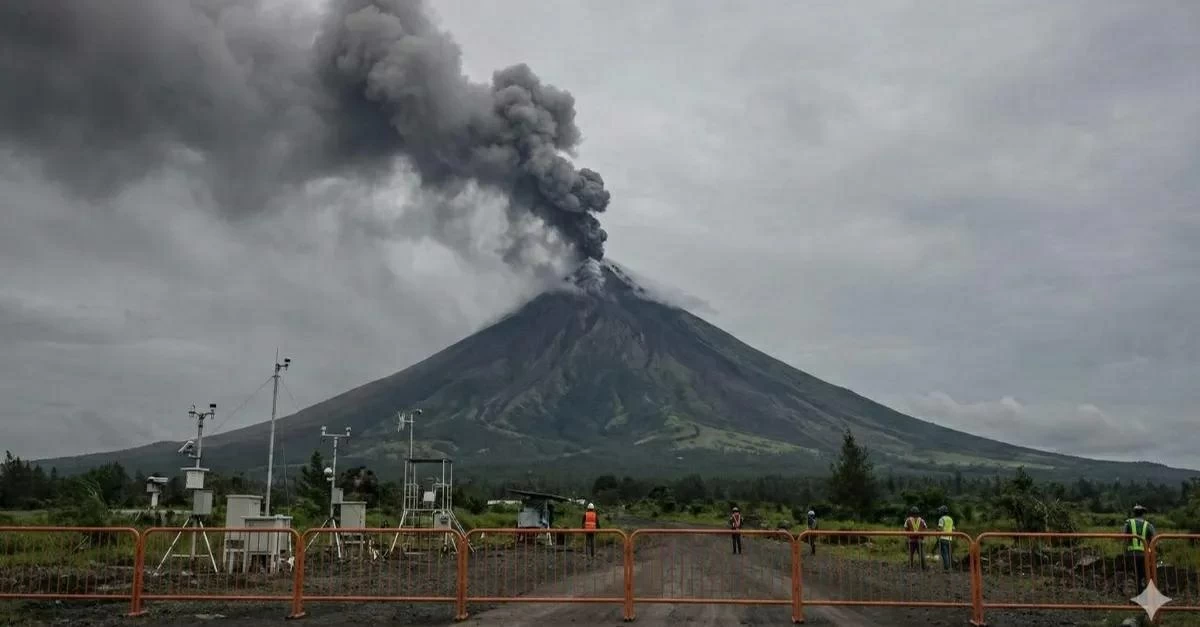
ثار بركان مايون، أحد أكثر البراكين نشاطاً في الفلبين، مجدداً، صباح اليوم (الجمعة)، مطلقاً عموداً كثيفاً من الرماد البركاني ارتفع نحو 3 آلاف متر فوق فوهته، ما دفع السلطات إلى رفع مستوى الإنذار من الثاني إلى الثالث، والتحذير من مخاطر ثوران أكثر خطورة خلال الأيام والأسابيع القادمة.
وأعلن المعهد الفلبيني لعلم البراكين والزلازل أن الثوران وقع عند الساعة 11:53 صباحاً بالتوقيت المحلي، ووصفه بأنه ثوران انفجاري متوسط الشدة، مشيراً إلى أن عمود الرماد انتشر باتجاه الغرب والجنوب الغربي بفعل الرياح.
وأوضح المعهد أن رفع مستوى الإنذار إلى الثالث يعكس زيادة احتمالات حدوث ثورانات خطرة، وتدفقات الحمم البركانية والتيارات الحارقة الناتجة عن انهيار المواد البركانية، التي قد تؤثر في المناطق الواقعة على المنحدرات العليا والوسطى للبركان.
إخلاء المناطق القريبة من البركان
ودعت السلطات إلى إخلاء المنطقة المحظورة الدائمة الممتدة لمسافة 6 كيلومترات حول فوهة البركان، بسبب مخاطر تدفقات الحمم البركانية والانهيارات الصخرية والتدفقات البركانية الحارة.
كما حذرت من احتمالات تساقط الرماد في بلدات داراغا وغينوباتان وكاماليغ والمناطق المجاورة في إقليم ألباي، ودعت إلى توخي الحذر من التدفقات الطينية البركانية التي قد تجرفها الأمطار عبر المجاري المائية المحيطة بالبركان.
وأوصى المعهد سلطات الطيران المدني بتنبيه الطيارين إلى تجنب التحليق بالقرب من قمة البركان، نظراً إلى المخاطر التي يشكلها الرماد البركاني على الطائرات.
ولم ترد تقارير فورية عن سقوط ضحايا أو وقوع أضرار جراء الثوران، فيما تواصل السلطات مراقبة نشاط البركان وإصدار التحديثات بشأن تطوراته.
The Mayon Volcano, one of the most active volcanoes in the Philippines, erupted again this morning (Friday), releasing a thick column of volcanic ash that rose about 3,000 meters above its crater, prompting authorities to raise the alert level from two to three and warning of the risks of a more dangerous eruption in the coming days and weeks.
The Philippine Institute of Volcanology and Seismology announced that the eruption occurred at 11:53 AM local time, describing it as a moderately explosive eruption, noting that the ash column spread to the west and southwest due to the winds.
The institute explained that raising the alert level to three reflects an increased likelihood of dangerous eruptions, lava flows, and pyroclastic currents resulting from the collapse of volcanic materials, which could affect areas located on the upper and middle slopes of the volcano.
Evacuation of Areas Near the Volcano
Authorities urged the evacuation of the permanent exclusion zone extending 6 kilometers around the volcano's crater due to the risks of lava flows, rockfalls, and hot volcanic flows.
They also warned of the possibility of ashfall in the towns of Daraga, Guinobatan, and Camalig, as well as neighboring areas in Albay province, and advised caution regarding volcanic mudflows that could be carried by rain through the waterways surrounding the volcano.
The institute recommended that civil aviation authorities alert pilots to avoid flying near the summit of the volcano, given the risks posed by volcanic ash to aircraft.
No immediate reports of casualties or damage from the eruption have been received, while authorities continue to monitor the volcano's activity and issue updates on its developments.