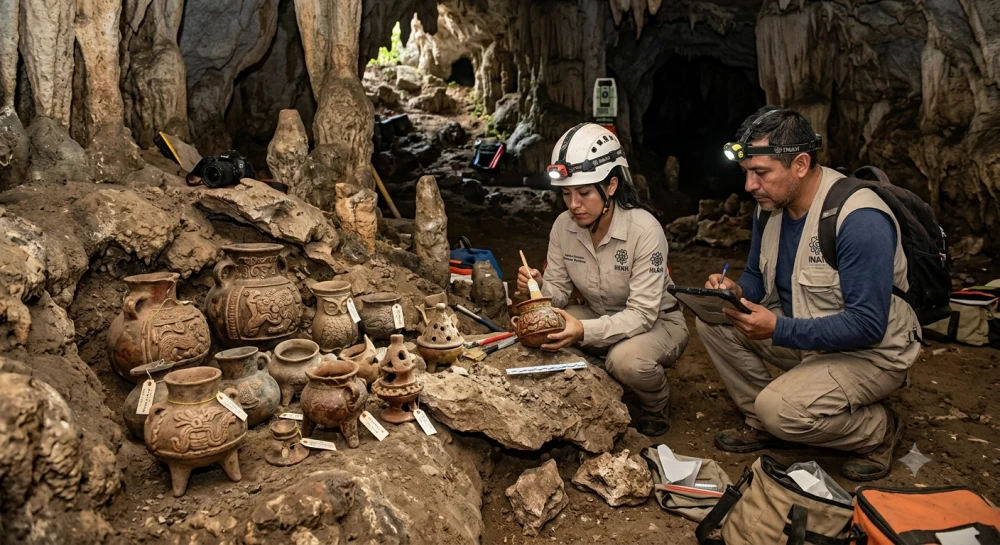
عثر باحثون على 179 قطعة أثرية تعود إلى ما قبل الحقبة الإسبانية، موزعة على 13 موضعاً داخل كهف «موندو سوكي» ببلدية سينتالابا في ولاية تشياباس، جنوب المكسيك.
وأوضح المعهد الوطني المكسيكي للأنثروبولوجيا والتاريخ، أن الاكتشاف جاء إثر بلاغ تقدم به مرشد سياحي محلي، قبل أن يباشر خبراء المؤسسة أبحاثاً ميدانية بين شهري فبراير ويونيو الماضيين.
وسجل الباحثون داخل الكهف مباخر وأوعية وجرارا خزفية تعود، وفق تقديرات أولية إلى الفترة الكلاسيكية (600-900 ميلادية)، وتحمل زخارف تمثل النمر الأمريكي والبوم والثعبان، وهي رموز مرتبطة بمعتقدات لشعب السوكي.
وأشار المعهد إلى أن الدراسات ستتواصل باستخدام تقنيات التصوير ثلاثي الأبعاد والتحاليل الكيميائية للكشف عن بقايا محتملة من اللبان أو الرماد أو العظام داخل القطع الأثرية.
Researchers have discovered 179 artifacts dating back to before the Spanish era, spread across 13 locations inside the "Mundo Suki" cave in the municipality of Cintalapa in the state of Chiapas, southern Mexico.
The Mexican National Institute of Anthropology and History explained that the discovery came after a report was submitted by a local tour guide, before experts from the institute began field research between February and June of last year.
Researchers recorded incense burners, vessels, and ceramic jars inside the cave, which, according to preliminary estimates, date back to the Classic period (600-900 AD), and feature decorations representing the jaguar, owl, and snake, which are symbols associated with the beliefs of the Suki people.
The institute noted that studies will continue using 3D imaging techniques and chemical analyses to uncover potential remains of resin, ash, or bones within the artifacts.