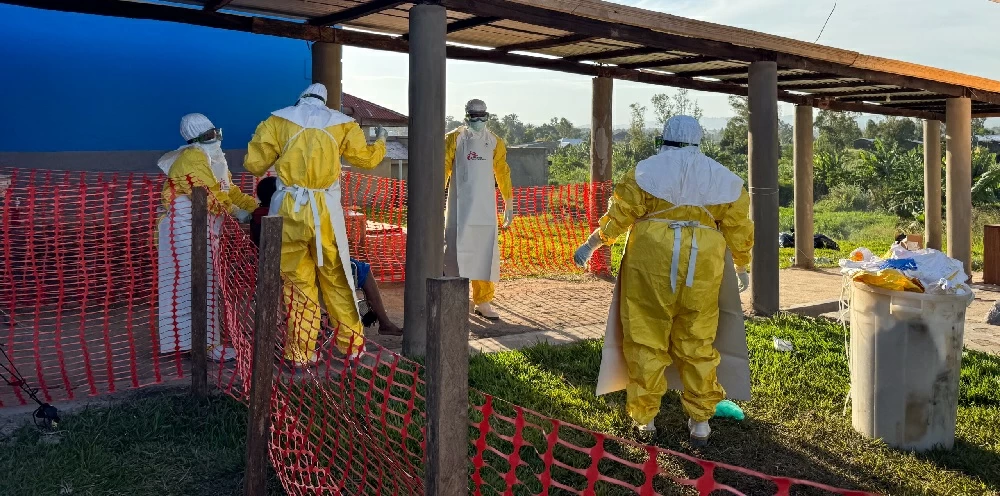
أكدت منظمة أطباء بلا حدود أن احتواء تفشي فايروس إيبولا في جمهورية الكونغو الديمقراطية يزداد صعوبة، مشيرة إلى أن التفشّي اكتُشف بعد تسجيل وفيات غير معتادة مطلع مايو في منطقة تقع شمال غرب مدينة بونيا، عاصمة مقاطعة إيتوري.
وأوضحت المنظمة أن الفايروس انتشر سريعاً في مناطق تعاني من انعدام الأمن، مع الإبلاغ عن حالات في أنحاء إيتوري، إضافة إلى مقاطعتي شمال كيفو وجنوب كيفو، فضلاً عن تسجيل 20 إصابة في أوغندا المجاورة.
وحذّرت (أطباء بلا حدود) من أن «التفشي لا يزال يمثّل حالة طوارئ صحية عامة حقيقية، رغم الجهود المبذولة لتوسيع نطاق الاستجابة»، لافتةً إلى أن سلالة (بونديبوغيو) تطرح تحديات خاصة؛ بسبب نقص أدوات التشخيص وعدم توفر علاجات أو لقاحات معتمدة لها.
وفي السياق ذاته، أعلنت منظمة الصحة العالمية أن «حجم التفشي قد يكون أكبر بما يصل إلى أربعة أضعاف الأرقام الرسمية»، مشيرة إلى أن نماذجها تُظهر أن عدد الإصابات الفعلي قد يتجاوز بكثير الحالات المُبلّغ عنها.
وتشير أحدث البيانات الرسمية إلى إصابة أكثر من 1960 شخصاً ووفاة أكثر من 700 حالة منذ اكتشاف التفشي قبل شهرين، فيما تؤكد المنظمة أن العديد من الإصابات الجديدة تأتي من سلاسل انتقال غير معروفة، ما يزيد من صعوبة السيطرة على انتشار الفايروس.
Doctors Without Borders confirmed that containing the Ebola virus outbreak in the Democratic Republic of the Congo is becoming increasingly difficult, noting that the outbreak was discovered after unusual deaths were reported in early May in an area located northwest of Bunia, the capital of Ituri Province.
The organization explained that the virus has spread rapidly in areas suffering from insecurity, with cases reported throughout Ituri, as well as in the provinces of North Kivu and South Kivu, in addition to 20 cases recorded in neighboring Uganda.
Doctors Without Borders warned that "the outbreak still represents a real public health emergency, despite efforts to scale up the response," pointing out that the Bundibugyo strain poses specific challenges due to a lack of diagnostic tools and the unavailability of approved treatments or vaccines for it.
In the same context, the World Health Organization announced that "the scale of the outbreak may be up to four times larger than the official figures," indicating that its models show that the actual number of infections may far exceed the reported cases.
The latest official data indicates that more than 1960 people have been infected and over 700 deaths have occurred since the outbreak was discovered two months ago, while the organization confirms that many of the new infections come from unknown transmission chains, making it more difficult to control the spread of the virus.