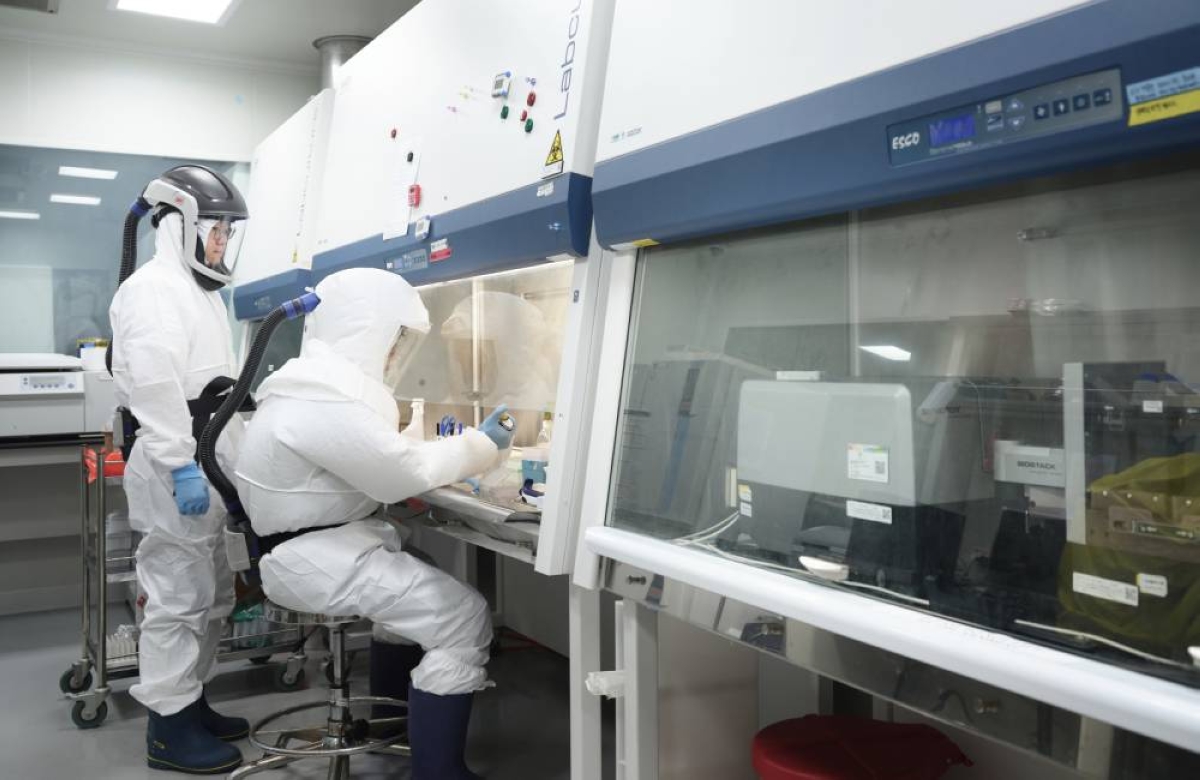
أعلن باحثون من معهد كوريا لبحوث العلوم البيولوجية والتقنية الحيوية عن تطوير علاج مبتكر لسرطان الرئة يعتمد على أجسام نانوية فائقة الصغر، قادرة على استهداف الخلايا السرطانية بدقة عالية مع تقليل الآثار الجانبية المصاحبة للعلاجات التقليدية.
ووفق النتائج المنشورة في دورية «انتقال الإشارات والمعالجة الموجهة»، أظهر العلاج الجديد، المسمى الجسم النانوي A5، نسب نجاح تراوحت بين 70 و90% في التجارب على الحيوانات ونماذج مأخوذة من مرضى سرطان الرئة.
ويمتاز هذا العلاج بصغر حجم الأجسام النانوية مقارنة بالأجسام المضادة التقليدية، ما يسمح لها بالتغلغل بسهولة في الأنسجة والوصول مباشرة إلى الخلايا السرطانية.
ولزيادة فعاليته، طور الفريق نسخة هجينة دمجت الأجسام النانوية مع كبسولات دهنية محملة بالدواء الكيميائي دوكسوروبيسين، ما مكن من توجيه الدواء للخلايا المصابة فقط، مع حماية الخلايا السليمة والأعضاء الحيوية مثل الكبد والقلب والكلى.
وأظهرت التجارب أن هذه التقنية ضاعفت وصول الدواء إلى الخلايا السرطانية ثلاث مرات مقارنة بالعلاج الكيميائي التقليدي، وخفضت قدرة الأورام على الانتشار والغزو بنسبة تزيد على 50%.
ويأمل الباحثون أن يشكل هذا النهج نقلة نوعية في علاج سرطان الرئة، الأكثر فتكا عالميا، كما قد يفتح الباب لتطبيقه على أنواع أخرى من الأورام ضمن إطار الطب الدقيق.
يذكر أن سرطان الرئة ينشأ عن نمو غير متحكم فيه للخلايا غير الطبيعية في الرئتين، مع كون التدخين السبب الرئيسي للمرض إلى جانب عوامل أخرى.
Researchers from the Korea Institute of Biological Sciences and Biotechnology have announced the development of an innovative treatment for lung cancer that relies on ultra-small nanoparticles capable of precisely targeting cancer cells while reducing the side effects associated with traditional therapies.
According to the results published in the journal "Signal Transduction and Targeted Therapy," the new treatment, called nanoparticle A5, demonstrated success rates ranging from 70% to 90% in trials on animals and models derived from lung cancer patients.
This treatment is characterized by the small size of the nanoparticles compared to traditional antibodies, allowing them to easily penetrate tissues and directly reach cancer cells.
To enhance its effectiveness, the team developed a hybrid version that combined the nanoparticles with drug-loaded lipid capsules containing the chemotherapy drug doxorubicin, enabling the targeted delivery of the drug only to the affected cells while protecting healthy cells and vital organs such as the liver, heart, and kidneys.
Experiments showed that this technique tripled the delivery of the drug to cancer cells compared to traditional chemotherapy and reduced the ability of tumors to spread and invade by more than 50%.
The researchers hope that this approach will represent a qualitative leap in the treatment of lung cancer, the deadliest cancer globally, and may pave the way for its application to other types of tumors within the framework of precision medicine.
It is worth mentioning that lung cancer arises from the uncontrolled growth of abnormal cells in the lungs, with smoking being the primary cause of the disease alongside other factors.