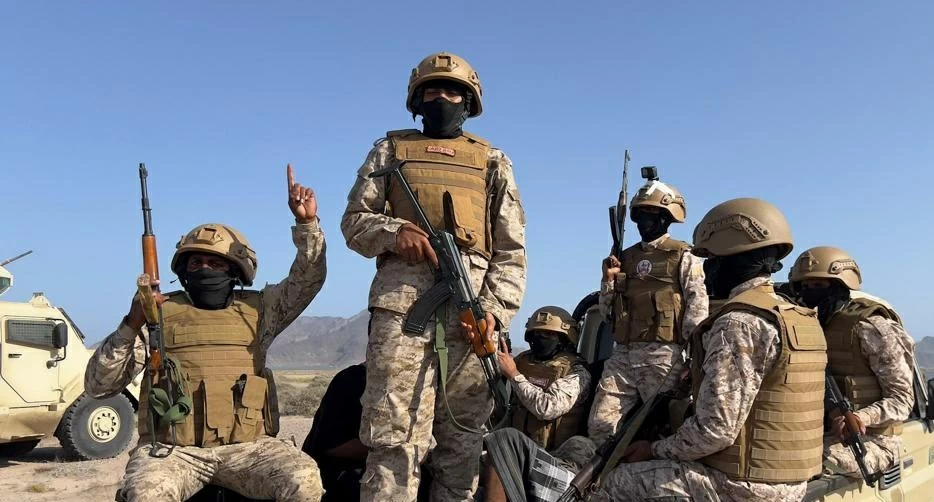
لم تعد «فجر اليمن» مجرد عملية عسكرية جديدة في مسار الحرب اليمنية، بل تمثل وفق ما يؤكده مسؤولون يمنيون لـ«عكاظ»، نقطة تحوّل في معركة استعادة الدولة وإنهاء المشروع الحوثي الذي صادر قرار اليمنيين وأدخل بلادهم في دوامة مفتوحة من الحروب والصراعات.
وبعد أسابيع من العمليات التمهيدية، جاءت العملية بدعم وإسناد من تحالف دعم الشرعية، في لحظة بات فيها استمرار الوضع القائم يعني إطالة معاناة اليمنيين، فيما أثبتت مليشيا الحوثي أن خيارات السلام التي أتيحت لها لم تكن بالنسبة إليها سوى فرصة للمراوغة وكسب الوقت وإعادة ترتيب صفوفها.
وأفاد مسؤولون يمنيون لـ«عكاظ» بأن قرار إطلاق «فجر اليمن» جاء بعد استنفاد كل الخيارات خصوصاً السلمية والتي تعاملت معها مليشيا الحوثي بصورة سلبية، واستغلتها لتعزيز نفوذها وإطالة أمد الحرب. ولذلك، فإن العملية، بحسب لا تستهدف فتح جبهة جديدة بقدر ما تستهدف إغلاق ملف الحرب من جذوره، عبر إنهاء سيطرة المليشيا واستعادة مؤسسات الدولة وتمكين اليمنيين من تقرير مستقبلهم بأنفسهم.
من التهيئة إلى الهجوم
وتكمن أهمية العملية في أنها تنقل المواجهة من مرحلة الاستعداد والتهيئة إلى مرحلة العمل العسكري الضارب، لكن الأهم أن المسؤولين اليمنيين يؤكدون لـ«عكاظ» أن المعركة لا تُقاس فقط بما تحققه القوات على الأرض، ولا تتوقف عند حدود جغرافية بعينها، بل إن الهدف النهائي يتمثل في الوصول إلى صنعاء وصعدة وإنهاء سيطرة مليشيا الحوثي على مؤسسات الدولة، وتخليص اليمن من رأس المشروع الذي أشعل الفتنة وأدار الحرب على مدى سنوات.
وبهذا المعنى، فإن «فجر اليمن» ليست معركة ضد محافظة أو منطقة أو مكوّن اجتماعي أو مذهبي، كما تحاول المليشيا تصويرها، وإنما معركة ضد مشروع مسلح اختطف الدولة، وضد أشخاص متورطين في جرائم وانتهاكات بحق اليمنيين. ويؤكد مسؤولون لـ«عكاظ» أن المعركة تستهدف الإرهابيين المتورطين في قتل اليمنيين وتدمير بلادهم، وفي مقدمتهم عبدالملك الحوثي وقيادات المليشيا، وليس المجتمع اليمني الذي عانى أصلاً من ممارساتها.
وتكشف هذه النقطة جوهر المعركة: اليمنيون لا يخوضون حرباً من أجل الحرب، وإنما من أجل الخلاص منها. فالشعب الذي أنهكته سنوات القتال والنزوح والفقر لا يبحث عن جولة جديدة، بل عن نهاية حقيقية للصراع، وعن دولة تحتكر السلاح والقرار، وعن مستقبل لا تتحكم فيه مليشيا مرتبطة بمشروع إقليمي.
حماية أطفال اليمن
ولعل أكثر ما يفضح طبيعة المشروع الحوثي هو تعمّد الزج بالأطفال في محارق القتال. ويقول مسؤولون يمنيون لـ«عكاظ» إن غالبية من تدفع بهم المليشيا إلى الجبهات من صغار السن، وبعضهم لم يتجاوز السابعة عشرة، في واحدة من أبشع صور استغلال المجتمع وتحويل أبنائه إلى وقود لحرب لا تخدم اليمنيين.
ومن هنا تأتي الرسالة التي يوجهها المسؤولون إلى الأسر اليمنية بوضوح: من يلتزم منزله فهو آمن، وعلى الآباء والأمهات حماية أبنائهم من محاولات المليشيا تجنيدهم والزج بهم في الجبهات. فالحوثي الذي يعجز عن تقديم مشروع حياة لليمنيين لا يجد أمامه سوى مشروع الموت، ويعوض عجزه عن بناء الدولة بتوسيع المقابر.
لكن «فجر اليمن» لا تحمل بعداً عسكرياً فقط، فبحسب ما كشفه مسؤولون يمنيون ، فإن العملية تأتي ضمن رؤية أوسع لاستعادة اليمن وبناء مستقبله، وهو ما يتزامن مع استمرار الدعم السعودي العسكري والسياسي والاقتصادي والإنساني.
ويأتي تخصيص المملكة 224 مليون ريال لدعم ميزانية الحكومة اليمنية ليؤكد أن استعادة الدولة ليست هدفاً عسكرياً منفصلاً عن عملية البناء، وإنما جزء من مسار متكامل لإعادة الحياة إلى مؤسسات الدولة والاقتصاد والخدمات.
دعم سعودي لانتشال اليمن
وفي السياق ذاته، تستمر المشاريع السعودية التنموية والإنسانية والصحية في اليمن، ومنها مدينة الملك سلمان الطبية التي يتوقع افتتاحها قريباً، إلى جانب دعم ورفع الكفاءة الطبية في مستشفى الأمير محمد بن سلمان في عدن، وهي مؤشرات تعكس، في جوهرها، الفرق بين مشروع يريد بناء اليمن ومشروع يريد استخدام اليمن ساحة للصراع ويدمّر ما تم بناؤه طوال السنوات الماضية وأكبر دليل على ذلك ما حدث في مديريات الخوخة وحيس والمخا من تدمير للمستشفيات التي شيدتها المملكة عبر مركز الملك سلمان للإغاثة الإنسانية والبرنامج السعودية لتنمية واعمار اليمن ونهب اجهزتها، وإحراق المباني، وتدمير محطة الكهرباء المولدة بالطاقة الشمسية في المخا ونهب اجهزتها ونقلها إلى صنعاء فوراً بعد السيطرة على المديريات الثلاث في الساحل الغربي لليمن.
ويكتمل المشهد الإنساني بتوجيه خادم الحرمين الشريفين الملك سلمان بن عبدالعزيز بتصحيح أوضاع اليمنيين الموجودين في المملكة بطرق غير نظامية، وهي خطوة تحمل دلالة سياسية وإنسانية عميقة، وتؤكد أن الموقف السعودي يتجه إلى حماية الإنسان اليمني ودعم استقراره، لا إلى التعامل مع اليمن باعتباره مجرد ملف أمني أو عسكري.
وهنا تتضح الصورة الأكبر لـ«فجر اليمن». فالمعركة، وفق مسؤولين يمنيين ، لا تستهدف تحرير الأرض فقط، وإنما تهيئة الظروف لمرحلة اقتصادية وتنموية جديدة، إذ إن هناك رؤية سياسية واقتصادية وتنموية لمرحلة ما بعد التحرير، إلى جانب تحضيرات لمؤتمرات تجمع المانحين ورجال الأعمال والاستثمار فور استعادة صنعاء، بما يفتح الطريق أمام إعادة الإعمار وإصلاح البنية التحتية وإطلاق مشاريع تنموية واسعة وبدعم سعودي مطلق، وربط اليمن بإقليميه ليكون عامل بناء ونماء واستقرار للمنطقة.
ماذا بعد عودة الدولة إلى صنعاء؟
المعركة الحقيقية إذن ليست فقط الوصول إلى صنعاء، رغم أن استعادتها تمثل عنواناً مركزياً في مسار التحرير، وإنما ضمان ألا يعود اليمن بعد ذلك إلى دائرة الصراع ذاتها، وهذا يتطلب دولة قوية، ومؤسسات موحدة، واقتصاداً قادراً على النهوض، وشراكة عربية وإقليمية ودولية واسعة، وهو ما تم تضمينه في رؤية عملية «فجر اليمن».
وحسب رؤية المسؤولين، فإن اليمنيين لا يريدون حرباً بلا نهاية، ولا يبحثون عن انتصار على حساب مستقبلهم، يريدون نهاية الحرب وبداية الحياة، ويريدون وطناً لا تحكمه المليشيا، ولا يُختطف قراره، ولا يُدفع أطفاله إلى الجبهات.
ويؤكد هؤلاء أن «فجر اليمن» بداية النهاية لمشروع الحوثي، وبداية مرحلة يستعيد فيها اليمن قراره ودولته ومكانته، ولن يكون بعدها كما كان قبلها، فالعملية تسير وفق مسار متكامل لتحرير الأرض، واستعادة الدولة، وإعادة الإعمار، وتمكين اليمنيين من صناعة مستقبلهم.
اليوم التالي للتحرير
ومن هنا، فإن الرهان لا ينبغي أن يكون على اللحظة العسكرية وحدها، بل على اليوم التالي للتحرير، فاليمن يمتلك موقعاً استراتيجياً بالغ الأهمية، وثروات وموارد وفرصاً استثمارية كبيرة، لكنه حُرم من استثمارها بسبب الحرب التي يفتعلها الحوثي منذ عام 2003 وإلى اليوم ومنها سيطرة المليشيا على مؤسسات الدولة، وإذا انتهى هذا الاختطاف، فإن اليمن يستطيع أن يعود إلى موقعه الطبيعي في محيطه العربي والإقليمي والدولي.
ويؤكد مسؤولون لـ«عكاظ» أن هناك تعهدات من دول عدة بالمساهمة في إعادة بناء اليمن ودعم بنيته التحتية وربطه بمحيطه الإقليمي، وهو ما يجعل «فجر اليمن» أبعد من كونها عملية عسكرية؛ إنها، في جوهرها، محاولة لفتح الطريق أمام مشروع وطني جديد يعيد تعريف علاقة اليمن بالدولة والتنمية والاقتصاد والمجتمع.
لقد دفع اليمنيون ثمناً باهظاً خلال سنوات الحرب، - قتلوا وشُردوا، ودُمرت منازلهم ومدارسهم ومستشفياتهم، وصودرت أحلام أجيال كاملة -، بينما واصلت مليشيا الحوثي استخدام معاناة اليمنيين وقوداً لبقائها، ولذلك فإن حق الشعب اليمني في الخلاص من الحرب ليس شعاراً سياسياً، وإنما حق أصيل في الحياة والأمن والكرامة.
ومن هنا، فإن «فجر اليمن» يجب أن تُقرأ باعتبارها معركة من أجل إنهاء عهد اختطاف الدولة، لا مجرد تغيير خطوط تماس، فاليمن الذي يريده أبناؤه ليس يمن الصواريخ والطائرات المسيّرة والخنادق والشعارات الطائفية، وإنما يمن الدولة والجمهورية والتنمية والاستقرار؛ يمن يستعيد علاقاته الطبيعية مع محيطه العربي، ويستثمر موقعه وثرواته لمصلحة شعبه، لا لمصلحة مشاريع خارجية.
"Fajr Al-Yemen" is no longer just a new military operation in the course of the Yemeni war, but it represents, according to Yemeni officials speaking to "Okaz," a turning point in the battle to restore the state and end the Houthi project that has usurped the decisions of the Yemenis and plunged their country into an open spiral of wars and conflicts.
After weeks of preparatory operations, the operation came with support and backing from the Coalition to Support Legitimacy, at a moment when the continuation of the current situation means prolonging the suffering of the Yemenis, while the Houthi militia has proven that the peace options available to them were merely opportunities for evasion, buying time, and reorganizing their ranks.
Yemeni officials informed "Okaz" that the decision to launch "Fajr Al-Yemen" came after exhausting all options, especially peaceful ones, which the Houthi militia dealt with negatively, exploiting them to strengthen their influence and prolong the war. Therefore, the operation, according to them, does not aim to open a new front as much as it aims to close the file of war from its roots, by ending the militia's control, restoring state institutions, and enabling Yemenis to determine their future themselves.
From Preparation to Attack
The importance of the operation lies in its transition of confrontation from a phase of readiness and preparation to a phase of decisive military action, but more importantly, Yemeni officials emphasize to "Okaz" that the battle is not measured solely by what the forces achieve on the ground, nor does it stop at specific geographical boundaries. The ultimate goal is to reach Sana'a and Saada and end the Houthi militia's control over state institutions, freeing Yemen from the head of the project that ignited the sedition and managed the war for years.
In this sense, "Fajr Al-Yemen" is not a battle against a governorate, region, or social or sectarian component, as the militia tries to portray it, but rather a battle against an armed project that has hijacked the state, and against individuals involved in crimes and violations against the Yemenis. Officials confirm to "Okaz" that the battle targets the terrorists involved in killing Yemenis and destroying their country, foremost among them Abdul-Malik Al-Houthi and the militia leaders, not the Yemeni society that has already suffered from their practices.
This point reveals the essence of the battle: Yemenis are not waging a war for the sake of war, but rather to be freed from it. The people, exhausted by years of fighting, displacement, and poverty, are not looking for a new round, but for a real end to the conflict, for a state that monopolizes weapons and decision-making, and for a future not controlled by a militia linked to a regional project.
Protecting the Children of Yemen
Perhaps the most revealing aspect of the Houthi project is its deliberate use of children in the fires of combat. Yemeni officials tell "Okaz" that the majority of those the militia sends to the front lines are minors, some of whom have not yet reached seventeen, in one of the most heinous forms of community exploitation, turning its children into fuel for a war that does not serve the Yemenis.
Thus, the message directed by officials to Yemeni families is clear: those who stay at home are safe, and it is the duty of fathers and mothers to protect their children from the militia's attempts to recruit them and send them to the front lines. The Houthis, who are unable to provide a life project for Yemenis, find no alternative but a project of death, compensating for their failure to build the state by expanding graves.
However, "Fajr Al-Yemen" does not only carry a military dimension; according to Yemeni officials, the operation comes as part of a broader vision to restore Yemen and build its future, coinciding with the continued Saudi military, political, economic, and humanitarian support.
The allocation of 224 million riyals by the Kingdom to support the Yemeni government's budget confirms that restoring the state is not a military goal separate from the process of building, but rather part of an integrated path to revive state institutions, the economy, and services.
Saudi Support to Rescue Yemen
In this context, Saudi developmental, humanitarian, and health projects in Yemen continue, including the King Salman Medical City, which is expected to open soon, alongside support and enhancement of medical efficiency at Prince Mohammed bin Salman Hospital in Aden. These are indicators that reflect, in essence, the difference between a project that seeks to build Yemen and a project that wants to use Yemen as a battleground and destroy what has been built over the past years. The most significant evidence of this is what happened in the districts of Al-Khawkhah, Hays, and Al-Mokha, where hospitals built by the Kingdom through the King Salman Humanitarian Relief Center and the Saudi Program for Development and Reconstruction of Yemen were destroyed, their equipment looted, buildings burned, and the solar-powered electricity station in Al-Mokha was destroyed and its equipment looted and transported to Sana'a immediately after the control of the three districts on Yemen's western coast.
The humanitarian scene is completed by the directive of the Custodian of the Two Holy Mosques, King Salman bin Abdulaziz, to rectify the situation of Yemenis in the Kingdom who are there illegally, a step that carries deep political and humanitarian significance, affirming that the Saudi stance is directed towards protecting the Yemeni people and supporting their stability, rather than treating Yemen as merely a security or military file.
Here, the bigger picture of "Fajr Al-Yemen" becomes clear. The battle, according to Yemeni officials, does not aim solely to liberate the land but also to prepare the conditions for a new economic and developmental phase, as there is a political, economic, and developmental vision for the post-liberation phase, alongside preparations for conferences that will gather donors, businessmen, and investors as soon as Sana'a is restored, paving the way for reconstruction, infrastructure repair, and launching extensive developmental projects with absolute Saudi support, linking Yemen with its regional surroundings to be a factor of building, growth, and stability for the region.
What Comes After the State Returns to Sana'a?
The real battle, then, is not just about reaching Sana'a, although its recovery represents a central title in the path of liberation, but rather ensuring that Yemen does not return to the same cycle of conflict afterward. This requires a strong state, unified institutions, a capable economy, and broad Arab, regional, and international partnerships, which have been included in the vision of the "Fajr Al-Yemen" operation.
According to the officials' vision, Yemenis do not want a never-ending war, nor are they seeking victory at the expense of their future; they want an end to the war and a beginning of life, and they want a homeland that is not governed by a militia, whose decisions are not hijacked, and whose children are not pushed to the front lines.
They affirm that "Fajr Al-Yemen" is the beginning of the end for the Houthi project, and the start of a phase in which Yemen regains its decision, state, and status, and it will not be as it was before; the operation is proceeding along an integrated path to liberate the land, restore the state, and rebuild, enabling Yemenis to shape their future.
The Day After Liberation
Thus, the bet should not be solely on the military moment, but on the day after liberation. Yemen possesses a strategically significant location, vast resources, and great investment opportunities, but it has been deprived of utilizing them due to the war instigated by the Houthis since 2003 to the present, including the militia's control over state institutions. If this hijacking ends, Yemen can return to its natural position in its Arab, regional, and international surroundings.
Officials confirm to "Okaz" that there are commitments from several countries to contribute to rebuilding Yemen and supporting its infrastructure and linking it with its regional surroundings, which makes "Fajr Al-Yemen" more than just a military operation; it is, in essence, an attempt to open the way for a new national project that redefines Yemen's relationship with the state, development, economy, and society.
The Yemenis have paid a heavy price during the years of war—killed, displaced, their homes, schools, and hospitals destroyed, and the dreams of entire generations confiscated—while the Houthi militia continued to use the suffering of the Yemenis as fuel for its survival. Therefore, the right of the Yemeni people to be freed from war is not a political slogan, but rather an inherent right to life, security, and dignity.
Thus, "Fajr Al-Yemen" should be read as a battle to end the era of state hijacking, not merely to change the lines of contact. The Yemen that its children want is not a Yemen of missiles, drones, trenches, and sectarian slogans, but rather a Yemen of state, republic, development, and stability; a Yemen that restores its natural relationships with its Arab surroundings and invests its location and resources for the benefit of its people, not for the benefit of external projects.