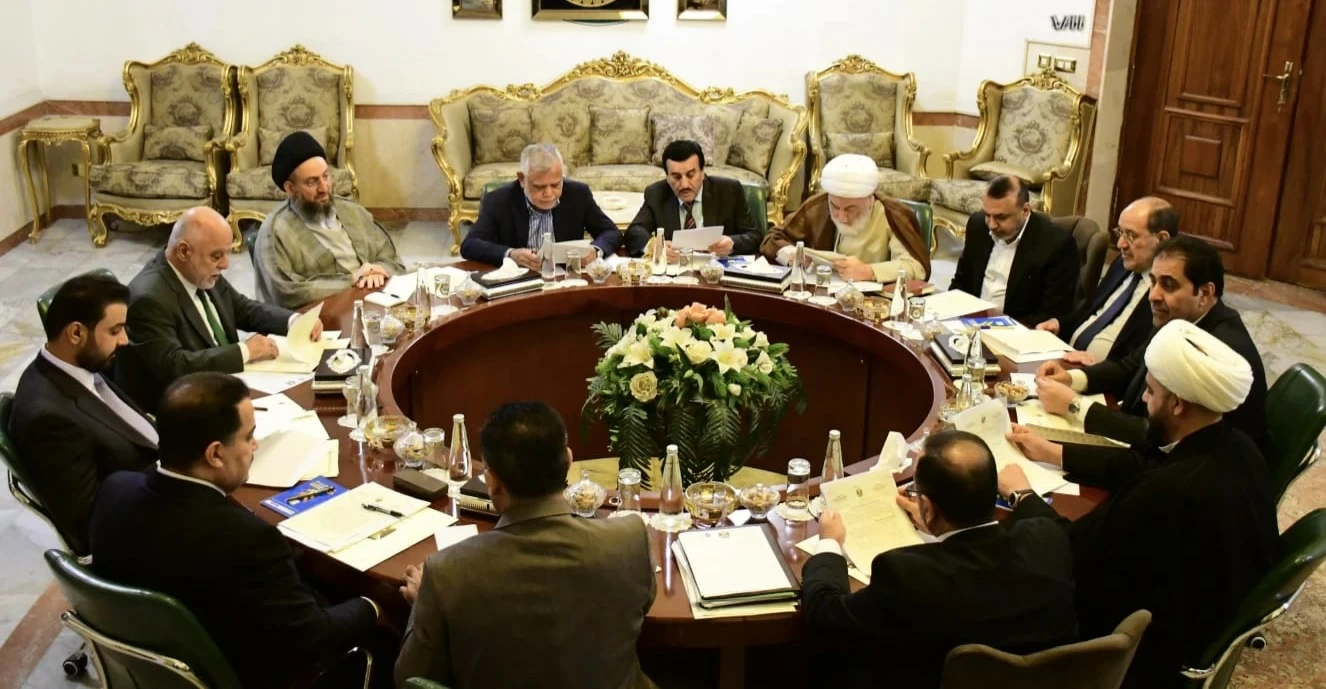
تأكيدا لما نشرته «عكاظ» أمس، فوض الإطار التنسيقي الليلة الماضية رئيس الوزراء العراقي القائد العام للقوات المسلحة علي الزيدي باتخاذ القرارات والإجراءات الكفيلة بحفظ المصالح العليا للبلاد، فيما أعلن تأييده مشروع حصر السلاح بيد الدولة وفك ارتباط هيئة الحشد الشعبي عن الأطر السياسية والحزبية والاجتماعية.
وذكر الإطار في بيان رسمي له عقب اجتماعه الذي عقد في مكتب رئيس الوزراء السابق حيدر العبادي بحضور رئيس مجلس الوزراء علي الزيدي أن الاجتماع بحث جملة من الملفات الوطنية والأمنية ذات الأولوية.
وأكد أن اختيار النظام السياسي وممثليه حق حصري للشعب العراقي الذي قال إنه قدم تضحيات جساماً دفاعاً عن دولته ونظامه الديمقراطي، مشدداً على أن قرار الحرب والسلم قرار وطني سيادي يعود إلى الشعب العراقي عبر مؤسساته الدستورية المتمثلة بمجلس النواب والحكومة المنتخبة حصراً.
واعتبر البيان أن أي فعل خارج هذا الإطار يعد خروجاً على القانون ومبادئ الدولة الدستورية.
وفي ملف الحشد الشعبي، أكد الإطار التنسيقي أن الهيئة «مؤسسة أمنية رسمية ملتزمة بالدستور والقوانين النافذة وأوامر القائد العام للقوات المسلحة، وتمارس مهماتها وفق الأطر القانونية المعتمدة».
وأعلن قادة الإطار، بحسب البيان، تأييدهم «من منطلق المسؤولية الوطنية مشروع حصر السلاح بيد الدولة، وفك ارتباط هيئة الحشد الشعبي عن جميع الأطر السياسية والحزبية والاجتماعية، استناداً إلى الدستور العراقي وتوجيهات المرجعية الدينية العليا وقانون هيئة الحشد الشعبي رقم 40 لسنة 2016، فضلاً عن المنهاج الوزاري الذي صوت عليه مجلس النواب في جلسة منح الثقة».
وربط البيان هذه الخطوة أيضاً بالحرص على استمرار التعاون بين الحكومة العراقية والمجتمع الدولي، واستكمال تنفيذ مسار إنهاء مهمة التحالف الدولي في العراق.
وأضاف الإطار أن قواه فوضت رئيس مجلس الوزراء القائد العام للقوات المسلحة «باتخاذ القرارات والإجراءات الكفيلة بحفظ المصالح العليا للبلد» وفق ما ورد في البيان.
ويأتي موقف الإطار بعد أيام من إعلان زعيم التيار الوطني الشيعي، مقتدى الصدر، فك الارتباط مع «سرايا السلام» وإلحاقها بالدولة، وهي خطوة لاقت ترحيباً من الحكومة العراقية المشكلة حديثاً برئاسة الزيدي.
وتعود جذور معظم الفصائل المسلحة الحالية إلى ما بعد عام 2003، حين نشأت تشكيلات مرتبطة بالفراغ الأمني الذي أعقب الاجتياح الأمريكي للعراق، قبل أن تتوسع بشكل كبير بعد اجتياح تنظيم «داعش» مدناً عراقية واسعة عام 2014.
Confirming what was published by "Okaz" yesterday, the Coordination Framework last night authorized Iraqi Prime Minister and Commander-in-Chief of the Armed Forces Ali Al-Zaydi to make decisions and take measures necessary to safeguard the supreme interests of the country, while announcing its support for the project to restrict arms to the state and to detach the Popular Mobilization Authority from political, party, and social frameworks.
The framework stated in an official statement following its meeting held at the office of former Prime Minister Haider Al-Abadi, with the presence of Prime Minister Ali Al-Zaydi, that the meeting discussed a number of national and security files of priority.
It emphasized that the choice of the political system and its representatives is an exclusive right of the Iraqi people, who it said have made significant sacrifices in defense of their state and democratic system, stressing that the decision of war and peace is a national sovereign decision that belongs to the Iraqi people through their constitutional institutions represented by the House of Representatives and the elected government exclusively.
The statement considered that any action outside this framework is deemed a violation of the law and the principles of the constitutional state.
Regarding the Popular Mobilization, the Coordination Framework affirmed that the authority is "an official security institution committed to the constitution, applicable laws, and the orders of the Commander-in-Chief of the Armed Forces, and it carries out its tasks in accordance with the approved legal frameworks."
The leaders of the framework announced, according to the statement, their support "from the standpoint of national responsibility for the project to restrict arms to the state, and to detach the Popular Mobilization Authority from all political, party, and social frameworks, based on the Iraqi constitution, the directives of the supreme religious authority, and Law No. 40 of 2016 on the Popular Mobilization Authority, in addition to the ministerial program that was voted on by the House of Representatives in the confidence-giving session."
The statement also linked this step to the commitment to continue cooperation between the Iraqi government and the international community, and to complete the implementation of the process of ending the mission of the international coalition in Iraq.
The framework added that its forces authorized the Prime Minister and Commander-in-Chief of the Armed Forces "to take decisions and measures necessary to safeguard the supreme interests of the country," as stated in the announcement.
This position comes days after the announcement by the leader of the Shiite National Current, Muqtada Al-Sadr, to detach "Saraya Al-Salam" and integrate it into the state, a step that was welcomed by the newly formed Iraqi government headed by Al-Zaydi.
The roots of most of the current armed factions date back to after 2003, when formations emerged linked to the security vacuum that followed the American invasion of Iraq, before expanding significantly after the invasion of the "ISIS" organization into large Iraqi cities in 2014.