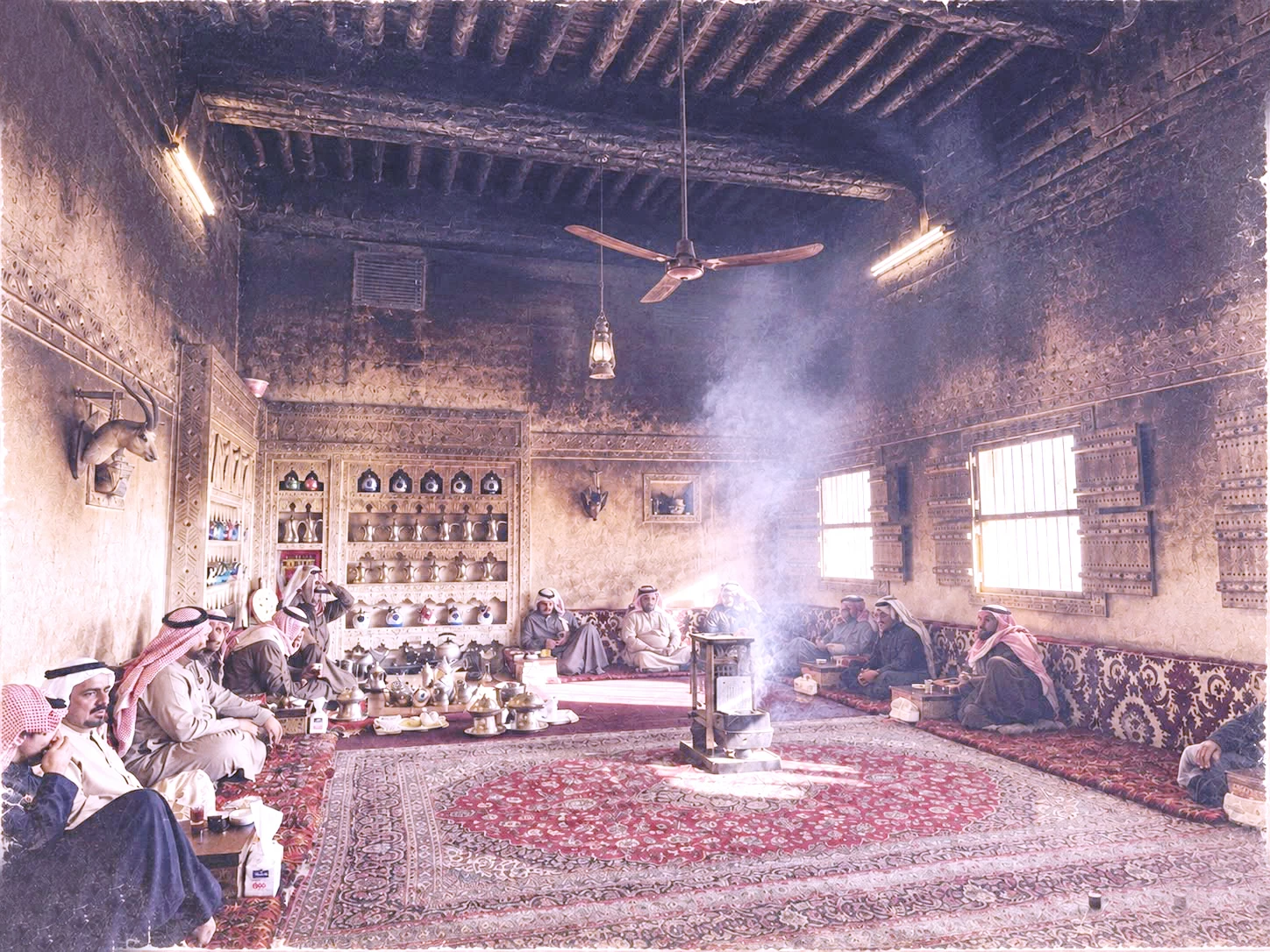
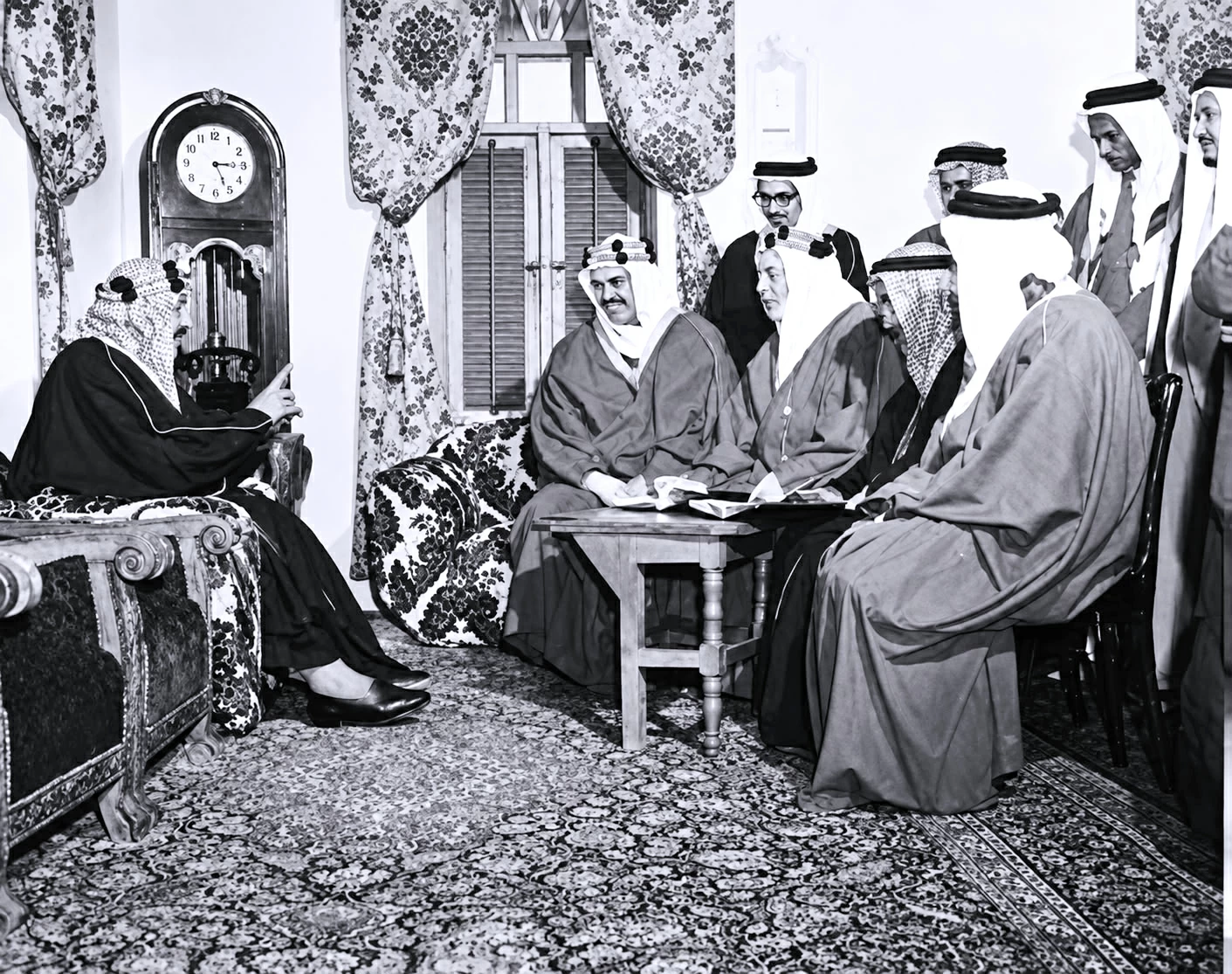
منذ توحيد المملكة حتى يومها الوطني، تغيّرت المدن والطرق والبيوت، وبقي في المجتمع السعودي مكان محفوظ للقادم: مجلس تُشعل فيه النار، وتصطف فيه الدلال، ويُقدم الطعام، ويجد عابر السبيل مكانًا للراحة قبل أن يكمل طريقه. وجذور المجلس المفتوح حاضرة في عهد الموحد الملك عبدالعزيز بن عبدالرحمن آل سعود؛ إذ يذكر خير الدين الزركلي في كتابه «الوجيز في سيرة الملك عبدالعزيز» أن للملك عبدالعزيز مجلسًا عامًا في أوقات معلومة، متاحًا للناس، يحضره العلماء والوجهاء وأفراد الشعب ورجالات الدولة. ومن مجلس الموحد إلى مجالس المواطنين، بقي الباب المفتوح جزءًا أصيلًا من الثقافة الاجتماعية السعودية.
العبيكة.. نار بقيت للضيف 70 عامًا
في جبة بمنطقة حائل، يقدم بيت مبارك العبيكة واحدة من أشهر صور هذه الثقافة. وظلت «شَبّة العبيكة» مشتعلة لاستقبال الضيوف وعابري السبيل نحو 70 عامًا، حتى أصبح البيت محطة يعرفها المسافرون والمارون بجبة والنفود. وتتجاوز قصة العبيكة الرواية الاجتماعية المتداولة؛ إذ دخل منزله ضمن العمل الميداني للباحث والأكاديمي الدكتور سعد عبدالله الصويان، أحد أبرز الباحثين السعوديين المتخصصين في الشعر النبطي والثقافة الشفوية ودراسة المجتمع البدوي في الجزيرة العربية.
جمع الروايات والأشعار
عُرف الصويان بمشروع علمي امتد عقودًا لجمع الروايات والأشعار والقصص من الرواة مباشرة، وتسجيلها ميدانيًا قبل أن يطوي النسيان أجزاء منها، وأثمرت أعماله مؤلفات ودراسات متخصصة في الشعر النبطي والرواية الشفوية والثقافة البدوية في الجزيرة العربية. وفي 24 أغسطس 1983 وصل الصويان إلى جبة، وسجل في منزل مبارك العبيكة لقاءً ميدانيًا مع الشاعرة والراوية فلجة المطلب الفهيدي النماصي الشمري «أم شيحان»، ضمن أعماله في توثيق الموروث الشفهي.
الصويان: بيت يتوقف عنده المسافرون
ومن خلال عمله الميداني، قدم الصويان وصفًا مهمًا لبيت مبارك العبيكة، فشبّهه بمحطة يتوقف عندها المسافرون، ووثق أن القادم إلى جبة يجد في البيت المأوى والمأكل والقهوة وأسباب الراحة. هذه الشهادة لها قيمة خاصة؛ فهي صادرة عن باحث متخصص عاش البيئة ميدانيًا، والتقى رواة المنطقة وسجل أشعارهم وحكاياتهم، ودخل المنزل نفسه أثناء رحلاته البحثية. وبذلك لم تعد قصة «شَبّة العبيكة» مجرد حكاية متناقلة عن نار لا تخمد؛ فلدينا وصف ميداني من باحث في الثقافة الشفوية يؤكد الوظيفة الاجتماعية للبيت: محطة للمسافر، ومأوى للقادم، وطعام وقهوة وراحة لعابر الطريق.
أم شيحان.. الشعر شاهد آخر
ويضيف تسجيل أم شيحان بعدًا آخر للقصة؛ فالشاعرة نفسها نظمت شعرًا في كرم مبارك العبيكة، وربطت صورته بإغاثة الضعيف وإكرام الركب والقادمين. وتكشف رواياتها وأشعارها كذلك عن مكانة الكرم في جبة؛ حيث ارتبطت «الشبة» والقهوة واستقبال الضيف بحياة المجتمع، لتصبح قصة العبيكة جزءًا من سياق اجتماعي أوسع، لا حالة فردية منفصلة. واجتمع في ذلك البيت ثلاثة شهود على ذاكرة المكان: المسافر الذي عرف طريقه إليه، والشاعرة التي سجلت كرمه بالشعر، والباحث الذي وثق المشهد ميدانيًا.
حين كانت الضيافة حاجة للمسافر
تكتسب قصة البيت معناها الأكبر عند قراءة طبيعة جبة والنفود في ذلك الزمن. قبل شبكة الطرق الحديثة ومحطات الوقود والخدمات والفنادق، كان المسافر يعبر مسافات صحراوية طويلة، ويصبح العثور على مأوى وطعام وماء وقهوة وموضع للراحة جزءًا من سلامة الرحلة نفسها.
ومن هنا حملت النار وظيفة تتجاوز التدفئة؛ فمشاهدتها من بعيد تعني وجود منزل ومجلس وقهوة وأهل يستقبلون القادم. ولهذا ظل المجلس المفتوح في مناطق المملكة مؤسسة اجتماعية يؤدي فيها الكرم وظيفة إنسانية مباشرة.
مجلس ابن جروح.. عقود لعابر الطريق
وعلى طريق حائل – الجوف، يقدم مجلس الشيخ محمد بن جروح الشمري في قرية التربية نموذجًا آخر. استقبل المجلس الزوار وعابري الطريق، وقدمت فيه الولائم والطعام دون مقابل لنحو 40 عامًا وقت توثيق قصته، فيما كان عمر المجلس نفسه يقارب 48 عامًا آنذاك. وبقيت فلسفته قائمة على أن القادم يدخل ضيفًا، وأن الطعام يقدم لعابر السبيل والمحتاج دون تحويل الضيافة إلى مقابل مالي.
عقود من الزمن.. والباب مفتوح
في اليوم الوطني، تمنح هذه القصص شعار «عزّنا بكرمنا» ذاكرة اجتماعية حقيقية. مجلس مفتوح في عهد الموحد الملك عبدالعزيز، ونار في جبة بقيت مشتعلة للضيف نحو 70 عامًا، وبيت وصفه الباحث سعد الصويان بأنه محطة للمسافرين يجدون فيها المأوى والطعام والقهوة والراحة، ومجالس أخرى استمرت عقودًا في خدمة عابر الطريق. تغيّرت المملكة، وعُبدت الطرق، واتسعت المدن، وأصبح المسافر على بعد دقائق من الفندق والمطعم ومحطة الخدمة؛ فيما بقيت الدلة في صدر المجلس، وبقي للضيف مكان. من مجلس الموحد إلى نار العبيكة، ومن رواية أم شيحان إلى بحوث الصويان الميدانية، بقيت الحكاية السعودية واحدة: عقود من الوطن.. والباب السعودي مفتوح.
Since the unification of the Kingdom until its National Day, cities, roads, and houses have changed, but a reserved place remains in Saudi society for the newcomer: a council where a fire is lit, where coffee pots are lined up, food is served, and travelers find a place to rest before continuing their journey. The roots of the open council are present during the era of the unifier, King Abdulaziz bin Abdulrahman Al Saud; as Khair al-Din al-Zarakli mentions in his book "The Concise Biography of King Abdulaziz," that King Abdulaziz held a public council at specified times, accessible to the people, attended by scholars, dignitaries, citizens, and state officials. From the unifier's council to the citizens' councils, the open door has remained an integral part of Saudi social culture.
Al-Abyka.. A fire that has welcomed guests for 70 years
In Jubbah, in the Hail region, the house of Mubarak Al-Abyka presents one of the most famous representations of this culture. The "Shabbat Al-Abyka" has remained lit to welcome guests and travelers for about 70 years, making the house a stop known to travelers passing through Jubbah and Al-Nafud. The story of Al-Abyka goes beyond the commonly circulated social narrative; his home became part of the fieldwork of researcher and academic Dr. Saad Abdullah Al-Suwayan, one of the prominent Saudi researchers specializing in Nabati poetry, oral culture, and the study of Bedouin society in the Arabian Peninsula.
Collecting Narratives and Poems
Al-Suwayan is known for a scientific project that extended for decades to collect narratives, poems, and stories directly from the narrators, recording them in the field before parts of them were lost to forgetfulness. His works have resulted in publications and specialized studies in Nabati poetry, oral narration, and Bedouin culture in the Arabian Peninsula. On August 24, 1983, Al-Suwayan arrived in Jubbah and recorded a field meeting at the home of Mubarak Al-Abyka with the poet and narrator Faljah Al-Mutalib Al-Fahidi Al-Namasi Al-Shammari, known as "Um Shayhan," as part of his efforts to document the oral heritage.
Al-Suwayan: A house where travelers stop
Through his fieldwork, Al-Suwayan provided an important description of Mubarak Al-Abyka's house, likening it to a station where travelers stop, documenting that those coming to Jubbah find in the house shelter, food, coffee, and reasons for comfort. This testimony holds special value; it comes from a specialized researcher who lived the environment in the field, met the narrators of the region, recorded their poetry and stories, and entered the house itself during his research trips. Thus, the story of "Shabbat Al-Abyka" is no longer just a transmitted tale of an unquenchable fire; we have a field description from a researcher in oral culture confirming the social function of the house: a station for travelers, a shelter for newcomers, and food, coffee, and comfort for passersby.
Um Shayhan.. Poetry as another witness
The recording of Um Shayhan adds another dimension to the story; the poet herself composed poetry praising the generosity of Mubarak Al-Abyka, linking his image to aiding the weak and honoring guests and newcomers. Her narratives and poems also reveal the status of generosity in Jubbah; where "shabbat," coffee, and welcoming guests are intertwined with the life of the community, making the story of Al-Abyka part of a broader social context, not an isolated individual case. In that house, three witnesses to the memory of the place converged: the traveler who knew his way there, the poet who recorded his generosity in poetry, and the researcher who documented the scene in the field.
When hospitality was a necessity for travelers
The story of the house gains greater meaning when considering the nature of Jubbah and Al-Nafud in that era. Before the modern road networks, gas stations, services, and hotels, travelers crossed long desert distances, and finding shelter, food, water, coffee, and a place to rest became part of the safety of the journey itself.
From here, the fire served a function that went beyond warmth; seeing it from afar meant the presence of a home, a council, coffee, and people welcoming the newcomer. For this reason, the open council in various regions of the Kingdom has remained a social institution where generosity serves a direct humanitarian function.
The Council of Ibn Jurooh.. Decades for the passerby
On the Hail – Al-Jouf road, the council of Sheikh Mohammed bin Jurooh Al-Shammari in the village of Al-Tarbiyah presents another model. The council welcomed visitors and passersby, offering banquets and food free of charge for about 40 years at the time of documenting its story, while the council itself was nearly 48 years old at that time. Its philosophy remained based on the idea that the newcomer enters as a guest, and that food is offered to travelers and those in need without turning hospitality into a financial transaction.
Decades of time.. and the door remains open
On National Day, these stories give the slogan "Our Pride is in Our Generosity" a true social memory. An open council during the era of the unifier King Abdulaziz, a fire in Jubbah that has remained lit for guests for about 70 years, and a house described by researcher Saad Al-Suwayan as a station for travelers where they find shelter, food, coffee, and comfort, along with other councils that have lasted for decades serving passersby. The Kingdom has changed, roads have been paved, cities have expanded, and travelers are just minutes away from hotels, restaurants, and service stations; yet the coffee pot remains at the heart of the council, and a place for the guest remains. From the council of the unifier to the fire of Al-Abyka, from the narration of Um Shayhan to Al-Suwayan's field research, the Saudi story remains one: decades of the homeland.. and the Saudi door is open.