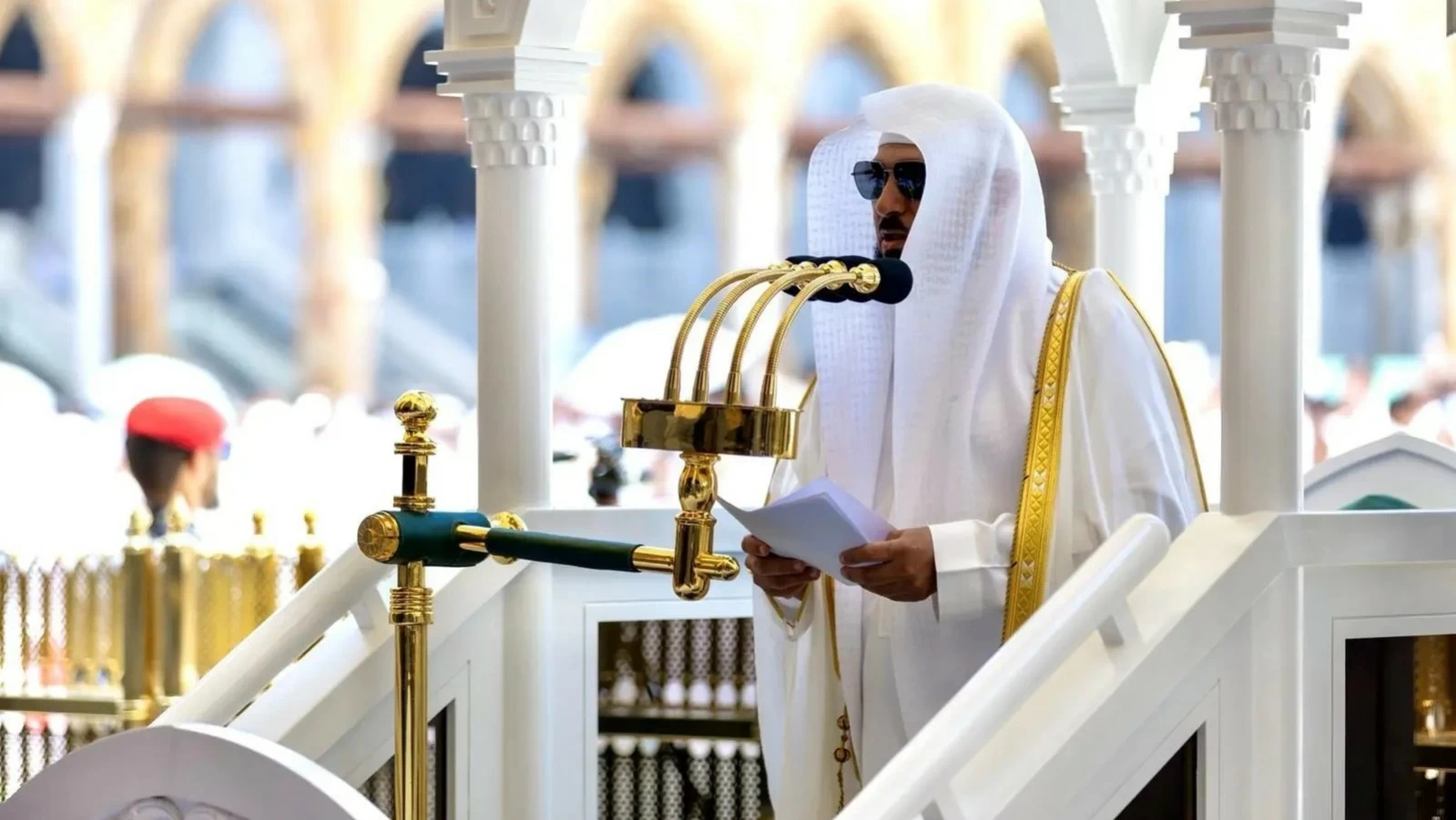
أوصى إمام وخطيب المسجد الحرام الشيخ الدكتور ماهر بن حمد المعيقلي المسلمين بتقوى الله تعالى، وإخلاص النية له، والالتزام بسنة نبيه -صلى الله عليه وسلم- والاجتهاد في الأعمال الصالحة، والابتعاد عن الآثام، مبينًا أن العلم بأسماء الله تعالى وصفاته وأفعاله من أجلِّ العلوم وأنفعها وأعظمها، وأن شرف العلم تابع لشرف معلومه، ولا معلوم أعظم وأجل من العلم بالله -عز وجل- وأن العبد كلما كان بأسماء ربه وصفاته أعلم، كان به أعرف، ومنه أخوف، وله أطلب، وإليه أقرب، ولرضاه أرجى، ومن سخطه أخشى.
وأوضح في خطبة الجمعة التي ألقاها اليوم بالمسجد الحرام، أن من أسماء الله الحسنى التي وردت في القرآن الكريم اسمي الحي والقيوم، وهما اسمان جامعان لمعاني الأسماء الحسنى، فالحي جامع لصفات الكمال، والقيوم جامع لصفات الأفعال، مشيرًا إلى أن جمعًا من أهل العلم ذهبوا إلى أنهما اسم الله الأعظم الذي إذا دُعي به أجاب، وإذا سُئل به أعطى، مستشهدًا بما ورد في مسند الإمام أحمد وسنن ابن ماجه في فضل الدعاء بهذين الاسمين، وبورودهما في آية الكرسي، وأول سورة آل عمران، وسورة طه.
وبيّن أن اسم الله الحي يدل على الحياة الكاملة الدائمة الباقية التي لم تُسبق بعدم، ولا يلحقها زوال ولا فناء، ولا يعتريها نصب ولا إعياء، وهي حياة تستلزم كمال صفاته -سبحانه- من العلم والقدرة والسمع والبصر والعفو والرحمة وسائر صفات الكمال، مؤكدًا أن الله -سبحانه- هو المستحق وحده للعبادة، بخلاف كل مخلوق يموت ويفنى، مستشهدًا بقوله تعالى: ﴿وَتَوَكَّلْ عَلَى الْحَيِّ الَّذِي لَا يَمُوتُ﴾، وقوله سبحانه: ﴿كُلُّ مَنْ عَلَيْهَا فَانٍ وَيَبْقَىٰ وَجْهُ رَبِّكَ ذُو الْجَلَالِ وَالْإِكْرَامِ﴾، كما استعرض موقف الصديق أبي بكر -رضي الله عنه- عند وفاة النبي -صلى الله عليه وسلم- واستدلاله بقوله تعالى: ﴿وَمَا مُحَمَّدٌ إِلَّا رَسُولٌ قَدْ خَلَتْ مِنْ قَبْلِهِ الرُّسُلُ﴾.
وأوضح أن اسم الله القيوم يدل على قيامه -سبحانه- بنفسه، وقيامه على شؤون خلقه، وأن جميع الخلق مفتقرون إليه، مستشهدًا بما كان يدعو به النبي -صلى الله عليه وسلم- في قيام الليل: «اللَّهُمَّ لَكَ الْحَمْدُ، أَنْتَ قَيِّمُ السَّمَاوَاتِ وَالْأَرْضِ وَمَنْ فِيهِنَّ»، مبينًا أن الله -سبحانه وتعالى- هو الذي يمسك السموات والأرض أن تزولا، ويجري أمر الكون كله بحكمته، ويقبض ويبسط، ويعطي ويمنع، ويحيي ويميت، ويعز ويذل، ويهدي ويضل، ويكشف الكرب، ويغيث الملهوف، ويشفي السقيم، ويجيب الداعي، ويقبل التائب، ويجبر المنكسر، وهو -سبحانه- قائم على كل نفس بما كسبت، يعلم أحوال عباده وأقوالهم وأعمالهم، ويحاسبهم ويجازيهم عليها يوم القيامة.
وبيّن أن من أعظم ما يدل على كمال قيوميته -سبحانه- ما تضمنته آية الكرسي من معاني العظمة والكمال، مستشهدًا بقوله تعالى: ﴿اللَّهُ لَا إِلَٰهَ إِلَّا هُوَ الْحَيُّ الْقَيُّومُ لَا تَأْخُذُهُ سِنَةٌ وَلَا نَوْمٌ لَّهُ مَا فِي السَّمَاوَاتِ وَمَا فِي الْأَرْضِ﴾، مبينًا ما اشتملت عليه الآية من إثبات كمال حياة الله وقيوميته، وسعة ملكه، وإحاطة علمه، وعظيم سلطانه، وأنه -سبحانه- لا يؤوده حفظ السموات والأرض، وهو العلي العظيم.
وأشار إمام وخطيب المسجد الحرام إلى أن المؤمن إذا أيقن بأن الله تعالى حي لا يموت، وأنه قيوم السموات والأرض، قائم على الخلق والتدبير، منفرد بالمشيئة والتقدير، حمله ذلك على صدق الاعتماد على الله، والثقة به، والرضا بقضائه، والصبر على بلائه، وألا يرجو إلا إياه، ولا يطمع إلا فيما عنده، وأن يكثر من دعائه وذكره، لا سيما عند نزول الهموم والكروب، مستشهدًا بما كان يقوله النبي -صلى الله عليه وسلم- إذا حزبه أمر: «يا حي يا قيوم، برحمتك أستغيث»، وبما ورد عن علي بن أبي طالب -رضي الله عنه- في دعاء النبي -صلى الله عليه وسلم- يوم بدر.
وحث على ملازمة الأدعية الجامعة التي كان النبي -صلى الله عليه وسلم- يداوم عليها صباحًا ومساءً، ومنها قوله: «يا حي يا قيوم، برحمتك أستغيث، أصلح لي شأني كله، ولا تكلني إلى نفسي طرفة عين»، مبينًا أن الاستغاثة بهذين الاسمين من أسباب تفريج الكربات، ونيل الخيرات، وتكفير السيئات، ودعا إلى الإكثار من الاستغفار، مستشهدًا بما ورد في فضل قول: «أستغفر الله الذي لا إله إلا هو الحي القيوم وأتوب إليه».
كما تحدث إمام وخطيب المسجد النبوي الشيخ الدكتور حسين آل الشيخ عن عناية الإسلام بالحياة الزوجية، مبينًا أن الشريعة الإسلامية أقامت العلاقة بين الزوجين على المودة والرحمة، وشرعت من الأحكام ما يكفل استقرار الأسرة ويحفظ حقوق أفرادها، وجعلت الطلاق آخر الحلول عند تعذر الإصلاح واستمرار الضرر.
وأوضح أن الطلاق في الإسلام شُرع بعد استنفاد وسائل الإصلاح وتعذر استمرار الحياة الزوجية، ليكون وسيلة لدفع الضرر وتحقيق المصلحة، لا بابًا للتسرع في إنهاء الحياة الزوجية، مستشهدًا بقولة تعالى: (وَعَاشِرُوهُنَّ بِالْمَعْرُوفِ ۚ فَإِن كَرِهْتُمُوهُنَّ فَعَسَىٰ أَن تَكْرَهُوا شَيْئًا وَيَجْعَلَ اللَّهُ فِيهِ خَيْرًا كَثِيرًا).
وأشار الدكتور آل الشيح إلى حديث النبي - صلى الله عليه وسلم: (لا يَفْرَكْ مؤمنٌ مؤمنةً، إن كره منها خُلُقًا رضي منها آخر)، موضحًا أن هذا التوجيه النبوي يحث على الصبر والتغاضي عن الزلات، والنظر إلى المحاسن، وتعزيز فرص الإصلاح قبل اللجوء إلى الطلاق.
وبيّن أن من ضوابط الطلاق المشروع أن يطلق الرجل زوجته طلقة واحدة في طُهر لم يمسها فيه، أو أن يطلقها وهي حامل، ثم يتركها في مسكن الزوجية لقصد مراجعة النفس، ولعل الله يُحدث بعد ذلك أمرًا من رجوع الزوج إلى زوجته وإصلاح حال الأسرة بأكملها.
وحذَّر من التعدي على حدود الله بإيقاع الطلاق على غير الوجه المشروع، كأن يطلق الرجل زوجته ثلاثًا بكلمة واحدة أو في مجلس واحد، أو يوقع الطلاق في حال حيض المرأة، أو في طُهرٍ جامعها فيه.
وشدَّد إمام وخطيب المسجد النبوي على التحذير من التهاون في إطلاق ألفاظ الطلاق، أو جعلها في حكم الحلف للحث على فعل شيء أو المنع منه، أو للتصديق بشيء أو التكذيب به، كقول بعضهم: «عليَّ الطلاق إن ذهبت إلى كذا» أو «إن لم تفعلي كذا»، أو استعماله عند إرادة إكرام أحد وإلزامه بالاستجابة للدعوة، كقوله: «عليَّ الطلاق أن تتغدى أو تتعشى عندنا»، مؤكدًا أن الطلاق من حدود الله التي يجب تعظيمها، مستشهدًا بقوله تعالى:( تِلْكَ حُدُودُ اللَّهِ فَلَا تَعْتَدُوهَا ۚ وَمَن يَتَعَدَّ حُدُودَ اللَّهِ فَأُولَٰئِكَ هُمُ الظَّالِمُونَ).
واختتم آل الشيخ الخطبة موصيًا الزوجين بالصبر والتأني، والبعد عن ردود الأفعال المتسرعة وبواعث العواطف الطارئة، مبينًا أن من أحكام الطلاق أنه لا يجوز للمرأة طلب الطلاق عند استقامة الأحوال وعدم وجود الأسباب الداعية إلى الفراق، مستشهدًا بقول النبي - صلى الله عليه وسلم- (أيُما امرأة سألت زَوجَها الطّلاقَ في غيِر ما بأس؛ فحَرامٌ عليها رائحَةُ الجنّةِ) صححه ابن خزيمة وابن حبان وغيرهما.
The Imam and preacher of the Grand Mosque, Sheikh Dr. Maher bin Hamad Al-Muaiqly, advised Muslims to fear Allah Almighty, to be sincere in their intentions, to adhere to the Sunnah of His Prophet - peace be upon him - to strive in good deeds, and to avoid sins. He explained that knowledge of Allah's names, attributes, and actions is among the noblest, most beneficial, and greatest of sciences, and that the honor of knowledge is contingent upon the honor of its subject. There is no subject more noble and exalted than knowledge of Allah - the Exalted - and that the servant, the more knowledgeable he is about his Lord's names and attributes, the more he will know Him, fear Him, seek Him, be closer to Him, hope for His pleasure, and fear His wrath.
He clarified in the Friday sermon he delivered today at the Grand Mosque that among the names of Allah that appear in the Holy Quran are the names "The Ever-Living" (الحي) and "The Sustainer" (القيوم), which are comprehensive names encompassing the meanings of the beautiful names. The Ever-Living encompasses the attributes of perfection, while The Sustainer encompasses the attributes of action. He pointed out that a group of scholars has stated that these are the Greatest Name of Allah, which, when invoked, He responds to, and when asked, He gives, citing what is mentioned in the Musnad of Imam Ahmad and the Sunan of Ibn Majah regarding the virtue of invoking these names, as well as their mention in the Ayat al-Kursi, the beginning of Surah Al-Imran, and Surah Taha.
He indicated that the name "The Ever-Living" signifies the complete, everlasting life that is not preceded by non-existence, nor does it experience decay or annihilation, nor does it suffer fatigue or exhaustion. It is a life that necessitates the perfection of His attributes - Glory be to Him - such as knowledge, power, hearing, sight, forgiveness, mercy, and all other attributes of perfection. He affirmed that Allah - Glory be to Him - is the only one worthy of worship, unlike any creature that dies and perishes, citing His saying: ﴿And put your trust in the Ever-Living who does not die﴾, and His saying: ﴿Everything upon it will perish, and there will remain the Face of your Lord, Owner of Glory and Honor﴾. He also reviewed the stance of Abu Bakr Al-Siddiq - may Allah be pleased with him - at the time of the Prophet's - peace be upon him - death, and his reference to Allah's saying: ﴿And Muhammad is but a messenger; messengers have passed on before him﴾.
He explained that the name "The Sustainer" indicates His - Glory be to Him - self-sufficiency and His management of the affairs of His creation, and that all creation is in need of Him, citing what the Prophet - peace be upon him - used to invoke during the night prayer: "O Allah, to You belongs all praise; You are the Sustainer of the heavens and the earth and all that is in them." He clarified that Allah - Glory be to Him - is the one who holds the heavens and the earth from shifting, and He runs the entire universe with His wisdom, He constricts and expands, gives and withholds, brings to life and causes to die, honors and humiliates, guides and misleads, alleviates distress, aids the distressed, heals the sick, answers the supplicant, accepts the repentant, and mends the broken. He - Glory be to Him - is aware of every soul's deeds, knows the conditions, words, and actions of His servants, and will hold them accountable and reward them for it on the Day of Resurrection.
He pointed out that one of the greatest indications of the perfection of His Sustaining nature - Glory be to Him - is what the Ayat al-Kursi contains of meanings of greatness and perfection, citing His saying: ﴿Allah! There is no deity except Him, The Ever-Living, The Sustainer. Neither drowsiness overtakes Him nor sleep. To Him belongs whatever is in the heavens and whatever is in the earth﴾. He explained what the verse includes regarding the affirmation of the completeness of Allah's life and Sustaining nature, the vastness of His dominion, the comprehensiveness of His knowledge, and His great authority, and that He - Glory be to Him - is not burdened by the preservation of the heavens and the earth; He is the Most High, the Most Great.
The Imam and preacher of the Prophet's Mosque, Sheikh Dr. Hussein Al-Sheikh, spoke about the care Islam gives to marital life, explaining that Islamic law establishes the relationship between spouses on affection and mercy, and it has legislated rules that ensure family stability and protect the rights of its members, making divorce the last resort when reconciliation is impossible and harm continues.
He clarified that divorce in Islam is legislated after exhausting means of reconciliation and when the continuation of marital life is impossible, serving as a means to prevent harm and achieve benefit, not as a door for hastily ending marital life, citing Allah's saying: (And live with them in kindness. But if you dislike them - perhaps you dislike a thing and Allah makes therein much good).
Dr. Al-Sheikh pointed to the Prophet's - peace be upon him - saying: (A believer should not hate a believer; if he dislikes one of her characteristics, he should be pleased with another), explaining that this prophetic guidance encourages patience, overlooking mistakes, focusing on the positives, and enhancing opportunities for reconciliation before resorting to divorce.
He indicated that among the regulations of permissible divorce is that a man should divorce his wife with one pronouncement during a period of purity in which he has not touched her, or to divorce her while she is pregnant, then leave her in the marital home for the purpose of self-reflection, hoping that Allah will bring about a change, such as the husband returning to his wife and improving the condition of the entire family.
He warned against transgressing Allah's limits by issuing divorce in an impermissible manner, such as a man divorcing his wife three times in one statement or in one sitting, or issuing divorce during the woman's menstruation, or during a period of purity in which he has had relations with her.
The Imam and preacher of the Prophet's Mosque emphasized the warning against being lax in uttering divorce phrases, or treating them as oaths to urge someone to do something or to refrain from it, or to affirm or deny something, such as saying: "I swear by divorce if you go to such and such" or "if you do not do such and such," or using it when intending to honor someone and compelling them to respond to an invitation, such as saying: "I swear by divorce that you will have lunch or dinner with us," emphasizing that divorce is among Allah's limits that must be respected, citing His saying: (These are the limits of Allah, so do not transgress them. And whoever transgresses the limits of Allah - it is they who are the wrongdoers).
Al-Sheikh concluded the sermon by advising the spouses to be patient and deliberate, to avoid hasty reactions and the impulses of transient emotions, explaining that among the rulings of divorce is that a woman should not seek divorce when circumstances are stable and there are no reasons compelling separation, citing the Prophet's - peace be upon him - saying: (Any woman who asks her husband for divorce without any reason will not smell the fragrance of Paradise) which was authenticated by Ibn Khuzaymah, Ibn Hibban, and others.