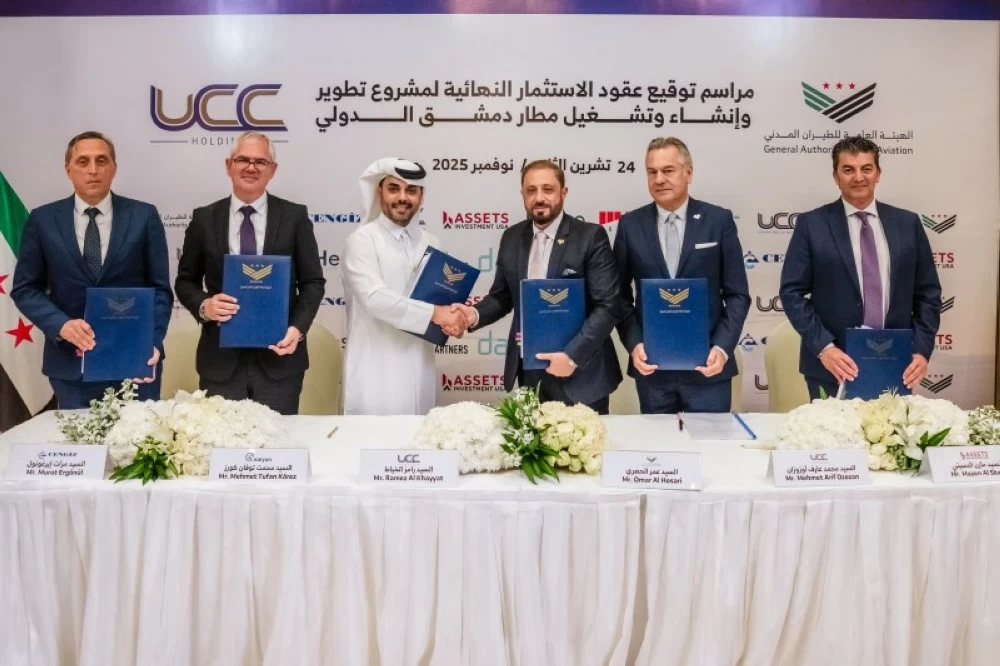
وقّعت الهيئة العامة للطيران المدني في الجمهورية العربية السورية عقود الامتياز النهائية الخاصة بالاستثمار في تطوير وتوسعة وإنشاء وتشغيل مطار دمشق الدولي مع تحالف دولي تقوده شركة أورباكون القابضة عبر شركتها التابعة يو سي سي كونسيشونز للاستثمار، وبمشاركة شركة جنكيز للإنشاءات التركية، وشركة كاليون للإنشاءات التركية، وشركة أسيتس للاستثمارات الأمريكية. ويعد المشروع أكبر استثمار في تاريخ سورية بقيمة 4 مليارات دولار، ما يعكس الثقة الدولية في مستقبل قطاع النقل الجوي السوري.
كما انطلقت الأعمال التنفيذية على الأرض، حيث باشرت شركات الائتلاف بأعمال تطوير المبنى الثاني في المطار، إضافة إلى إعادة تأهيل مبنى الفندق القديم داخل حرم المطار، وبدء تحسين الطريق الرئيسي المؤدي إلى المطار، بما يعكس التزام الائتلاف بتنفيذ المشروع وفق جدول زمني متسارع يتماشى مع متطلبات إعادة تأهيل المطار ورفع جاهزيته التشغيلية.
وقد جرت مراسم التوقيع بحضور كل من: رئيس الهيئة العامة للطيران المدني السوري عمر الحصري، وقائد الائتلاف رامز الخياط رئيس شركة أورباكون القابضة، والرئيس التنفيذي لشركة هيسكو للخدمات الهندسية المهندس رفاعي حمادة، ومرات إيرغونول ممثلاً عن شركة جنكيز للإنشاءات التركية، ومحمتتوفان كورز عن شركة كاليون التركية، ومحمت عارف أوزوزان ممثل عن شركة يو سي سي كونسيشونز للاستثمار، إضافةً إلى مازن السبيتي ممثلاً عن شركة أسيتس للاستثمارات الأمريكية، وحضور ممثلين عن شركة دار الهندسة وشركة دي جي جونز، ومسؤولي الهيئة العامة للطيران المدني، ومديري الائتلاف، في اجتماع عكس الأهمية الإستراتيجية للمشروع ودوره في إعادة بناء بوابة سورية الجوية.
وقال السيد عمر الحصري إن توقيع عقود تطوير مطار دمشق يشكّل خطوة إستراتيجية لإعادة بناء بوابة سورية الجوية، وتعزيز الاقتصاد الوطني، وفتح فرص استثمارية ووظيفية جديدة، بمشاركة شركات دولية كبرى من قطر وتركيا والولايات المتحدة، ما يعكس ثقة العالم بقدرة سورية على النهوض، وبوجود بيئة استثمارية واضحة وقانونية وجاذبة.
كما أكد رئيس مجلس إدارة شركة أورباكون القابضة معتز الخياط، ، أن التحالف عازم على تنفيذ مشروع يعيد تشكيل مستقبل مطار دمشق الدولي ويرفعه إلى مستوى المطارات الإقليمية المتقدمة، مشيراً إلى أن هذا الاستثمار سيقود تحوّلاً اقتصادياً واسعاً في المنطقة، ويحقق قيمة حقيقية تمتد من تطوير البنية التحتية إلى خلق فرص عمل مستدامة وتعزيز مسار التعافي والنمو في سورية.
وقال رئيس شركة أورباكون القابضة رامز الخياط، ، إن مشروع تطوير مطار دمشق الدولي يمثّل محطة مفصلية في إعادة بناء منظومة النقل الجوي في سورية، ويعزز قدرة البلاد على استعادة دورها الطبيعي في حركة الربط الجوي الإقليمي. وأكد أن الائتلاف يسير وفق خطة عمل دقيقة وبمنهجيات تشغيلية متوافقة مع أعلى المعايير العالمية في صناعة الطيران، وأحدث التجهيزات التكنولوجية بما يضمن رفع كفاءة المطار وتطوير قدراته التشغيلية بشكل مستدام.
وأشار الخياط إلى أن الرؤية الإستراتيجية للمشروع تهدف إلى رفع الطاقة الاستيعابية للمطار إلى 31 مليون مسافر سنوياً، وترسيخ موقع مطار دمشق كمركز إقليمي رئيسي للمسافرين في المنطقة، حيث يوفر تجربة متكاملة استثنائية. كما سيضم المطار الجديد مرافق حديثة تشمل فندقاً من فئة 5 نجوم، ومنطقة حرة، ومجموعة واسعة من الخدمات.
وأكد الرئيس التنفيذي لشركة هيسكو للخدمات الهندسية المهندس رفاعي حمادة، أن التصميم المعماري للمطار الجديد يأتي ضمن رؤية تطويرية شُكِّلت بالتعاون مع شركة زها حديد للهندسة المعمارية، بهدف إرساء هوية عمرانية عصرية تعكس روح دمشق وتاريخها العريق. وأوضح أن التصميم يعتمد على الانسيابية والمساحات الرحبة والضوء الطبيعي، إلى جانب دمج بنية تحتية ذكية وتقنيات طيران متقدمة لضمان كفاءة تشغيلية عالية.
يمضي المشروع وفق خطة تطوير متدرجة تهدف إلى رفع الطاقة الاستيعابية لمطار دمشق الدولي ليصبح مركزاً إقليمياً حديثاً ومتكاملاً. تبدأ الخطة بتشغيل مبنى الركاب الجديد تيرمنال 2 قبل موسم الحج القادم، وذلك بعد استكمال جميع التجهيزات التشغيلية واللوجستية وأنظمة الأمن والملاحة والمناولة وخدمة تزويد الطائرات بالوقود.
وبالتوازي مع ذلك، ستتم إعادة تصميم وتطوير مبنى تيرمنال 1، وتحديث مرافقه الداخلية والخدمية، ليكتمل العمل به بنهاية عام 2026، وبما يرفع الطاقة الاستيعابية للمطار إلى 6 ملايين مسافر سنوياً. وفي المرحلة التالية، ينتقل المشروع إلى التوسّع الأكبر عبر تطوير المرافق الجوية واللوجستية وساحات وقوف الطائرات ومراكز الشحن والبنية التجارية والخدمية، بالتزامن مع تنفيذ مبنى الركاب الجديد تيرمنال 3، الذي سيُشيّد وفق أعلى المعايير الدولية المعتمدة من منظمة الطيران المدني الدولي (ICAO)، والاتحاد الدولي للنقل الجوي (IATA). وسيضم المبنى قدرات تشغيلية متقدمة تشمل حتى 32 بوابة مجهّزة بجسور عبور حديثة، إضافة إلى سوق حرة عالمية تضم مطاعم ومقاهي وعلامات تجارية دولية.
ووفق جدول التطوير، سترتفع السعة الاستيعابية للمطار مع الانتهاء من المرحلة الأولى من تنفيذ تيرمنال 3 إلى 16 مليون مسافر سنوياً، فيما ستصل السعة النهائية للمطار، بعد اكتمال تيرمنال 3 وكامل الأعمال الإنشائية واللوجستية، إلى 31 مليون مسافر سنوياً، ليصبح واحداً من أهم المطارات الحديثة في المنطقة من حيث التكنولوجيا وجودة الخدمات والبنية التشغيلية. كما يتضمن برنامج تمويل بقيمة 250 مليون دولار لشراء طائرات جديدة دعماً لقطاع النقل الجوي السوري، إضافة إلى اعتماد أحدث تقنيات التشغيل مثل البوابات الإلكترونية (E-Gates) التي ستسهم في تسريع إجراءات السفر وتعزيز كفاءة حركة المسافرين.
ويتوقع أن يوفر المشروع أكثر من 90 ألف فرصة عمل مباشرة وغير مباشرة عبر مختلف مراحل الإنشاء والتشغيل، تشمل قطاعات الهندسة والتشغيل الجوي والخدمات الأرضية واللوجستيات والتجارة والضيافة، ما يجعله أحد أكبر المشاريع المؤثرة في سوق العمل بقطاع الطيران السوري خلال العقود الأخيرة. ويعكس المشروع، بقيادة شركة أورباكون القابضة، مرحلة جديدة في إدارة مشاريع البنية التحتية في سورية عبر شراكات طويلة الأمد تجمع الخبرة الدولية بالمعايير العالمية، بما يعيد لمطار دمشق الدولي مكانته الحيوية ويمهّد لعودة دوره في حركة النقل الجوي الإقليمي والدولي.
The General Authority of Civil Aviation in the Syrian Arab Republic has signed the final concession contracts for investment in the development, expansion, establishment, and operation of Damascus International Airport with an international consortium led by Orbakon Holding through its subsidiary UCC Concessions for Investment, in partnership with Turkish construction companies Cengiz and Kalyon, and American investment firm Assets. This project represents the largest investment in Syria's history, valued at $4 billion, reflecting international confidence in the future of the Syrian air transport sector.
Executive works have also commenced on the ground, as the consortium companies have started developing the second terminal at the airport, in addition to rehabilitating the old hotel building within the airport premises, and beginning improvements to the main road leading to the airport, reflecting the consortium's commitment to implementing the project according to an accelerated timeline that aligns with the requirements for rehabilitating the airport and enhancing its operational readiness.
The signing ceremony was attended by: the head of the Syrian General Authority of Civil Aviation, Omar Al-Hosari, the leader of the consortium, Ramez Al-Khayyat, the chairman of Orbakon Holding, the CEO of Hisco Engineering Services, Engineer Rifai Hamada, Murat Ergünol representing Cengiz Construction, Muhammet Tufan Korkuz from Kalyon Construction, and Muhammed Arif Ozozan representing UCC Concessions for Investment, in addition to Mazen Al-Sebiti representing Assets Investment, along with representatives from Dar Engineering and DJ Jones, officials from the General Authority of Civil Aviation, and directors of the consortium, in a meeting that reflected the strategic importance of the project and its role in rebuilding Syria's air gateway.
Mr. Omar Al-Hosari stated that signing the contracts for the development of Damascus Airport represents a strategic step in rebuilding Syria's air gateway, enhancing the national economy, and opening new investment and job opportunities, with the participation of major international companies from Qatar, Turkey, and the United States, reflecting the world's confidence in Syria's ability to rise and in the existence of a clear, legal, and attractive investment environment.
Chairman of Orbakon Holding, Moataz Al-Khayyat, confirmed that the consortium is determined to implement a project that reshapes the future of Damascus International Airport and elevates it to the level of advanced regional airports, noting that this investment will lead to a wide economic transformation in the region, creating real value that extends from infrastructure development to creating sustainable job opportunities and enhancing the path of recovery and growth in Syria.
Ramez Al-Khayyat, chairman of Orbakon Holding, stated that the project to develop Damascus International Airport represents a pivotal moment in rebuilding the air transport system in Syria, enhancing the country's ability to regain its natural role in regional air connectivity. He confirmed that the consortium is proceeding according to a precise work plan and operational methodologies that comply with the highest global standards in the aviation industry, utilizing the latest technological equipment to ensure the airport's efficiency and sustainably develop its operational capabilities.
Al-Khayyat pointed out that the strategic vision for the project aims to raise the airport's capacity to 31 million passengers annually, establishing Damascus Airport as a major regional hub for travelers in the area, providing an exceptional integrated experience. The new airport will also feature modern facilities, including a 5-star hotel, a free trade zone, and a wide range of services.
Engineer Rifai Hamada, CEO of Hisco Engineering Services, confirmed that the architectural design of the new airport comes within a developmental vision shaped in collaboration with Zaha Hadid Architects, aiming to establish a modern architectural identity that reflects the spirit of Damascus and its rich history. He explained that the design relies on fluidity, spaciousness, and natural light, alongside integrating smart infrastructure and advanced aviation technologies to ensure high operational efficiency.
The project is progressing according to a phased development plan aimed at raising the capacity of Damascus International Airport to become a modern and integrated regional hub. The plan begins with the operation of the new passenger terminal, Terminal 2, before the upcoming Hajj season, after completing all operational and logistical preparations, as well as security, navigation, handling, and aircraft refueling systems.
In parallel, Terminal 1 will be redesigned and developed, updating its internal and service facilities, with work expected to be completed by the end of 2026, raising the airport's capacity to 6 million passengers annually. In the next phase, the project will transition to larger expansions by developing air and logistical facilities, aircraft parking areas, cargo centers, and commercial and service infrastructure, alongside the construction of the new passenger terminal, Terminal 3, which will be built according to the highest international standards set by the International Civil Aviation Organization (ICAO) and the International Air Transport Association (IATA). The terminal will feature advanced operational capabilities, including up to 32 gates equipped with modern boarding bridges, in addition to a global duty-free market that includes restaurants, cafes, and international brand names.
According to the development schedule, the airport's capacity will increase to 16 million passengers annually upon the completion of the first phase of Terminal 3, while the final capacity of the airport, after completing Terminal 3 and all construction and logistical works, will reach 31 million passengers annually, making it one of the most modern airports in the region in terms of technology, service quality, and operational infrastructure. The program also includes a financing package of $250 million for purchasing new aircraft to support the Syrian air transport sector, in addition to adopting the latest operational technologies such as electronic gates (E-Gates) that will help expedite travel procedures and enhance the efficiency of passenger movement.
The project is expected to provide more than 90,000 direct and indirect job opportunities across various stages of construction and operation, covering sectors such as engineering, air operations, ground services, logistics, trade, and hospitality, making it one of the largest projects impacting the labor market in the Syrian aviation sector in recent decades. The project, led by Orbakon Holding, reflects a new phase in managing infrastructure projects in Syria through long-term partnerships that combine international expertise with global standards, restoring Damascus International Airport's vital status and paving the way for its return to the regional and international air transport movement.