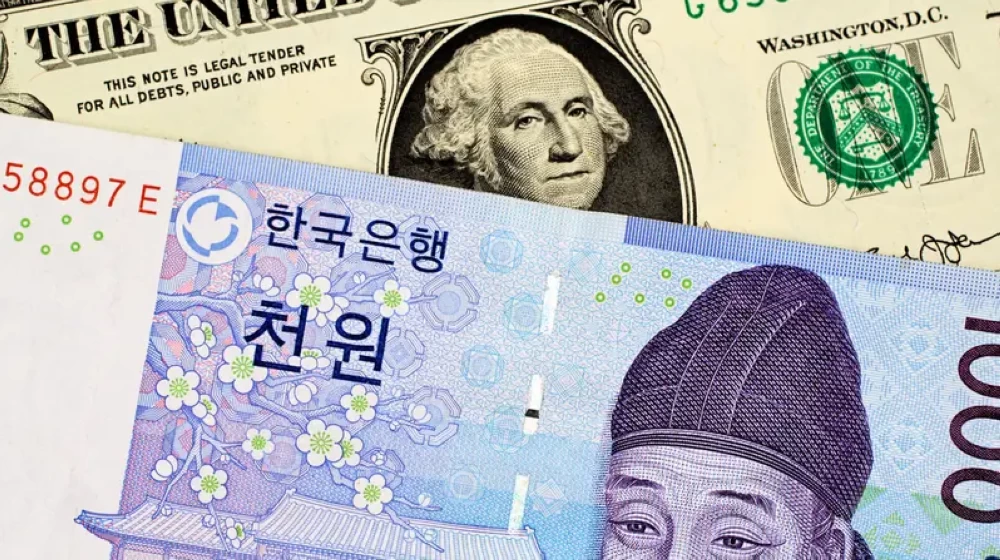
أظهرت بيانات البنك المركزي الكوري الجنوبي (الأحد)، أن العملة الكورية الجنوبية «الوون» اكتسبت قوة أمام الدولار في ظل ارتفاع المعروض من الدولار بسبب انتعاش الصادرات.
وسجلت عملة «الوون» متوسط 1342.6 وون مقابل الدولار خلال أول 12 جلسة تداول في أكتوبر الجاري، فيما يعد أدنى مستوى منذ سبتمبر 2024، عندما بلغ متوسط سعر صرف الوون أمام الدولار 1332.8 وون، وفقاً لبيانات نظام الإحصاء الاقتصادي بالبنك المركزي الكوري.
وارتفع متوسط سعر الصرف الشهري إلى 1492.5 وون في مارس الماضي في أعقاب اندلاع الحرب بالشرق الأوسط، وسجل 1528 وون في يونيو الماضي في ظل ارتفاع أسعار النفط الخام، وفقاً لوكالة الأنباء الألمانية «د ب أ».
واكتسبت العملة الكورية الجنوبية قوة منذ ذلك الحين، في ظل بيع المصدرين دولارات في السوق، حيث انخفض متوسط سعر الصرف الشهري إلى 1488.9 وون في شهر يوليو الماضي، و1404.4 وون في أغسطس الماضي، و1358.8 وون في سبتمبر الماضي.
وقال الخبراء إن الفائض التجاري بكوريا الجنوبية ووفرة عملة الدولار الأمريكي دعما ارتفاع قيمة الوون.
وكان صندوق النقد الدولي قد رفع توقعاته لنمو اقتصاد كوريا الجنوبية إلى 3.3% خلال عام 2026، وأرجع ذلك إلى قوة صادرات أشباه الموصلات التي خففت من تأثير الحرب بالشرق الأوسط.
Data from the Bank of Korea showed on Sunday that the South Korean currency, the "won," has gained strength against the dollar due to an increase in the dollar supply as a result of a rebound in exports.
The "won" recorded an average of 1342.6 won per dollar during the first 12 trading sessions in October, marking the lowest level since September 2024, when the average exchange rate was 1332.8 won per dollar, according to data from the Bank of Korea's economic statistics system.
The average monthly exchange rate rose to 1492.5 won in March following the outbreak of war in the Middle East, and reached 1528 won in June amid rising crude oil prices, according to the German news agency DPA.
The South Korean currency has gained strength since then, as exporters sold dollars in the market, with the average monthly exchange rate dropping to 1488.9 won in July, 1404.4 won in August, and 1358.8 won in September.
Experts stated that South Korea's trade surplus and the abundance of U.S. dollars supported the rise in the value of the won.
The International Monetary Fund had raised its growth forecast for South Korea's economy to 3.3% for the year 2026, attributing this to the strength of semiconductor exports, which mitigated the impact of the war in the Middle East.