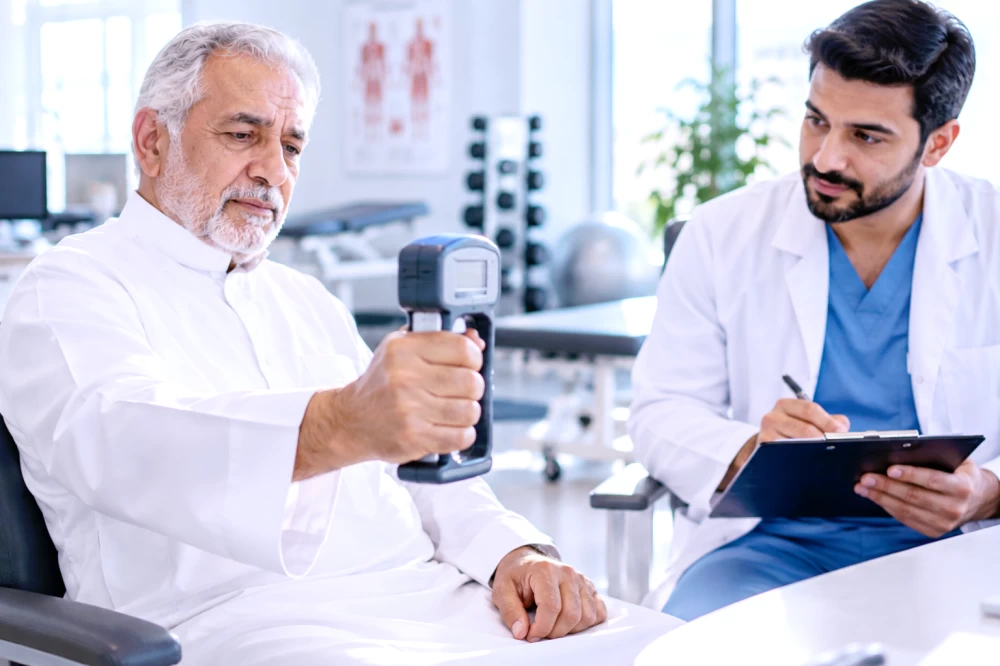
تتحوّل قبضة اليد في الدراسات الصحية من مجرد مقياس لقوة الأصابع والذراع إلى مؤشر سريع يساعد على قراءة جانب من القوة العضلية والقدرة الوظيفية، خصوصاً مع التقدّم في العمر.
ويستخدم الباحثون جهازاً بسيطاً لقياس قوة القبضة، فيما أظهرت دراسات سكانية واسعة ارتباط ضعفها بزيادة احتمالات تراجع القدرة على الحركة وبعض النتائج الصحية غير المرغوبة. وتكتسب أهمية إضافية لدى كبار السن؛ إذ قد تعكس بصورة غير مباشرة مقدار القوة والكتلة العضلية والحالة البدنية العامة.
وتشير أبحاث الشيخوخة إلى أن تراجع القوة العضلية قد يسبق أحياناً الانخفاض الواضح في حجم العضلات، ما يجعل الانتباه إلى القدرة على حمل الأغراض وفتح العبوات وأداء المهام اليومية مهماً، بدلاً من الاعتماد على شكل الجسم وحده.
لكن قوة القبضة ليست فحصاً يشخّص مرضاً بعينه، كما تتأثر نتائجها بالعمر والجنس وحجم الجسم والإصابات والحالة الصحية.
The grip strength in health studies transforms from merely a measure of finger and arm strength to a quick indicator that helps assess a facet of muscular strength and functional ability, especially with aging.
Researchers use a simple device to measure grip strength, and extensive population studies have shown a correlation between its weakness and an increased likelihood of declining mobility and some undesirable health outcomes. It gains additional importance among the elderly; it may indirectly reflect the amount of strength, muscle mass, and overall physical condition.
Research on aging indicates that a decline in muscular strength may sometimes precede a noticeable decrease in muscle size, making attention to the ability to carry items, open containers, and perform daily tasks important, rather than relying solely on body shape.
However, grip strength is not a test that diagnoses a specific disease, as its results are influenced by age, gender, body size, injuries, and health status.