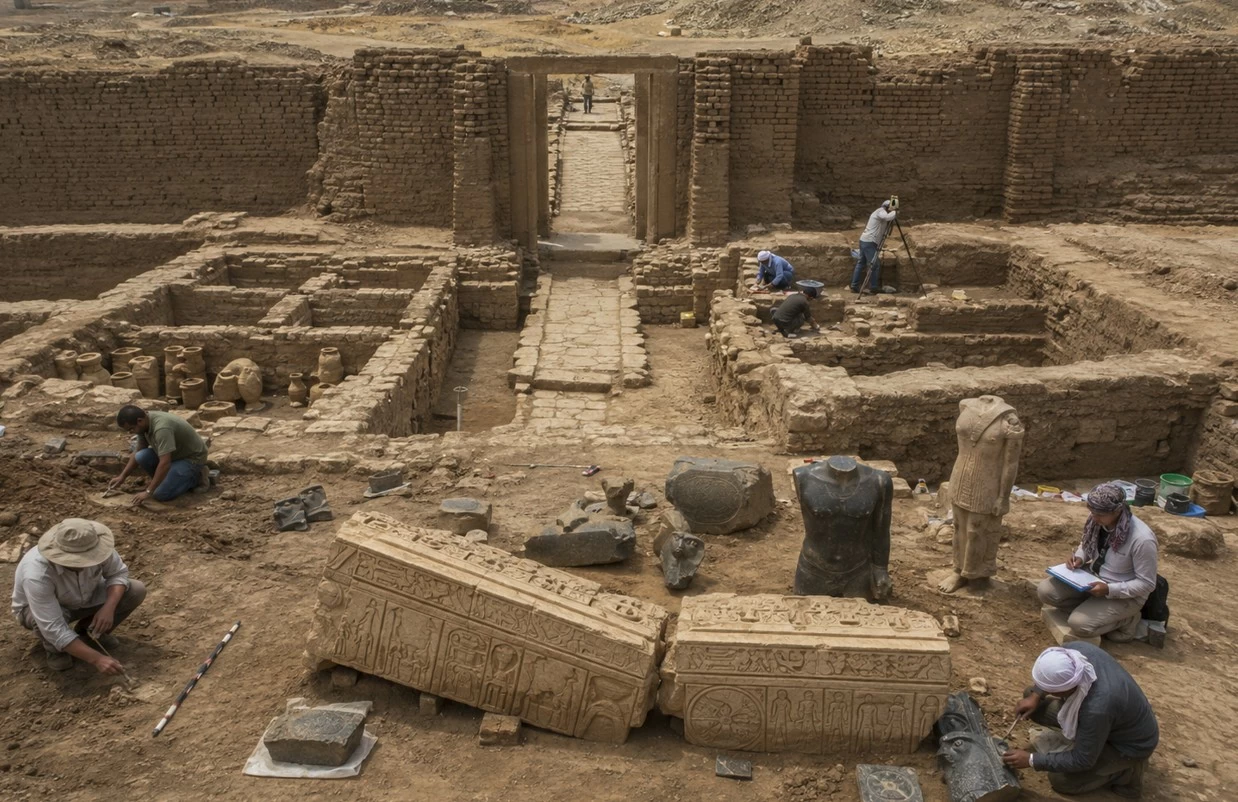
كشفت البعثة الأثرية المصرية العاملة بموقع تل أبو صيفي بمدينة القنطرة التابعة لمحافظة الإسماعيلية المصرية، عن سور ضخم من الطوب اللبن، ببواباته وغرفه الداخلية وطبقاته المختلفة التي تمثل السور الخارجي لأحد المعابد، كما رصدت بقايا طريقين حجريين متعاقبين يؤديان من خارج منطقة التحصين إلى داخل المعبد، ما يبزر الدور الإستراتيجي والحضاري الذي لعبته هذه المنطقة في حماية الحدود الشرقية لمصر عبر العصور.
وأوضحت وزارة السياحة والآثار المصرية في بيان أن أعمال الحفائر التي تقوم بها البعثة أسفرت عن الكشف عن غرف تخزينية في الناحية الشمالية للمعبد، وغرف خدمية أوسع في الناحية الجنوبية، إضافةً إلى العثور على نصف عَتب علوي ضخم من الحجر الرملي مكسور إلى جزءين، ومنقوش من ثلاث جهات.
وأضافت أنه تم الكشف أيضاً عن مجموعة من اللقى الأثرية ذات الدلالات الإدارية والعسكرية، من بينها جزء من تمثال من حجر الشست من عصر الأسرة السادسة والعشرين، كما عُثر على تمثال فاقد الرأس والقدمين من العصر المتأخر من التاريخ المصري القديم، وجذع تمثال ملكي من البازلت، إلى جانب أجزاء من تماثيل لصقور مصنوعة من البازلت والحجر الجيري.
وأفادت بأن نتائج الحفائر تشير إلى أن المعبد بلغ ذروة ازدهاره المعماري خلال العصر البطلمي، قبل أن يُعاد استخدام أجزاء منه في إنشاء ثكنات عسكرية خلال القرن الثالث الميلادي، فيما تحوّل في أواخر العصر الروماني إلى محجر لإنتاج الجير، إذ كشفت البعثة عن فرنين دائريين ضخمين، يحتويان على بقايا أحجار جيرية.
The Egyptian archaeological mission working at the site of Tell Abu Saifi in the city of Qantara, which belongs to the Ismailia Governorate in Egypt, has revealed a massive wall made of mud bricks, complete with its gates, internal rooms, and various layers that represent the outer wall of one of the temples. The mission also recorded the remains of two successive stone pathways leading from outside the fortified area to inside the temple, highlighting the strategic and civilizational role that this area played in protecting Egypt's eastern borders throughout the ages.
The Egyptian Ministry of Tourism and Antiquities explained in a statement that the excavation work being carried out by the mission has resulted in the discovery of storage rooms on the northern side of the temple, and wider service rooms on the southern side, in addition to finding a large upper lintel made of sandstone that is broken into two parts and inscribed on three sides.
It added that a collection of archaeological finds with administrative and military significance was also uncovered, including part of a statue made of schist from the 26th Dynasty, as well as a headless and footless statue from the Late Period of ancient Egyptian history, and a torso of a royal statue made of basalt, along with parts of statues of falcons made from basalt and limestone.
It reported that the results of the excavations indicate that the temple reached the peak of its architectural prosperity during the Ptolemaic period, before parts of it were reused to establish military barracks during the 3rd century AD. In the late Roman period, it was transformed into a quarry for producing lime, as the mission uncovered two massive circular kilns containing remains of limestone.