تتحرك سيارات رؤساء الدول في مساحة تتجاوز الفخامة والرفاهية؛ فهي واجهة سياسية وصناعية، ومكتب محصن، وجزء من صورة الدولة أمام العالم. ومن واشنطن إلى موسكو وبكين وباريس، تكشف السيارات الرئاسية اختلافاً لافتاً في مفهوم القوة على أربع عجلات.
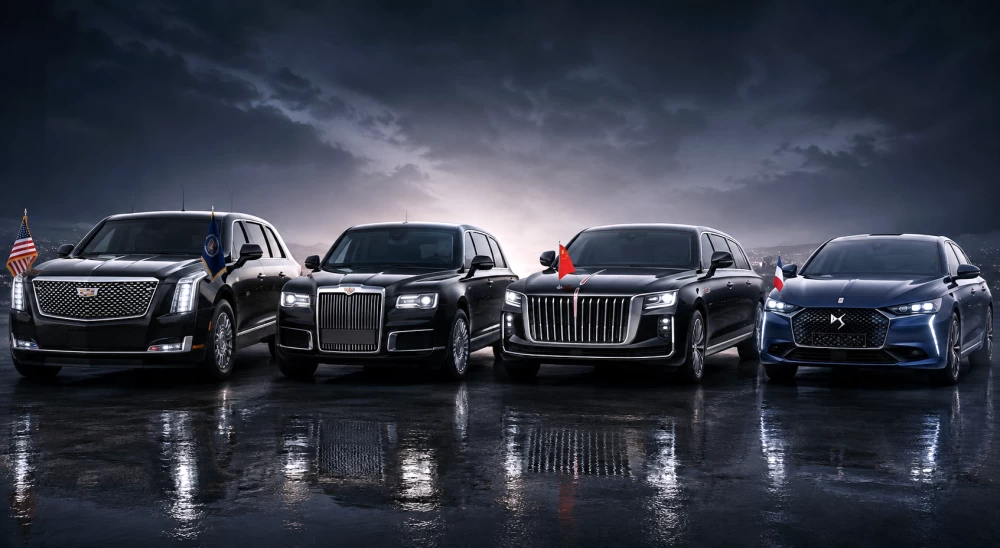
يتصدر «The Beast» المشهد من حيث الشهرة والتحصين، إذ ترافق الليموزين الرئاسية الأمريكية الرئيس دونالد ترمب بهيكل يحمل هوية «كاديلاك»، فيما تحيط السرية بجزء كبير من مواصفاتها الأمنية. حضورها الضخم وطبيعة الموكب المحيط بها يجعلانها أقرب إلى حصن متحرك صُمم للحماية أولاً، قبل التفكير في مفهوم السيارة التقليدية.
روسيا تقدم فلسفة مختلفة مع «Aurus Senat Limousine»، التي يستخدمها الرئيس فلاديمير بوتين. هنا تدخل الصناعة الوطنية قلب المشهد السياسي؛ سيارة روسية فاخرة ومدرعة، تعمل بمنظومة هجينة ومحرك V8 سعة 4.4 لتر، لتجمع بين القوة والحماية ورسالة الاعتماد على المنتج المحلي.
وتبدو «Hongqi N701»، الخاصة بتنقلات الرئيس الصيني شي جين بينغ، الأكثر غموضاً بين المجموعة. المعلومات التقنية المتاحة عنها محدودة، فيما يمنح اسم «Hongqi»، الذي يعني «العلم الأحمر»، السيارة ثقلاً رمزياً واضحاً. اختيار مركبة صينية لرأس الدولة يجعل ظهورها في المناسبات والزيارات الخارجية استعراضاً هادئاً لقدرات الصناعة المحلية بقدر ما هو إجراء بروتوكولي.
فرنسا أخذت السيارة الرئاسية إلى اتجاه آخر. «DS N°7 ÉLYSÉE» المدرعة، التي دخلت أسطول الرئاسة في يوليو 2026، تمثل جيلاً جديداً من سيارات القادة، كونها كهربائية بالكامل ومجهزة لتعمل كمكتب متنقل للرئيس إيمانويل ماكرون، لتجمع الحماية بالصناعة الفرنسية والتحول الكهربائي.
المقارنة تضع «الوحش» الأمريكي في صدارة الحضور الأمني والشهرة، و«هونغتشي» الصينية في دائرة الغموض، و«أوروس» الروسية بوصفها أبرز تعبير عن توظيف السيارة كرمز للصناعة الوطنية، فيما تتقدم «DS» الفرنسية في الرهان الكهربائي.
أربع سيارات تكشف أربع رؤى للسلطة؛ أمريكا تستعرض التحصين، وروسيا الصناعة والقوة، والصين الرمزية والخصوصية، وفرنسا التكنولوجيا والاستدامة. وفي النهاية، تصبح السيارة التي يخرج منها الرئيس أمام عدسات العالم جزءاً من الرسالة التي تريد دولته إيصالها.
The cars of heads of state move in a realm that surpasses luxury and opulence; they are a political and industrial facade, a fortified office, and part of the country's image before the world. From Washington to Moscow, Beijing, and Paris, presidential vehicles reveal a striking difference in the concept of power on four wheels.
At the forefront is "The Beast," renowned for its fame and fortification, as the American presidential limousine accompanies President Donald Trump with a structure bearing the identity of "Cadillac," while much of its security specifications remain shrouded in secrecy. Its massive presence and the nature of the convoy surrounding it make it closer to a moving fortress designed for protection first, before considering the concept of a traditional car.
Russia presents a different philosophy with the "Aurus Senat Limousine," used by President Vladimir Putin. Here, national industry enters the heart of the political scene; a luxurious and armored Russian car, operating with a hybrid system and a 4.4-liter V8 engine, combining power and protection with a message of reliance on local products.
The "Hongqi N701," designated for the transportation of Chinese President Xi Jinping, appears to be the most mysterious among the group. The available technical information about it is limited, while the name "Hongqi," meaning "red flag," gives the car a clear symbolic weight. Choosing a Chinese vehicle for the head of state makes its appearance at events and foreign visits a quiet showcase of local industry capabilities as much as it is a protocol procedure.
France has taken the presidential car in another direction. The armored "DS N°7 ÉLYSÉE," which entered the presidential fleet in July 2026, represents a new generation of leaders' cars, as it is fully electric and equipped to function as a mobile office for President Emmanuel Macron, combining protection with French industry and the electric transition.
The comparison places the American "Beast" at the forefront of security presence and fame, the Chinese "Hongqi" in a circle of mystery, and the Russian "Aurus" as the most prominent expression of utilizing the car as a symbol of national industry, while the French "DS" leads in the electric bet.
Four cars reveal four visions of power; America showcases fortification, Russia industry and strength, China symbolism and uniqueness, and France technology and sustainability. In the end, the car from which the president emerges before the lenses of the world becomes part of the message that his state wishes to convey.