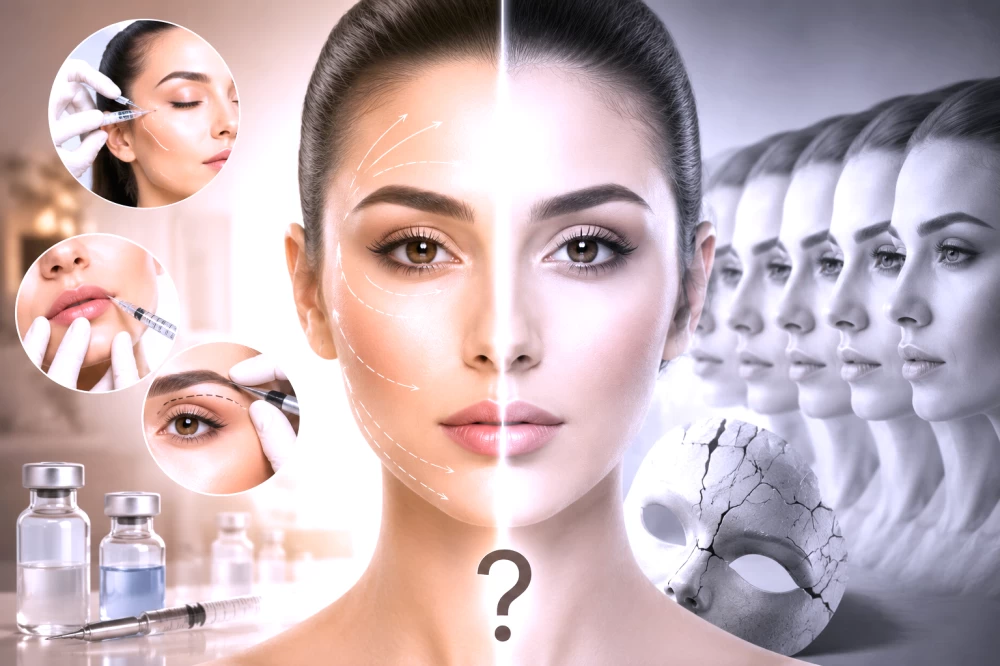
أثار التوسع الكبير في إجراءات التجميل والمكياج نقاشاً واسعاً حول تأثيرها على الملامح الفردية للنساء، وسط تساؤلات بشأن ما إذا كانت بعض الصيحات الحديثة قد أسهمت في خلق مظهر متشابه لدى الكثيرات، فيما يُعرف مجازاً بـ«النسخ المتكررة»، أم أنها ما زالت وسيلة لتعزيز الجمال الطبيعي وإبراز الملامح الخاصة لكل امرأة.
وفي استطلاع أجرته «عكاظ»، رأت داليا سحرتي، أن تشابه الملامح بات أمراً ملحوظاً نتيجة تكرار الإجراءات التجميلية واعتماد أنماط مكياج متشابهة، مشيرة إلى أن المشكلة تكمن في التدخلات الدائمة التي قد لا تتناسب مع طبيعة الوجه، داعية إلى التركيز على إبراز الجمال الشخصي بدلاً من تقليد الصيحات السائدة.
من جهتها، وصفت نجلاء قشعر الواقع الحالي، بأنه أقرب إلى «الاستنساخ»، معتبرة أن البحث عن الجمال تحول لدى البعض إلى سعي وراء قالب واحد يتكرر بأشكال متعددة.
واتفقت آراء عدد من المختصات على أن مهارة الطبيب وخبرته تلعبان دوراً محورياً في النتائج النهائية. وأوضحت مها شلبي، أن تقنيات الفيلر والبوتوكس يمكن أن تمنح مظهراً طبيعياً إذا استُخدمت بشكل صحيح، بينما تؤدي المبالغة أو التطبيق غير المهني إلى تشابه الملامح. كما أكدت الدكتورة منة حمدي، أن الطبيب المتميز هو من يحافظ على هوية الوجه ولا يعتمد نموذجاً موحداً لجميع الحالات.
وفي السياق ذاته، شددت الدكتورة شيرين فتحي على أن الهدف من التجميل يجب أن يكون تقديم أفضل نسخة من الشخص نفسه، لا تقليد ملامح الآخرين أو المشاهير.
في المقابل، رأت بعض المشاركات أن التجميل المعتدل لا يلغي التميز، وأن المكياج يمثل خياراً أكثر مرونة وأماناً لإضفاء لمسات جمالية مؤقتة. فيما دعت آلاء يحيى إلى التمسك بالطبيعة والحذر من الإفراط في استخدام المواد المحقونة، محذرة من آثارها المحتملة على المدى البعيد.
The significant expansion in cosmetic and makeup procedures has sparked a wide discussion about their impact on the individual features of women, amid questions about whether some modern trends have contributed to creating a similar appearance among many, in what is metaphorically known as "repeated copies," or if they still serve as a means to enhance natural beauty and highlight the unique features of each woman.
In a survey conducted by "Okaz," Dalia Saharti noted that the similarity in features has become noticeable due to the repetition of cosmetic procedures and the adoption of similar makeup styles, pointing out that the problem lies in permanent interventions that may not suit the nature of the face, calling for a focus on highlighting personal beauty instead of imitating prevailing trends.
For her part, Najla Qashar described the current reality as being closer to "cloning," considering that the pursuit of beauty has turned for some into a quest for a single mold that is repeated in various forms.
Opinions from several specialists agreed that the skill and experience of the doctor play a crucial role in the final results. Maha Shalabi explained that filler and Botox techniques can provide a natural appearance if used correctly, while exaggeration or unprofessional application leads to similar features. Dr. Mona Hamdi also confirmed that an outstanding doctor is one who maintains the identity of the face and does not rely on a uniform model for all cases.
In the same context, Dr. Sherine Fathy emphasized that the goal of cosmetic procedures should be to present the best version of oneself, not to imitate the features of others or celebrities.
Conversely, some participants felt that moderate cosmetic procedures do not eliminate uniqueness, and that makeup represents a more flexible and safer option for adding temporary aesthetic touches. Meanwhile, Alaa Yahya urged sticking to nature and being cautious about the excessive use of injected substances, warning of their potential long-term effects.