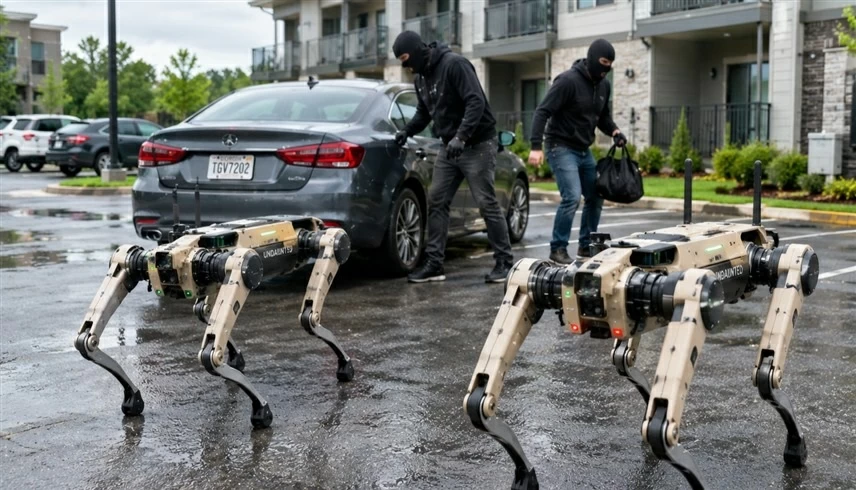
في مشهد مرعب وحابس للأنفاس بدا وكأنه مقتطع بعناية من فيلم خيال علمي، انتهت محاولة سرقة تقليدية داخل مجمع سكني فاخر في مدينة «أتلانتا» الأمريكية بنهاية كابوسية لم يتوقعها أعتى المجرمين، فبدلاً من مواجهة حراس الأمن البشر، وجد اللصوص أنفسهم مطاردين من قِبل «كلاب روبوتية» ذكية لاحقتهم خطوة بخطوة وشلت حركتهم بالكامل.
بدأت القصة في عتمة مرآب السيارات، عندما تسلل رجلان ملثمان بخطى حذرة بين المركبات الفارهة، يبحثان عن ثغرة أو سيارة غير مغلقة لنهب محتوياتها. وبينما ظن الجانيان أن خطتهما تسير في صمت، كانت الخوارزميات الرقمية لأنظمة المراقبة الذكية ترصد أنفاسهما وتحركاتهما في الوقت الفعلي.
وفي غضون ثوانٍ معدودة من رصد الخرق الأمني، اتخذت شركة الأمن المشغلة للموقع قراراً غير تقليدي، ودفعت بـ«كلبين آليين» إلى ساحة المعركة، لتبدأ مطاردة سيكوباتية غريبة من نوعها:
- روبوت التعقب اللصيق: تولى الكلب الروبوتي الأول مهمة اختراق المرآب، وملاحقة اللصين خطوة بخطوة، مسلطاً كاميراته الحرارية وأشعة الليزر على وجوههما دون كلل أو تراجع.
- روبوت غرف العمليات: في الوقت ذاته، استخدم الكلب الروبوتي الثاني نظام اتصال وربط مباشر بالشرطة، مغذياً غرف العمليات بأوصاف المشتبه بهما، وإحداثيات موقعهما الجغرافي بدقة متناهية.
ومع وصول صفارات إنذار الشرطة، أصيب اللصان بذعر حقيقي، فألقي القبض على الأول فور خروجه مسرعاً من البوابة الرئيسية للمرآب، بينما اعتقد اللص الثاني أن الحظ سيسعفه فاختبأ في رعب شديد خلف حاويات النفخات الكبيرة داخل المجمع السكني.
لكن ما لم يحسب له حساباً، هو أن «الكلب الحديدي» كان يقف على بعد خطوات منه، يرمقه بأعينه الرقمية ويرسل موقعه بدقة للقوات الأمنية، حتى حوصر تماماً وسقط في قبضة رجال الأمن.
وأثارت الواقعة المدوية نقاشاً عالمياً ساخناً حول مستقبل الأمن، فالشركة المشغلة فجرت مفاجأة بتأكيدها أن هذه الكلاب الروبوتية غير مسلحة بأي أدوات هجومية ولا خطط لتسليحها مستقبلاً، بل تعتمد على قوة التتبع، والضغط النفسي، والاتصال الفوري.
وتفتح هذه المطاردة الباب أمام سؤال يفرض نفسه بقوة: هل أعلنت هذه التكنولوجيا نهاية عصر الحارس البشري التقليدي، أم أن ما حدث في أتلانتا هو مجرد شرارة البداية لعصر أمني مرعب تفرض فيه الآلة سيطرتها على الشوارع؟
In a terrifying and breathless scene that seemed carefully cut from a science fiction film, a traditional robbery attempt inside a luxury residential complex in the American city of "Atlanta" ended in a nightmarish conclusion that even the toughest criminals did not expect. Instead of facing human security guards, the thieves found themselves being chased by "smart robotic dogs" that pursued them step by step and completely immobilized them.
The story began in the darkness of a parking garage when two masked men stealthily crept between the luxury vehicles, searching for a gap or an unlocked car to loot its contents. While the perpetrators thought their plan was proceeding silently, the digital algorithms of the smart surveillance systems were tracking their breaths and movements in real time.
Within seconds of detecting the security breach, the security company operating the site made an unconventional decision and deployed "two robotic dogs" into the battlefield, initiating a bizarre psychopathic chase:
- Close-Tracking Robot: The first robotic dog took on the task of infiltrating the garage, pursuing the thieves step by step, relentlessly focusing its thermal cameras and laser beams on their faces.
- Operations Room Robot: At the same time, the second robotic dog used a direct communication system to connect with the police, feeding the operations rooms with descriptions of the suspects and their geographical coordinates with pinpoint accuracy.
With the arrival of police sirens, the two thieves were struck by real panic. The first was arrested immediately upon rushing out of the main gate of the garage, while the second thief thought luck would be on his side and hid in sheer terror behind large dumpsters within the residential complex.
However, what he did not account for was that the "iron dog" was just steps away from him, watching him with its digital eyes and sending his location precisely to the security forces, until he was completely cornered and fell into the hands of the security personnel.
The sensational incident sparked a heated global debate about the future of security, as the operating company revealed a surprise by confirming that these robotic dogs are unarmed with any offensive tools and have no plans to arm them in the future; they rely instead on tracking power, psychological pressure, and instant communication.
This chase opens the door to a compelling question: Has this technology announced the end of the traditional human guard era, or is what happened in Atlanta merely the spark of the beginning of a terrifying security era where machines impose their control over the streets?