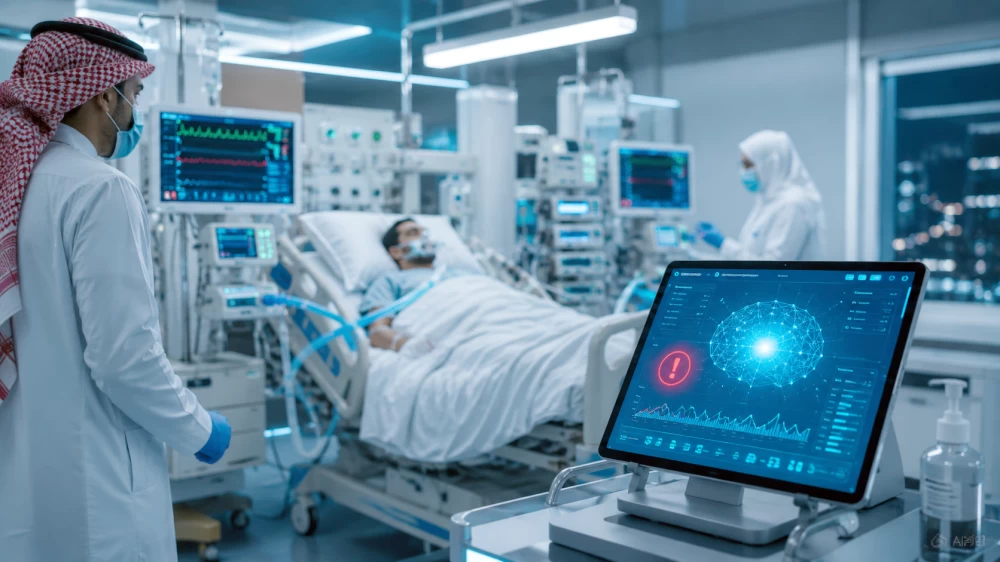
كشفت دراسة علمية حديثة، بمشاركة باحثين من 4 جامعات سعودية، تطوير نموذج للذكاء الاصطناعي يستطيع تحليل الساعات الأولى من وجود المريض في العناية المركزة للتنبؤ باحتمال تعرّضه لتدهور حاد خلال الأيام التالية، بما قد يوفر للفريق الطبي إنذاراً مبكراً قبل وصول الحالة إلى مرحلة حرجة.
ونُشرت الدراسة في مجلة «التقارير العلمية» المحكمة التابعة لمحفظة «نيتشر» عن دار «سبرنغر نيتشر» في 22 أغسطس 2026، وشارك فيها باحثون من جامعات المجمعة والقصيم والإمام محمد بن سعود الإسلامية والأميرة نورة بنت عبدالرحمن، إلى جانب باحثين من ماليزيا وتركيا، بدعم من جامعة الأميرة نورة.
وبنى الباحثون نموذجاً متعدد المصادر يجمع بين البيانات السريرية المنظمة، وتغير المؤشرات الفسيولوجية خلال أول 24 ساعة، ونمط مراقبة الفريق الطبي للمريض. وحددت الدراسة التدهور الحاد ببدء استخدام أدوية رافعة لضغط الدم خلال 72 ساعة أو وفاة المريض داخل المستشفى.
واعتمد اختبار النموذج على قاعدة بيانات دولية كبيرة لسجلات مرضى العناية المركزة، ما يعني أن الدراسة طورت واختبرت نموذجاً حسابياً ولم تُجرَ كتجربة سريرية على مرضى في مستشفيات سعودية.
وأظهرت النتائج قدرة تنبؤية قوية للنموذج، إذ بلغ مقياس التمييز بين المرضى المعرضين للتدهور وغيرهم 0.87، فيما بلغ المؤشر الذي يقيس التوازن بين اكتشاف الحالات والإنذارات 0.81.
ويتمثل الجانب اللافت في الدراسة في إدخال سلوك الفريق الطبي ضمن البيانات التي يحللها الذكاء الاصطناعي؛ إذ يمكن أن تعكس زيادة مراقبة مريض أو تكثيف طلب الفحوص والتحاليل وجود قلق سريري بشأن حالته حتى قبل ظهور مؤشرات التدهور بشكل واضح.
ويرى الباحثون أن الجمع بين حركة العلامات الحيوية والتحاليل ونمط متابعة الطبيب قد يساعد مستقبلاً في تحديد المرضى الذين يحتاجون إلى مراقبة أو تدخل أسرع، مقارنة بالاعتماد على المؤشرات الفسيولوجية وحدها.
ورغم النتائج الواعدة، شدّد الباحثون على ضرورة اختبار النموذج خارجياً في مستشفيات ومراكز عناية مركزة متعددة، وباستخدام مجموعات مختلفة من المرضى، قبل تعميمه أو اعتماده للاستخدام السريري.
وتفتح الدراسة بذلك مساراً بحثياً جديداً في توظيف الذكاء الاصطناعي بالعناية المركزة، يقوم على تحليل حالة المريض إلى جانب الطريقة التي يتابع بها الفريق الطبي تطورات حالته.
A recent scientific study, involving researchers from four Saudi universities, revealed the development of an artificial intelligence model capable of analyzing the initial hours of a patient's stay in intensive care to predict the likelihood of experiencing acute deterioration in the following days, potentially providing the medical team with an early warning before the condition reaches a critical stage.
The study was published in the peer-reviewed journal "Scientific Reports," part of the "Nature" portfolio by Springer Nature, on August 22, 2026. It included researchers from Al-Majma'ah University, Qassim University, Imam Muhammad bin Saud Islamic University, and Princess Nourah bint Abdulrahman University, alongside researchers from Malaysia and Turkey, with support from Princess Nourah University.
The researchers built a multi-source model that combines organized clinical data, changes in physiological indicators during the first 24 hours, and the monitoring pattern of the medical team for the patient. The study defined acute deterioration as the initiation of the use of blood pressure-raising medications within 72 hours or the patient's death in the hospital.
The model's testing relied on a large international database of intensive care patient records, meaning that the study developed and tested a computational model and was not conducted as a clinical trial on patients in Saudi hospitals.
The results demonstrated a strong predictive capability of the model, with a discrimination scale between patients at risk of deterioration and others reaching 0.87, while the index measuring the balance between detecting cases and false alarms was 0.81.
A notable aspect of the study is the inclusion of the medical team's behavior within the data analyzed by the artificial intelligence; an increase in monitoring a patient or intensifying requests for tests and analyses may reflect clinical concern about their condition even before clear signs of deterioration appear.
The researchers believe that combining the movement of vital signs, analyses, and the doctor's follow-up pattern may help in the future to identify patients who need closer monitoring or quicker intervention, compared to relying solely on physiological indicators.
Despite the promising results, the researchers emphasized the need to externally test the model in multiple hospitals and intensive care centers, using different patient groups, before generalizing or approving it for clinical use.
Thus, the study opens a new research pathway in employing artificial intelligence in intensive care, based on analyzing the patient's condition alongside the way the medical team monitors the developments of their case.