



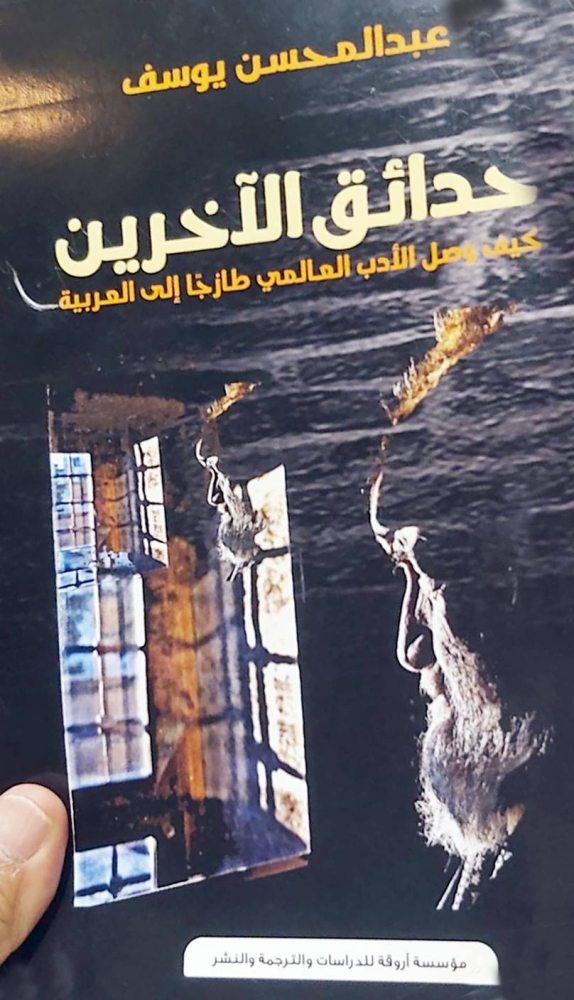
يُشكّل كتاب «حدائق الآخرين: كيف وصل الأدب العالمي طازجاً إلى العربية» للأديب عبدالمحسن يوسف، الصادر عن مؤسسة أروقة للدراسات والترجمة والنشر عام 2021، دعوة مفتوحة للتأمل في فعل الترجمة، ليس بوصفه مجرد نقل للكلمات، بل كرحلة فكرية وجمالية تضيء دروب التواصل بين الثقافات. إنّ هذا السفر الماتع، الذي يصفه المؤلف بأنه «نزهة متمهلة في كتب جميلة قرأتها»، يتجاوز حدود المراجعات النقدية التقليدية ليغوص في أعماق التجربة القرائية، مقدماً رؤية ثاقبة حول كيفية تلقّي الأدب العالمي في الوعي العربي.
يُعدّ عنوان الكتاب بحد ذاته مفتاحاً دالاً على مضمونه؛ فـ«حدائق الآخرين» ُيوحي بالانفتاح على عوالم غنية ومتنوعة، هي عوالم الفكر والإبداع الإنساني، بينما عبارة «كيف وصل الأدب العالمي طازجاً إلى العربية» تُبرز الهاجس الأساسي للمؤلف: استكشاف آليات وصول هذه النصوص إلى المتلقي العربي بحيويتها الأصلية، دون أن يفقدها زمن أو لغة بريقها. هذه الطزاجة ليست مجرد جودة شكلية، بل هي جوهر الروح التي يبحث عنها الكاتب في كل نص مترجم، وهي تتجلّى بوضوح في اختياراته وشواهده.
ينطلق المؤلف من فرضية بسيطة لكنها عميقة: القصيدة لا يحتملها إلا من امتلأ بها، والترجمة الحقيقية للشعر لا تتم إلا حين يكون المترجم شاعراً في الأصل، يصغي لما بين السطور، ويكتب بالقلب قبل اللسان.
يُقدم عبدالمحسن يوسف، بأسلوبه السلس والعميق، سجلاً لجُلّ ما أثّر في وعيه وذاكرته القرائية. يستعرض الكتاب باقة من الأسماء الأدبية العالمية، من شعراء وكتّاب قصص وروايات، مروراً بأسماء مثل بابلو ميدينا، يوسف برودسكي، شيمبورسكا، ياروسلاف سيفرت، هرمان هيسه، فلورنس أنطوني، وبيسوا، وصولاً إلى كالفينو، تشيخوف، وكبلنغ، وكيم أدونيزيو، وميشائيل كروغر وغيرهم. هذا التنوع في الاختيارات لا يعكس فقط سعة اطلاع المؤلف، بل يُشير أيضاً إلى رؤيته الشمولية للأدب، فهو يرى أن الأدب الحقيقي لا يعرف حدوداً جغرافية أو زمنية، بل هو جسر يربط بين القلوب والعقول عبر العصور.
ما يُميّز «حدائق الآخرين» هو غوصه في العلاقة بين المترجِم والنص المترجَم. يطرح المؤلف سؤالاً ضمنياً عن السر وراء وصول نص معين إلى القارئ العربي «طازجاً». الإجابة لا تكمن فقط في براعة المترجم اللغوية، بل في قدرته على استيعاب روح النص وثقافته، وفي إيصال هذه الروح إلى لغة أخرى دون تشويه أو تبديل. إنها عملية لا تنفصل عن الذائقة، الحس الفني، والإحساس العميق بالمسؤولية تجاه العمل الأصلي والقارئ على حد سواء.
يُبرز يوسف في دراسته الأدبية هذه، أن الترجمة ليست عملية ميكانيكية، بل هي فعل إبداعي بحد ذاته. المترجم الجيد هو الذي يمتلك القدرة على «إعادة خلق» النص بلغة أخرى، محافظاً على نبرته، إيقاعه، وصورته الشعرية. ولعل هذا ما يفسر اختياراته المتنوعة، التي تُشير إلى أن بعض النصوص قد وجدت طريقها إلى العربية بفضل جهود مترجمين استثنائيين استطاعوا أن يكونوا بمثابة «بستانيين» ماهرين حافظوا على ترف زهور «حدائق الآخرين» في تربة اللغة العربية.
شواهد على جمال الاختيار والترجمة
يقدم عبدالمحسن يوسف نماذج مختارة بعناية فائقة، تُظهر ليس فقط عمق النصوص الأصلية، بل أيضاً جودة الترجمة التي حافظت على جوهرها وجمالها. لنقف عند بعض هذه الشواهد التي تُضيء ذائقة الكاتب:
1. من عالم «يوسف برودسكي»:
يُقدّم المؤلف برودسكي نموذجاً للشاعر العميق الذي تتجاوز كلماته الزمان والمكان. يقول:
«يوسف برودسكي، شاعرٌ لا يكتبُ عن الشغف، بل هو الشغف نفسه، يتجلّى في كلماته. إنه يتحدّث عن الحب بطريقةٍ تُفجّر في الروح مواجع الغياب والأمل».
هذا الوصف التكثيفي لبرودسكي يُشير إلى عمق الرؤية التي يعتمدها المؤلف في تقديم الأدباء، فلا يكتفي بعرض سيرهم الذاتية، بل يلجأ إلى استكشاف جوهر إبداعهم. اختيار برودسكي يُسلّط الضوء على الشعر الفلسفي الذي يتجاوز المباشرة، ويُحلّق في عوالم التأمل الإنساني العميق.
2. إشراقة «الشاعرة البولندية شيمبورسكا»:
يُعرّج الكتاب على الشاعرة البولندية الكبيرة شيمبورسكا، المعروفة بأسلوبها الساخر والحكيم في آن واحد، ويُشير إلى نصٍّ يتسم بالبساطة والعمق:
«قد لا يهمّ إن كان ذلك حدث أم لا. المهم أنك قرأته. لقد خُلقتَ».
هذا المقطع، الذي ينبض بالبساطة الفلسفية، يُلخّص جوهر الإبداع والتلقّي. يوسف يُقدّم هذه الشاهدة ليؤكد أن القراءة فعلٌ يُعيد خلق القارئ، وأن النصوص المترجمة لا تُقدّم مجرد معلومات، بل تُساهم في بناء الوعي والذات. اختيار شيمبورسكا يُبرز التقدير للغة الشعرية التي تستطيع أن تقول الكثير بالقليل، وتُثير التساؤلات الوجودية بلمسة خفيفة.
3. هرمان هيسه و«إذا ما استمرت الحرب»:يُبرز عبدالمحسن يوسف من أعمال هرمان هيسه، الكاتب الذي يغوص في أعماق النفس البشرية والبحث عن الذات، مقطعاً يحمل دلالات عميقة:
«عندما تستمر الحرب، تصبح الأرواح هي الجبهة الحقيقية».
هذه الجملة المُكثّفة تُشير إلى قدرة الأدب على كشف الحقائق الإنسانية العميقة، متجاوزاً الأحداث الظاهرية. اختيار هذا الاقتباس من هيسه، المعروف بفلسفته وتأملاته في الحرب والسلام والروح البشرية، يؤكد أن «حدائق الآخرين» ليست مجرد استعراض لنصوص جميلة، بل هي دعوة للتفكير في القضايا الكبرى التي تشغل الإنسان.
4. فلورنس أنطوني و«سوداء كليلةِ البارحة»:يختار المؤلف من «سوداء كليلةِ البارحة» لفلورنس أنطوني ما يُجسّد قوة الصورة الشعرية، وربما ما يحمل في طياته إشارة إلى الواقع المعاش أو تجارب إنسانية عميقة:
«كم كانت سوداء كليلةِ البارحة، كجرحٍ مفتوح في الروح».
هذه الصورة البلاغية العميقة تُظهر كيف يمكن للكلمة أن تتحول إلى لوحة فنية، وكيف تستطيع الترجمة الجيدة أن تنقل هذا العمق الشعوري. اختيار هذا النص يُبرز اهتمام المؤلف بالشعر الذي يرسم الصور الذهنية ويُلامس المشاعر الدفينة.
5. بيسوا و«لستُ ذا شأن»:من كتابات فرناندو بيسوا، الشاعر البرتغالي الشهير الذي اشتهر بتعدّد الأسماء المستعارة والشخصيات الأدبية، ينتقي يوسف ما يُعبّر عن التيه الوجودي واللامبالاة الظاهرية:
«لستُ ذا شأن، إلا في تلك اللحظات التي أنسى فيها أنني كذلك».
هذه العبارة، التي تُجسّد الوعي بالذات ونفيها في آن واحد، تُشير إلى عُمق التأمل الفلسفي الذي يقدمه بيسوا. اختيارها من قبل عبدالمحسن يوسف يُبرز إعجابه بالأدب الذي يتناول تعقيدات النفس البشرية وتناقضاتها، ويُلقي الضوء على المترجمين الذين يمتلكون القدرة على نقل هذه الدقائق الفلسفية.
6. كيم أدونيزيو في «خاسران على الناصية»:
يُقدم المؤلف من «خاسران على الناصية» لكيم أدونيزيو، نصّاً يُلامس جانباً من الضعف الإنساني أو اليأس، لكن بلمسة أدبية:
«كلانا خاسران، لكننا نملك هذا الرصيف، وهذه الأضواء الخافتة».
هذا المقطع، الذي يجمع بين المرارة وشيء من التعايش مع الواقع، يُظهر حساسية المؤلف في اختيار النصوص التي تُلامس جوانب مختلفة من التجربة الإنسانية. يُبرز هذا الاختيار أيضاً، كيف يمكن للنص أن يكون مُكثّفاً في معناه، وأن يُشير إلى حالات نفسية واجتماعية عميقة.
7. ميشائيل كروغر، في «خطوات وظلال»:يستعرض يوسف من عمل ميشائيل كروغر، مقطعاً يثير التأمل في أثر الزمن وذكرياته:
«الخطوات ترحل، والظلال وحدها تبقى تحكي».
هذه الجملة الشعرية، التي تتسم بالعمق الفلسفي، تُشير إلى أن الأثر المادي يزول، بينما تبقى الذاكرة والقصص والأثر المعنوي. اختيار هذا الاقتباس يؤكد ميل الكاتب إلى النصوص التي تتناول الأفكار الوجودية وتُحفّز على التأمل.
من خلال هذه «الإضاءات» المتناثرة في فضاءات عديدة، ينجح عبدالمحسن يوسف في تقديم رؤية متكاملة للأدب العالمي المترجم، ليس ككيان غريب، بل كجزء أصيل من تجربتنا الثقافية. يُشجع الكتاب القارئ على إعادة اكتشاف نصوص أدبية معروفة، والتعرف على أخرى ربما لم تحظَ بالاهتمام الكافي، كل ذلك من خلال عدسة ناقد وقارئ شغوف يرى في كل كلمة مترجمة جسراً يربط بين أرواح البشر على اختلاف ألسنتهم وثقافاتهم.
في الختام، يُعدّ «حدائق الآخرين» احتفاء بالترجمة بوصفها فعلاً حضارياً، وتأكيداً على أن الأدب، في جوهره، لغة كونية تتجاوز الحواجز وتفتح القلوب على مصراعيها لاستقبال «الآخر» بكل جماله وعمقه. هو عملٌ يُلهم القارئ بأن يغدو هو نفسه «بستانياً» يزرع ويحصُد من حدائق الآخرين، لتبقى شجرة الأدب العالمي مُورِقة ومُثمِرة في حدائق اللغة العربية، بفضل الذائقة الرفيعة للمؤلف والمترجمين الذين جلبوا لنا هذه الجواهر.
كاتبة وناقدة لبنانية
«حدائق الآخرين» للأديب عبدالمحسن يوسف
نافذة على روح الترجمة وألقها
20 يونيو 2025 - 03:11
|
آخر تحديث 20 يونيو 2025 - 03:11


تابع قناة عكاظ على الواتساب
فاتن مرتضى
The book "Gardens of Others: How World Literature Arrived Freshly in Arabic" by writer Abdul Mohsen Youssef, published by the Arwaq Foundation for Studies, Translation, and Publishing in 2021, is an open invitation to reflect on the act of translation, not merely as a transfer of words, but as an intellectual and aesthetic journey that illuminates the paths of communication between cultures. This delightful travelogue, which the author describes as "a leisurely stroll through beautiful books I have read," transcends the boundaries of traditional critical reviews to delve deep into the reading experience, offering a keen insight into how world literature is received in Arab consciousness.
The title of the book itself serves as a key indicator of its content; "Gardens of Others" suggests an openness to rich and diverse worlds, those of human thought and creativity, while the phrase "how world literature arrived freshly in Arabic" highlights the author's primary concern: exploring the mechanisms by which these texts reach the Arab reader in their original vitality, without losing their luster to time or language. This freshness is not merely a formal quality, but the essence of the spirit that the writer seeks in every translated text, clearly manifested in his choices and examples.
The author starts from a simple yet profound hypothesis: a poem can only be embraced by someone who is filled with it, and the true translation of poetry can only occur when the translator is a poet at heart, listening to what lies between the lines, and writing with the heart before the tongue.
Abdul Mohsen Youssef, with his smooth and profound style, presents a record of much that has influenced his consciousness and reading memory. The book showcases a bouquet of global literary names, from poets and story writers to novelists, including figures like Pablo Medina, Joseph Brodsky, Wisława Szymborska, Jaroslav Seifert, Hermann Hesse, Florence Anthony, and Pessoa, reaching up to Calvino, Chekhov, Kipling, Kim Addonizio, Michael Krüger, and others. This diversity in choices not only reflects the author's wide-ranging knowledge but also points to his holistic vision of literature; he believes that true literature knows no geographical or temporal boundaries, but is a bridge connecting hearts and minds across ages.
What distinguishes "Gardens of Others" is its deep exploration of the relationship between the translator and the translated text. The author implicitly raises a question about the secret behind a particular text reaching the Arab reader "freshly." The answer lies not only in the linguistic skill of the translator but also in their ability to grasp the spirit of the text and its culture, and to convey this spirit into another language without distortion or alteration. It is a process inseparable from taste, artistic sensibility, and a profound sense of responsibility towards both the original work and the reader.
Youssef emphasizes in this literary study that translation is not a mechanical process, but a creative act in itself. A good translator is one who possesses the ability to "recreate" the text in another language, preserving its tone, rhythm, and poetic imagery. Perhaps this explains his diverse selections, which indicate that some texts have found their way into Arabic thanks to the efforts of exceptional translators who have managed to be like skilled "gardeners" preserving the luxury of the flowers of "Gardens of Others" in the soil of the Arabic language.
Examples of the beauty of selection and translation
Abdul Mohsen Youssef presents carefully selected examples that demonstrate not only the depth of the original texts but also the quality of the translations that maintained their essence and beauty. Let us pause at some of these examples that illuminate the writer's taste:
1. From the world of "Joseph Brodsky":
The author presents Brodsky as a model of the profound poet whose words transcend time and space. He says:
“Joseph Brodsky is a poet who does not write about passion; he is passion itself, manifesting in his words. He speaks of love in a way that ignites in the soul the pains of absence and hope.”
This condensed description of Brodsky indicates the depth of vision that the author employs in presenting writers; he does not merely present their biographies but seeks to explore the essence of their creativity. The choice of Brodsky highlights philosophical poetry that transcends directness and soars into realms of deep human contemplation.
2. The brilliance of "Polish poet Szymborska":
The book touches upon the great Polish poet Szymborska, known for her simultaneously ironic and wise style, and refers to a text characterized by simplicity and depth:
“It may not matter whether it happened or not. What matters is that you read it. You were created.”
This passage, pulsating with philosophical simplicity, summarizes the essence of creativity and reception. Youssef presents this witness to affirm that reading is an act that recreates the reader, and that translated texts do not merely provide information, but contribute to the construction of awareness and self. The choice of Szymborska highlights an appreciation for poetic language that can say much with little and provoke existential questions with a light touch.
3. Hermann Hesse and "If the War Continues":
Abdul Mohsen Youssef highlights a passage from the works of Hermann Hesse, a writer who dives into the depths of the human soul and the search for self, carrying deep connotations:
“When the war continues, souls become the real front.”
This condensed sentence indicates literature's ability to reveal deep human truths, transcending apparent events. The choice of this quote from Hesse, known for his philosophy and reflections on war, peace, and the human spirit, confirms that "Gardens of Others" is not merely a showcase of beautiful texts but a call to think about the major issues that occupy humanity.
4. Florence Anthony and "The Black of Last Night":
The author selects from "The Black of Last Night" by Florence Anthony what embodies the power of poetic imagery, perhaps carrying within it a reference to lived reality or deep human experiences:
“How black was last night, like an open wound in the soul.”
This profound rhetorical image shows how words can transform into a work of art, and how good translation can convey this emotional depth. The choice of this text highlights the author's interest in poetry that paints mental images and touches on buried feelings.
5. Pessoa and "I Am of No Importance":
From the writings of Fernando Pessoa, the famous Portuguese poet known for his multiple pseudonyms and literary personas, Youssef selects what expresses existential wandering and apparent indifference:
“I am of no importance, except in those moments when I forget that I am.”
This phrase, which embodies self-awareness and denial simultaneously, points to the depth of philosophical contemplation that Pessoa offers. Its selection by Abdul Mohsen Youssef highlights his admiration for literature that addresses the complexities and contradictions of the human soul, shedding light on translators who possess the ability to convey these philosophical nuances.
6. Kim Addonizio in "Losers on the Corner":
The author presents from "Losers on the Corner" by Kim Addonizio a text that touches on a facet of human weakness or despair, but with a literary touch:
“We are both losers, but we have this sidewalk, and these dim lights.”
This passage, which combines bitterness with a sense of coexistence with reality, shows the author's sensitivity in selecting texts that touch on different aspects of the human experience. This choice also highlights how a text can be condensed in meaning and point to deep psychological and social states.
7. Michael Krüger, in "Steps and Shadows":
Youssef reviews a passage from Michael Krüger's work that provokes contemplation on the impact of time and memories:
“The steps depart, and only the shadows remain to tell.”
This poetic sentence, characterized by philosophical depth, indicates that the material effect fades, while memory, stories, and the moral impact remain. The choice of this quote confirms the author's inclination towards texts that address existential ideas and stimulate contemplation.
Through these "illuminations" scattered across various spaces, Abdul Mohsen Youssef succeeds in presenting a comprehensive vision of translated world literature, not as a foreign entity but as an integral part of our cultural experience. The book encourages the reader to rediscover well-known literary texts and to get to know others that may not have received sufficient attention, all through the lens of a passionate critic and reader who sees in every translated word a bridge connecting the souls of humans across their different tongues and cultures.
In conclusion, "Gardens of Others" is a celebration of translation as a civilizational act, affirming that literature, at its core, is a universal language that transcends barriers and opens hearts wide to welcome "the other" in all its beauty and depth. It is a work that inspires the reader to become a "gardener" themselves, planting and harvesting from the gardens of others, so that the tree of world literature remains lush and fruitful in the gardens of the Arabic language, thanks to the refined taste of the author and the translators who brought us these gems.
A Lebanese writer and critic.
The title of the book itself serves as a key indicator of its content; "Gardens of Others" suggests an openness to rich and diverse worlds, those of human thought and creativity, while the phrase "how world literature arrived freshly in Arabic" highlights the author's primary concern: exploring the mechanisms by which these texts reach the Arab reader in their original vitality, without losing their luster to time or language. This freshness is not merely a formal quality, but the essence of the spirit that the writer seeks in every translated text, clearly manifested in his choices and examples.
The author starts from a simple yet profound hypothesis: a poem can only be embraced by someone who is filled with it, and the true translation of poetry can only occur when the translator is a poet at heart, listening to what lies between the lines, and writing with the heart before the tongue.
Abdul Mohsen Youssef, with his smooth and profound style, presents a record of much that has influenced his consciousness and reading memory. The book showcases a bouquet of global literary names, from poets and story writers to novelists, including figures like Pablo Medina, Joseph Brodsky, Wisława Szymborska, Jaroslav Seifert, Hermann Hesse, Florence Anthony, and Pessoa, reaching up to Calvino, Chekhov, Kipling, Kim Addonizio, Michael Krüger, and others. This diversity in choices not only reflects the author's wide-ranging knowledge but also points to his holistic vision of literature; he believes that true literature knows no geographical or temporal boundaries, but is a bridge connecting hearts and minds across ages.
What distinguishes "Gardens of Others" is its deep exploration of the relationship between the translator and the translated text. The author implicitly raises a question about the secret behind a particular text reaching the Arab reader "freshly." The answer lies not only in the linguistic skill of the translator but also in their ability to grasp the spirit of the text and its culture, and to convey this spirit into another language without distortion or alteration. It is a process inseparable from taste, artistic sensibility, and a profound sense of responsibility towards both the original work and the reader.
Youssef emphasizes in this literary study that translation is not a mechanical process, but a creative act in itself. A good translator is one who possesses the ability to "recreate" the text in another language, preserving its tone, rhythm, and poetic imagery. Perhaps this explains his diverse selections, which indicate that some texts have found their way into Arabic thanks to the efforts of exceptional translators who have managed to be like skilled "gardeners" preserving the luxury of the flowers of "Gardens of Others" in the soil of the Arabic language.
Examples of the beauty of selection and translation
Abdul Mohsen Youssef presents carefully selected examples that demonstrate not only the depth of the original texts but also the quality of the translations that maintained their essence and beauty. Let us pause at some of these examples that illuminate the writer's taste:
1. From the world of "Joseph Brodsky":
The author presents Brodsky as a model of the profound poet whose words transcend time and space. He says:
“Joseph Brodsky is a poet who does not write about passion; he is passion itself, manifesting in his words. He speaks of love in a way that ignites in the soul the pains of absence and hope.”
This condensed description of Brodsky indicates the depth of vision that the author employs in presenting writers; he does not merely present their biographies but seeks to explore the essence of their creativity. The choice of Brodsky highlights philosophical poetry that transcends directness and soars into realms of deep human contemplation.
2. The brilliance of "Polish poet Szymborska":
The book touches upon the great Polish poet Szymborska, known for her simultaneously ironic and wise style, and refers to a text characterized by simplicity and depth:
“It may not matter whether it happened or not. What matters is that you read it. You were created.”
This passage, pulsating with philosophical simplicity, summarizes the essence of creativity and reception. Youssef presents this witness to affirm that reading is an act that recreates the reader, and that translated texts do not merely provide information, but contribute to the construction of awareness and self. The choice of Szymborska highlights an appreciation for poetic language that can say much with little and provoke existential questions with a light touch.
3. Hermann Hesse and "If the War Continues":
Abdul Mohsen Youssef highlights a passage from the works of Hermann Hesse, a writer who dives into the depths of the human soul and the search for self, carrying deep connotations:
“When the war continues, souls become the real front.”
This condensed sentence indicates literature's ability to reveal deep human truths, transcending apparent events. The choice of this quote from Hesse, known for his philosophy and reflections on war, peace, and the human spirit, confirms that "Gardens of Others" is not merely a showcase of beautiful texts but a call to think about the major issues that occupy humanity.
4. Florence Anthony and "The Black of Last Night":
The author selects from "The Black of Last Night" by Florence Anthony what embodies the power of poetic imagery, perhaps carrying within it a reference to lived reality or deep human experiences:
“How black was last night, like an open wound in the soul.”
This profound rhetorical image shows how words can transform into a work of art, and how good translation can convey this emotional depth. The choice of this text highlights the author's interest in poetry that paints mental images and touches on buried feelings.
5. Pessoa and "I Am of No Importance":
From the writings of Fernando Pessoa, the famous Portuguese poet known for his multiple pseudonyms and literary personas, Youssef selects what expresses existential wandering and apparent indifference:
“I am of no importance, except in those moments when I forget that I am.”
This phrase, which embodies self-awareness and denial simultaneously, points to the depth of philosophical contemplation that Pessoa offers. Its selection by Abdul Mohsen Youssef highlights his admiration for literature that addresses the complexities and contradictions of the human soul, shedding light on translators who possess the ability to convey these philosophical nuances.
6. Kim Addonizio in "Losers on the Corner":
The author presents from "Losers on the Corner" by Kim Addonizio a text that touches on a facet of human weakness or despair, but with a literary touch:
“We are both losers, but we have this sidewalk, and these dim lights.”
This passage, which combines bitterness with a sense of coexistence with reality, shows the author's sensitivity in selecting texts that touch on different aspects of the human experience. This choice also highlights how a text can be condensed in meaning and point to deep psychological and social states.
7. Michael Krüger, in "Steps and Shadows":
Youssef reviews a passage from Michael Krüger's work that provokes contemplation on the impact of time and memories:
“The steps depart, and only the shadows remain to tell.”
This poetic sentence, characterized by philosophical depth, indicates that the material effect fades, while memory, stories, and the moral impact remain. The choice of this quote confirms the author's inclination towards texts that address existential ideas and stimulate contemplation.
Through these "illuminations" scattered across various spaces, Abdul Mohsen Youssef succeeds in presenting a comprehensive vision of translated world literature, not as a foreign entity but as an integral part of our cultural experience. The book encourages the reader to rediscover well-known literary texts and to get to know others that may not have received sufficient attention, all through the lens of a passionate critic and reader who sees in every translated word a bridge connecting the souls of humans across their different tongues and cultures.
In conclusion, "Gardens of Others" is a celebration of translation as a civilizational act, affirming that literature, at its core, is a universal language that transcends barriers and opens hearts wide to welcome "the other" in all its beauty and depth. It is a work that inspires the reader to become a "gardener" themselves, planting and harvesting from the gardens of others, so that the tree of world literature remains lush and fruitful in the gardens of the Arabic language, thanks to the refined taste of the author and the translators who brought us these gems.
A Lebanese writer and critic.


