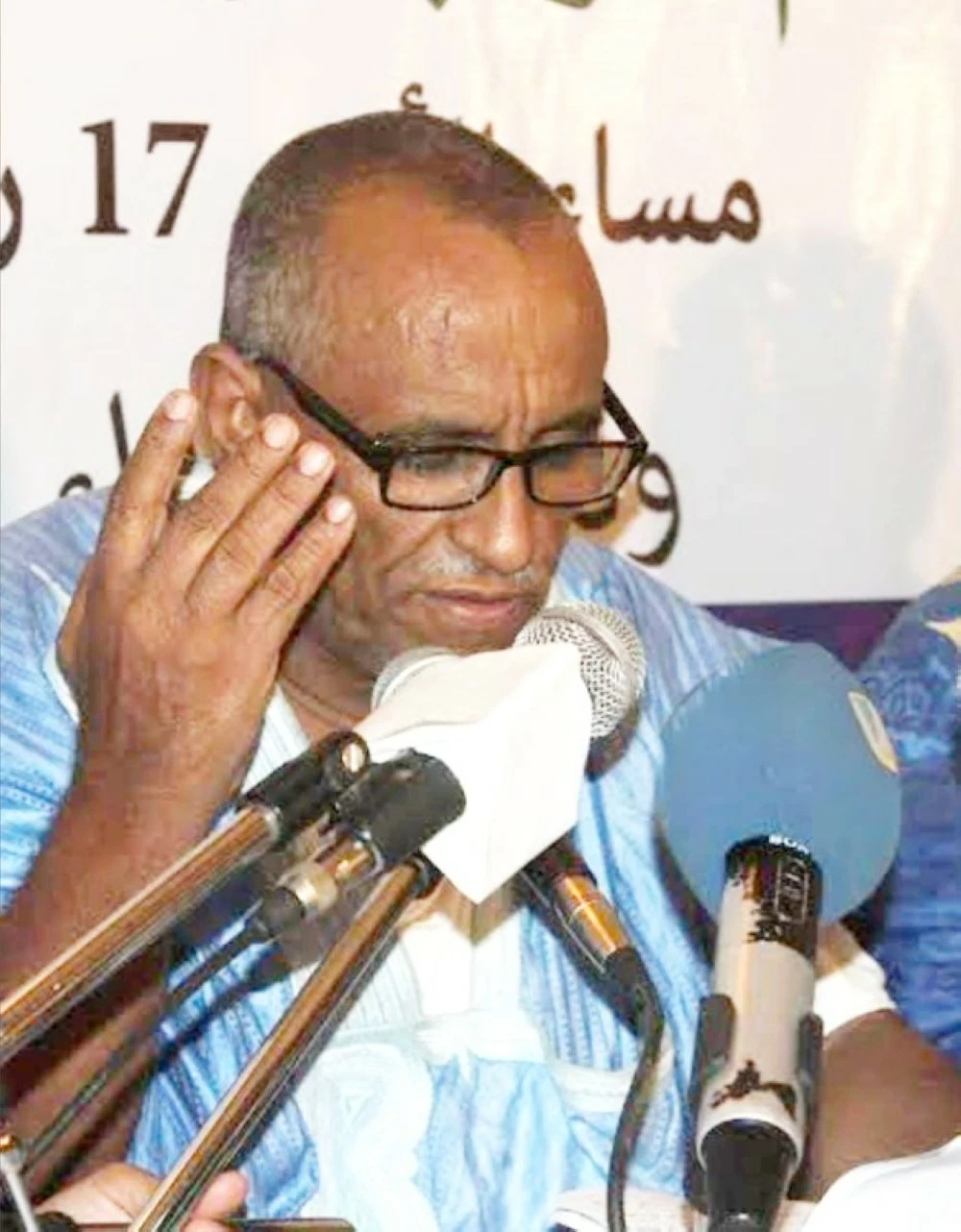
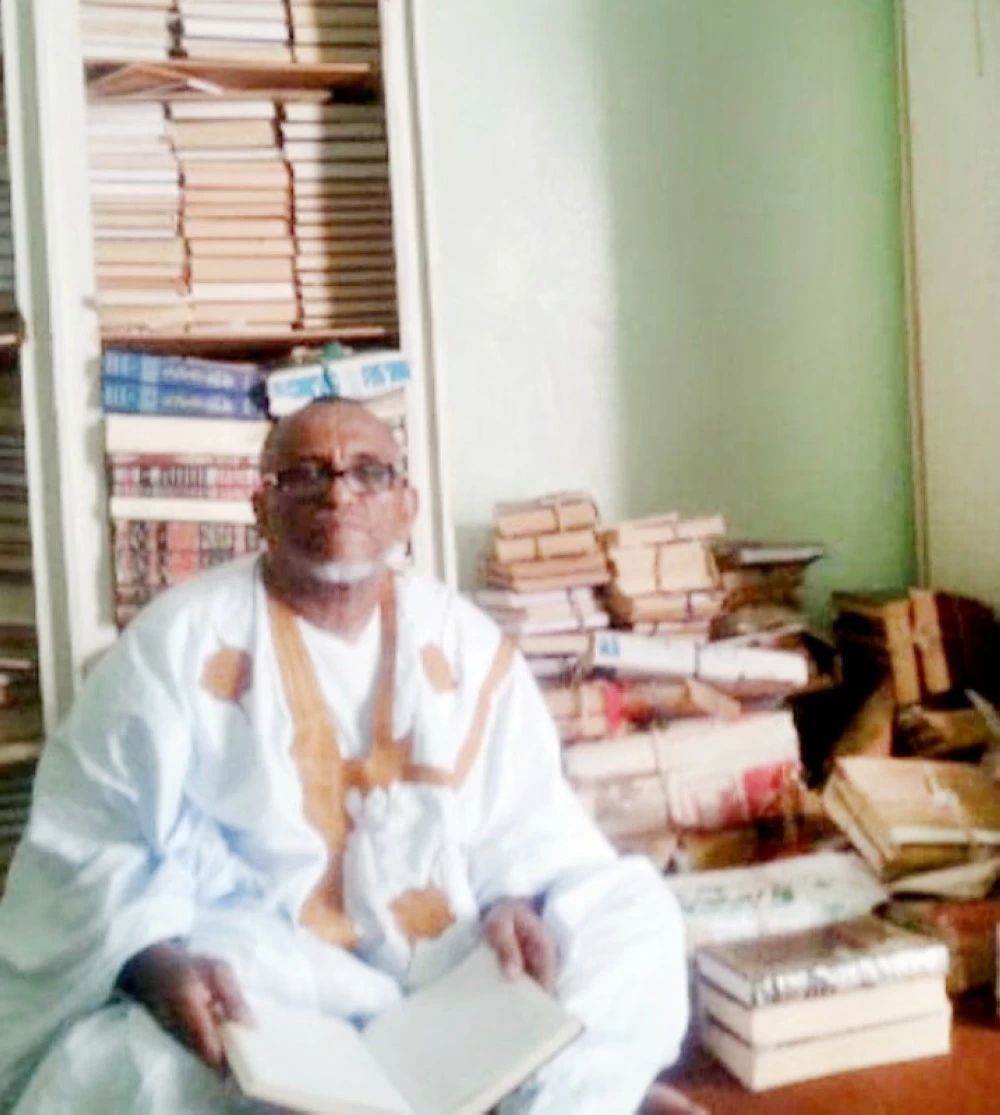
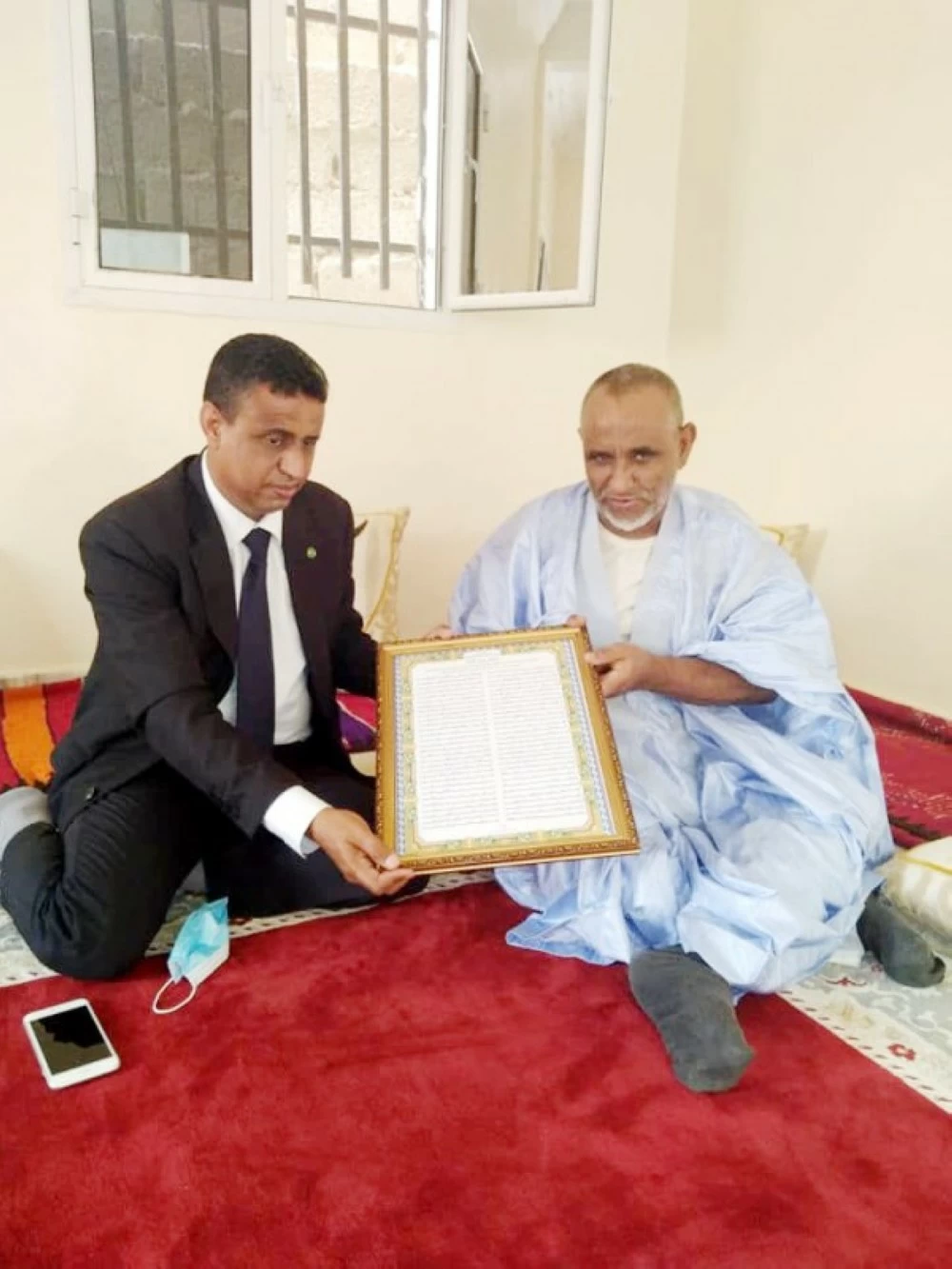
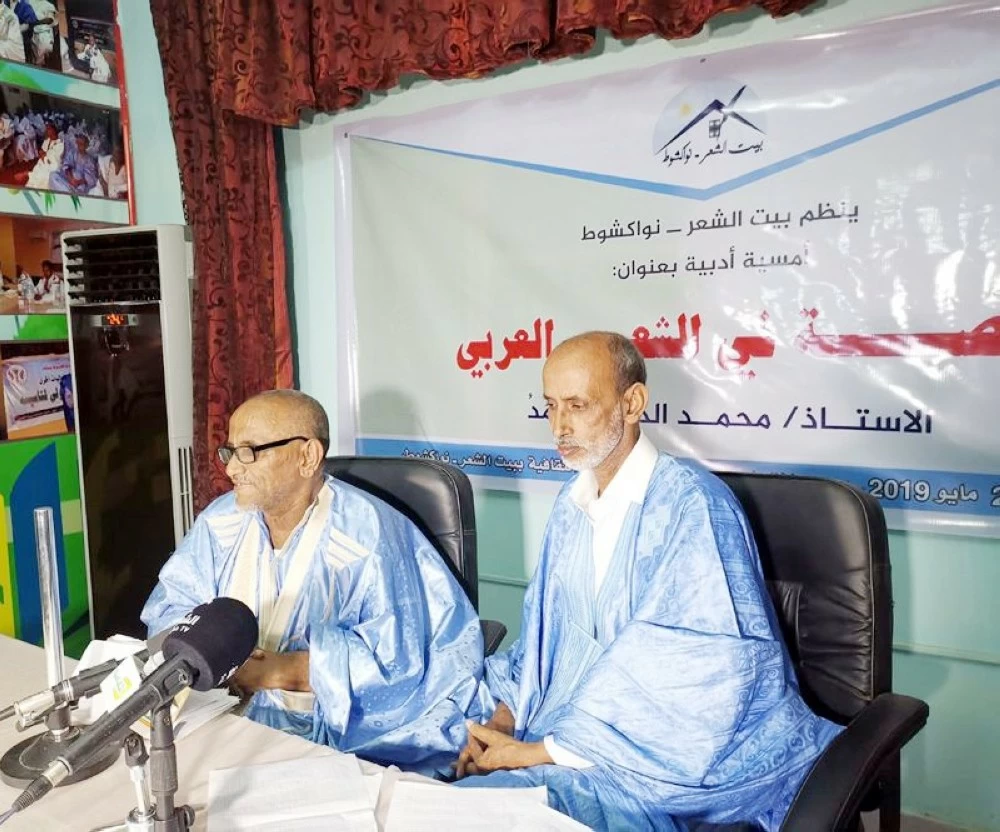
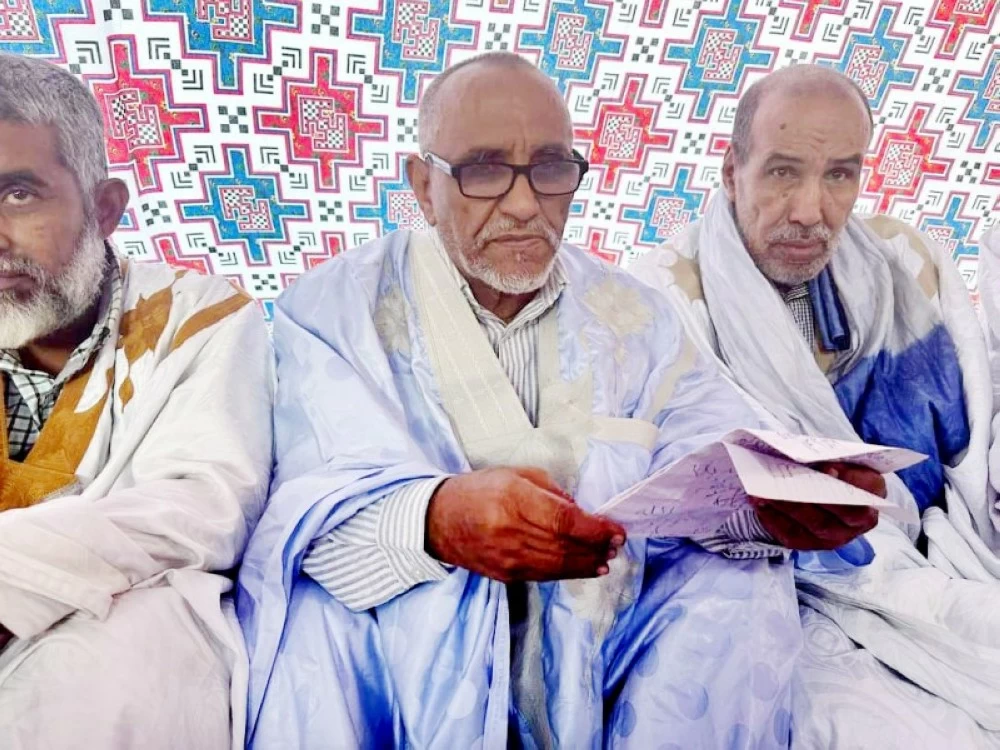
شدّ انتباهي مقطع مُصوّر يتحدث فيه الشاعر الموريتاني محمد الحافظ ولد أحمدو عن تجربته الشعريّة، ويُلقي نصوصاً مُدهِشة، فهي عذوبة معاصرة ولغة أصيلة، فشعره الكلاسيكي، والرومانسي، حضر حيناً من الدهر، ثمّ آمن أن الشّعر هو ما يختط دربه ومساره دون إدراك أو تصنيف الشاعر لما هو صادر عنه، وهذا المنزع الإنساني في قصيدته له روافد قرائية، نوّعت المنبع ووحّدت المصبّ، وهنا بعضُ آرائه الحدِيّة، وتجاربه الشديّة، وقطوفه النديّة، مع امتنان كبير لأريحية استجابته لدعوة «عكاظ» وتثمينها، باعتبارها أحرى وأولى من يبحث عن شاعر يستلهمها كل يوم من خلال شعرائها، فإلى نصّ الحوار..
• إلامَ تعزو فصاحة اللسان الشنقيطي؟
•• من أسباب فصاحة لغة الشناقطة، وخلوصها من هجنة اللحن والتعقيد عوامل، منها: التربوي الدراسي، إذ كنا ننشئ أبناءنا أول ما ننشئهم على حفظ كتاب الله وإتقانه مقرأ وضبطاً وتجويداً، ونفرض عليهم أن يستوعبوا النصوص المقررة في المعاهد الأهلية (المحاظر) التي كانت تضاهي أو تفوق الجامع الأزهر، على حفظ مقرراتها في السيرة النبوية الشريفة، لتنطبع في نفوسهم محبة رسولهم صلى الله عليه وسلم، لما يترتب عليها من الاقتداء والتأسي به، ونقفي على إثر ذلك باستيعاب مختارات الشعر الجاهلي كأشعار الشعراء الستة من اختيار الأصمعي وغيره وجمع وشرح الأعلم الشنتمري الأندلسي، وهذا تقليد ورثناه عن أسلافنا الأندلسيين، وأثناء ذلك نتقن استيعاب شروح المعلقات وما يتصل بها من شواهد نحوية ولغوية إلى غير ذلك من الاختيارات كجمهرة القرشي والمفضليات والحماسات، ولا بد في أثناء ذلك أو بعده من إتقان ألفية ابن مالك واستيعاب شروحها وعقد مجالس الإعراب للمبتدئين المعروفة محلياً «بالزرك» التي كانت بمثابة التدريب على الرماية فكأن كل شيخ يسدد إلى تلاميذه سهام غريب الإعراب ويدربهم على الانتضال والرماية على هذا النحو؛ لذلك ترى بعض مشايخنا يعلقون على اختيارات المجمع العلمي ويخطئونها مثل اختياره التقييم على التقويم بزعم التسهيل بالرغم من أن مادة (قوم) وما تفرع عنها بالواو، إلى غير ذلك مما هو شائع في مخاطبات الإعلام، والعامل البيئي إذ عاش الشناقطة في بيئة بدوية يغلب عليها الحل والترحال والانتجاع شأن حياة الجاهليين تماماً بل إننا أشبهناهم في الاستعاضة عن التدوين بالحفظ فاعتمادنا للرواية قبل أن تتفشى الكتابة وتنتشر الكتب والمطبوعات، وحياة الظعن لا يستقيم معها حفظ الكتب نتيجة لنمط المساكن؛ ولذلك ترانا مولعين بشعر (ذو الرِّمة غيلان)، الذي يقول البعض إن فيه ثلث لغة العرب، وهو حاضر في حياتنا الثقافية والعملية كاختيارنا الملاحف النيلية السوداء لبساً للعرائس تأسياً بشعره حيث يقول: وليلٌ كجلباب العروس ادرعته، بأربعةٍ والشخصُ في العين واحدُ، أحمّ علافي وأبيض صارم، وأعيش مهريّ و أصيد ماجد، وصيدح اسم ناقته، وهو علم غدا صفةً لكل ناقة ركوب عند الشناقطة، ومنها جغرافي إذ عاش الشناقطة في هذه البيئة الصحراوية المعزولة عن المراكز الحضرية شمالاً وجنوباً وذلك ما أسهم في بقاء لغتهم نقيّةً، مما يفرضه الاختلاط العمراني الحضاري، ولم يجد المستعمرون مستقراً حضرياً ينفذون من خلاله إلى المجتمع وثقافته.
• ما سر كثرة عدد الشعراء في بلاد شنقيط؟
•• يقال إن موريتانيا بلد مليون شاعر؛ والسبب في ذلك أن بعثة من محرري مجلة العربي، وفدوا على موريتانيا في ستينيات القرن الماضي قبل انتسابها إلى الجامعة العربية، وكان الكثيرون يعتبرونها من أفريقيا السوداء ففاجأهم أنهم لم يلقوا أحداً من أهل هذه البلاد إلا وهو شاعر أو راوية للشعر فأطلقوا هذا اللقب، والواقع أن الشعراء في موريتانيا قديماً وحديثاً كثير، ويتفاضلون من حيث جودة الشعر، وكان أغلب المتون العلمية في المحاضر منظومات وذلك تسهيلاً للحفظ، فالأذن الشنقيطية عموماً أذن شاعرية تطرب للشعر وتهتز لأوزانه.
• بماذا يمكن تعريف نفسك لقارئ مشرقي عاشق لديوان العرب؟
•• الواقع أنني نشأت في بيئة علمية شعرية، وكان أغلب الشيوخ الذين، أختلف إليهم في الحيّ شعراء ورواة لأحسن الشعر، وتململت في رمضاء الشعر العربي وأنا غضٌّ طريّ، وحفظت منه ما شاء الله أن أحفظ وقرضت الشعر، وأنا صغير تأثرتُ، بالجاهليين ثم أعجبني شعر الأمويين مثل غيلان وجرير وكثير والراعي؛ لأن من خاصية هؤلاء أنهم جمعوا فصاحة الأوائل، مع التأثر ببلاغة القرآن الكريم، وقرأت لأمراء الشعر في العصر العباسي ومنهم، بشّار، وأبو نواس وكلفت بالثلاثة العظماء أبي تمام والبحتري والمتنبي، وكان لأبي الطيب نصيب الأسد من إعجابي فهو خاتمة الشعراء، ومع حبي لأبي الطيب فإني كلف بشعر أبي تمام، وأعتقد أنه لولا ولعه بالصناعة البديعية لكان مثل أبي الطيب، وأحد السفراء العرب في نواكشوط لقّبني بـ(أبو تمام) وأطلق عليّ الدكتور محمد المختار ابن أباه (جواهري موريتانيا)، والواقع أني أعجبت بشعر الجواهري والبردوني وبشعر أحمد شوقي إعجاباً دون ذلك، وقرأت لجميع أدباء وكتاب النهضة العربية، وألممت بدواوين الشعراء العرب المعاصرين كالسياب ونازك الملائكة والبياتي وصلاح عبدالصبور ونزار قباني ومحمود درويش وسميح قاسم وغيرهم من شعراء الحداثة، وقرضت الشعر الحر في أيام شبابي وبعد اطلاعي على أسباب نشأة هذا الشعر مما ليس متداولاً عند الناس من أن وراء أكمته ما وراءها من الكيد لهذه الأمة لتتخلى عن الشعر العمودي، الذي هو ديوانها عمدوا إلى الشعر الجاهلي وشككوا في صحته بالرغم من وضوح وثبات روايته، وصدق تصويره للبيئة والحياة الجاهلية، وإذا كان بعض المحققين شكك في أشياء جزئية من الشعر الجاهلي، فهو من باب الاستثناء الذي يثبت القاعدة، وعقب أن شكك المستشرقون في الشعر الجاهلي شجعوا الشعر الحر ليذبحوا الشعر ذبح الحية بقطع رأسها وذنبها، ولاحظت أنه ما خرجت الأمة على هذا الشعر العمودي الذي هو ديوانها إلا وضاع شلو من أشلائها، إذ كانت الموشحات سبباً في سقوط الأندلس، باعتبارها أهازيج غنائية أخلد أهلها إلى مجالس اللهو والشراب، فاجتاحهم أعداؤهم، وتزامن ظهور الشعر الحر مع نكبة فلسطين، لذلك نرى أنه بينما كان شعر شوقي وحافظ والرصافي يقرأ في مصر وبعد أيام قليلة يظهر في دمشق وبغداد وبيروت وبالرغم من اتساع رقعة التواصل الاجتماعي، ولا تجد الآن شعراً حراً يعالج قضايا الأمة. وللدكتور العلامة السوداني عبدالله الطيب الذي أُطلقُ عليه «عميد الأدب العربي»، وأتأثم من إطلاقه على طه حسين الذي سخر قلمه للتشكيك في ثوابت الأمة، يقول د.عبدالله الطيب: «إن الانقلاب الحضاري في العصر الحديث استدعى التجديد في الشعر وكان الذين تأثروا به لا يملكون استبحاراً في اللغة العربية فكانوا أشبه بالمترجمين».
• مَنْ صاحب فضل تأسيسك الأدبي؟
•• يرجع الفضل في ذلك أولاً لوالدي رحمه الله، الذي نذرني لدراسة النحو والعربية وأنا صغير، وقال لي إن اللغة العربية هي مادة الإسلام، وإن من أتقنها قاده ذلك إلى إتقان جميع العلوم، وإن ملكة اللغة لا تحصل لمن تجاوز الثانية عشرة من عمره، يضاف إليه ما جُبلتُ عليه من حب اللغة الذي لا تصوره العبارة ما جعلني أتتبع مساقط غيثها، وتعدد مشايخي في هذه اللغة، وكثرة مطالعاتي الأدبية، وتنوع مقتنياتي من مدونات الأدب والشعر غير أني أهتم بالتفسير والحديث الشريف اللذين تجمعهما وشائج اللغة بالشعر وعلى العكس من ذلك لا أجد باعثاً قوياً على مصطلحات الفقه والمنطق، بل أزعم أن الاشتغال بها يصلد زند القريحة الشعرية.
• ما أثر المكان في قصيدك؟
•• كان للوطن الموريتاني الحظ الأوفر من مساحة الاهتمام في شعري، وبما أني أؤمن بالعروبة واعتبار الأمة كياناً واحداً، جعلت القطرية تتضاءل في شعري، وبالرغم من كثرة توظيفي للمرويات والأساطير المحلية في شعري إلا أن للربوع القديمة وقعاً سحرياً في نفسي ومن أمثلة ذلك مقاطع من قصيدتي «حج مناسك عذرة» وقصيدة «قالت وقلت» ويكثر توظيف تلك الربوع في غرض المديح النبوي الشريف.
• هل هناك قواسم مشتركة مع شعراء عصور سبقت؟
•• رغم تأثري الذي لا ينكر بما قرأت من الشعر إلا أنني أحاول أن أختط لنفسي طريقاً شعرياً خاصاً ذا ملامح مميزة، ويرى البعض أنني رائد مدرسة شعرية خاصة تدمج التجربة الشعرية الحديثة بالمعجم الشعري الأصيل، وعلى كل حال فإنني أحاول أن أشكل الصورة الشعرية المبدعة في قالب عربي أصيل.
• ماذا عن اطلاعكم على تجارب من الشعر الغربي؟
•• الواقع أني لا أجيد من اللغات إلا اللغة العربية، لكني عوضت عن ذلك بالاستبحار في قراءة الترجمات؛ فقرأت أغلب مترجمات شكسبير وترجمات كورني ويودلير وفيكتور هيجو من الأدب الفرنسي وقرأت لكثير من الشعراء الإيطاليين وقرأت أغلب مترجمات رامبو وإليوت مثل قصيدته (اليباب والأرض الخراب)، كما قرأت لأعلام الأدب الروسي، تولستوي وبوشكن والشاعر الهندي طاغور والشاعر الباكستاني محمد إقبال، والغريب أني لاحظت أن بعض شعرهم أحياناً يشبه الشعر الجاهلي، أذكر من ذلك أن شاعراً جاهلياً شبه لسان الحية بشرارة النار وشبه شاعر فرنسي بانقداح النار من القداحة بلسان الأفعى.
• كيف بنيت هذه الحافظة الشعرية؟
•• كلفت أيام الصبا بالمدارس الأهلية (المحاظر) بحفظ أطايب الشعر، ومنتخباته كاختيارات الأعلم الشنتمري للشعراء الستة والكامل للمبرد وغيرها من مدوانات الشعر العربي، لكن ما إن انتسبت للمدارس النظامية حتى تبخر الكثير منها وبقيت بعض الأطلال والرسوم في الذاكرة أستمتح منها بعض الصور والأخيلة مازجاً إياها بما تلقفت من مدونات الشعر الحديث ليكون الجميع سماداً لحقول الإبداع الشعري، ولعل نسيان كثير مما حفظت كان مساعداً لي في اجتراح خط شعري مميز لا أتوكأ فيه على عصا غيري
• ألا ترى أنك ماهر في تطعيم صورك بالحداثة كمن يقدم العطر المعتق في آنية حديثة؟
•• هذا صحيح في مجمله، وأضرب لك مثلاً بقصائد كتبتها وتقاطعتُ فيها مع امرئ القيس، وغيره في العشق والفخر.
• كم مجموعة شعرية أصدرتَ؟
•• أغلب دواويني ما تزال مخطوطة، ولم ينشر منها على نطاق واسع إلا مجموعة شعرية صغيرة بعنوان (عودة الهديل) غير أن بعض قصائدي قد نشرت ضمن نصوص شعرية موريتانية، كما أن جريدة الشعب الوطنية الرسمية حافلة بما نشرت فيها من قصائد من أيام 1976 إلى قريب من سنة 2000.
• ما رأيك ببرامج المسابقات الشعرية؟ وماذا أضافت للشعر؟
•• لا شك أن تنظيم هده المسابقات يعتبر تشجيعاً للشعر، وإعادة اعتبار لمكانته عند العرب، وشحذاً لقرائح الشعراء الشباب، وتحفيزاً لهم على الإنتاج والإبداع، لكن ما يصاحب بعضها من تغليب المعيار التجاري وجعل كلمته فيصلاً في التنافس يصرفها ويعوقها عن بلوغ أهدافها السامية.
• لماذا تغيب قصيدتا التفعيلة والنثر عن المشهد الشعري في موريتانيا؟
•• القصيدة الحرة أو قصيدة التفعيلة غير غائبة تماماً عن الشعر الموريتاني، وأنا شخصياً تعاطيت كتابتها في شرة شبابي، إلا أن الأقطار المحافظة التي تتوفر على موروث ديني عميق مثل موريتانيا والسعودية واليمن إلى حد ما لا يكاد يطرب جمهورها لغير الشعر العمودي، غير أني أرى أن قصيدة التفعيلة استنفدت طاقتها، وخفت بريقها فأصبحت في الأغلب نوعاً من النثر الباهت، وما أظنها إلا ستختفي كما اختفت الشيوعية غير مأسوف عليهما. فالحقيقة التي لا يمكن دفعها أن الإيقاع الشعري في القصيدة العمودية يلامس اللاوعي الجماعي للمتلقي العربي مهما كانت ثقافته؛ لذلك تجد أحدهم يورد في شعره بيتاً أو مثلاً عربياً فيطرب السامعون كأنه يقدمه رشوة بين يدي شعره لذائقة المستمع العربي، وهذا ما فطن له الشعراء، فقد قال حسان بن ثابت رضي الله عنه: تغنّ بالشِّعرِ إمّا كنتَ قائله، إن الغناء لهذا الشعر ميدان؛ ولذلك أطلقوا على إلقائه الإنشاد.
• مما لفت انتباهي إلى تجربتك الشعرية قصيدتك «كسوت نهديك من سحر النسا إتبا»، فهل تأثرت بالراحل نزار قباني في تعبيره عن مفاتن الأنثى؟
•• الواقع أن هذه القصيدة بالذات كانت معارضة لإحدى قصائد نزار، وذلك إثر مشادة بيني وبين بعض غلاة مريديه بالمربد في العراق، إذ تمالؤوا على إغاظتي بتفضيله على المتنبي، فقلت لهم أي قصيدة أكثر إعجاباً لكم في شعر نزار؟ فأنشد أحدهم قصيدته: فرشتُ فوق ثراك الطاهر الهُدبا، والواقع أن وصف نهد المرأة وحسن صدرها ليس قاصراً على نزار ولا يعد من إبداعه، إذ سبق إليه شعراء الجاهلية ومنهم النابغة، الذي قال: «والبطنُ ذو عكن لطيفٌ طيّه، والإتب تنفجه بثدي مُقعدِ»، وهذا كثير في الشعر العربي وأغلب ما صدر عني من معارضة نزار من هذا الوادي.
• هل يفسق قولك شعراً ويعف جسدك وقلبك؟
•• أجيبك بما قال الله جل وعلا عن الشعراء: «ألم ترَ أنهم في كل وادٍ يهيمون وأنهم يقولون ما لا يفعلون»، وقد درأ الفاروق عمر الحد عن عامله على البصرة بعدما احتج بهذه الآية، وكان قال شعراً فاحشاً.
• كيف تقرأ واقع الشعر العربي بعد رحيل الجواهري والبردوني ومحمود درويش وسميح قاسم وغيرهم؟
•• لقد تقهقر الشعر بعد رحيل الفحلين الجواهري والبردوني، وفي الساحة العربية اليوم شعراء كثر يتفاوتون في درجات الإبداع وعوالم القول.
• على من تعتب اليوم من الشعراء؟ ولمن تقول: شققتَ على من بعدك؟
•• ليس من طبعي التشهير بالمعاصرين وتوجيه النقد اللاذع لهم، وليس هناك من يمكن أن يقال في حقه شققت على من بعدك، فإني أرى أن الإبداع جمال لا يتناهى، إذ ليست له حدود ولا نهايات، ولن تترك العرب الشعر حتى تترك الإبل الحنين، ورغم إعجابي بالمتنبي فلا أرى أنه بلغ الغاية، وكما أننا لم نؤت من العلم إلا قليلاً فإننا لم نؤت من الإبداع إلا أقل القليل، وأتطلع وجميع الشعراء إلى تثوير اللغة الجميلة والتفنن في الإبداع.
I was drawn to a video clip in which the Mauritanian poet Mohamed Al-Hafiz Ould Ahmedou talks about his poetic experience and recites astonishing texts. His poetry embodies contemporary sweetness and authentic language. His classical and romantic poetry has been present for a while, and he believes that poetry is what carves its own path and course without the poet's awareness or classification of what comes from him. This human inclination in his poetry has various reading tributaries that diversify the source while unifying the outlet. Here are some of his sharp opinions, intense experiences, and fresh harvests, with great gratitude for his generous response to the invitation of "Okaz" and its appreciation, as it is the most deserving and foremost to seek a poet who draws inspiration from it every day through its poets. So, here is the text of the dialogue...
• To what do you attribute the eloquence of the Shinqiti tongue?
•• The eloquence of the Shinqiti language, free from the blemish of accent and complexity, is attributed to several factors, including educational upbringing. We used to raise our children primarily on memorizing and mastering the Book of Allah, both in reading and recitation. We required them to comprehend the prescribed texts in the private institutes (Mahadhir), which rivaled or surpassed Al-Azhar University, memorizing their curricula in the noble prophetic biography, instilling in their hearts love for their Messenger, peace be upon him, due to the resulting emulation and following of him. Following that, we would focus on understanding selections of pre-Islamic poetry, such as the poems of the six poets chosen by Al-Asma'i and others, and compiled and explained by the Andalusian scholar Al-A'lam Al-Shantamari. This is a tradition we inherited from our Andalusian ancestors. During this time, we mastered the explanations of the Mu'allaqat and related grammatical and linguistic examples, among other selections like Al-Jamharah, Al-Mufaddaliyat, and Al-Hamasa. It is essential during this process or afterward to master Ibn Malik's Alfiyyah and understand its explanations, holding local sessions for grammatical analysis known as "Al-Zark," which served as training in archery, as if each teacher aimed at his students with arrows of strange grammar and trained them in this manner. Therefore, you see some of our scholars commenting on the selections of the Scientific Academy and criticizing them, such as their choice of "taqweem" over "taqweem" under the pretext of simplification, despite the fact that the root "qawm" and its derivatives with the "waaw" are well-established in media communications. The environmental factor also plays a role, as the Shinqitis lived in a nomadic environment dominated by movement and grazing, akin to the life of the pre-Islamic Arabs. In fact, we resembled them in substituting writing with memorization, relying on oral transmission before writing became widespread and books and publications became available. The nomadic lifestyle does not allow for the preservation of books due to the nature of the dwellings. Thus, we find ourselves fond of the poetry of Dhul-Rimmah Ghaylan, which some say contains a third of the Arabic language, and it is present in our cultural and practical lives, as we choose to wear black Nile shawls for brides, emulating his poetry where he says: "And a night like the bride's cloak draped over her, with four, and the person in the eye is one, I am a fierce stallion and a white sword, and I live my mare and hunt a noble one," and "Saidah" is the name of his she-camel, which has become a descriptor for every riding she-camel among the Shinqitis. Geographically, the Shinqitis lived in this isolated desert environment away from urban centers to the north and south, which contributed to the preservation of their language's purity, free from the impositions of urban civilization. The colonizers did not find an urban settlement through which they could penetrate the society and its culture.
• What is the secret behind the large number of poets in the land of Shinqit?
•• It is said that Mauritania is a land of a million poets; the reason for this is that a delegation from the editors of Al-Arabi magazine visited Mauritania in the 1960s before its membership in the Arab League. Many considered it part of Black Africa, and they were surprised that they did not meet anyone from this land who was not a poet or a reciter of poetry, so they coined this title. In reality, poets in Mauritania, both ancient and modern, are numerous and differ in the quality of their poetry. Most of the scientific texts in the Mahadhir were composed in verse to facilitate memorization, as the Shinqiti ear is generally poetic, enjoying poetry and resonating with its rhythms.
• How would you define yourself to an Eastern reader who loves the Arabic anthology?
•• In reality, I grew up in a scholarly and poetic environment, and most of the scholars I frequented in my neighborhood were poets and reciters of the finest poetry. I was restless in the heat of Arabic poetry while still young, memorizing what Allah willed for me to memorize and composing poetry. I was influenced by the pre-Islamic poets, and I admired the poetry of the Umayyads, such as Ghaylan, Jarir, Al-Kathir, and Al-Ra'i, because one of their characteristics is that they combined the eloquence of the ancients with the influence of the eloquence of the Holy Quran. I read the princes of poetry in the Abbasid era, including Bashar, Abu Nuwas, and I was enamored with the three greats: Abu Tammam, Al-Buhturi, and Al-Mutanabbi. Abu Al-Tayyib had the lion's share of my admiration, as he is the culmination of poets. While I love Abu Al-Tayyib, I am also fond of the poetry of Abu Tammam, and I believe that if it weren't for his passion for rhetorical devices, he would have been like Abu Al-Tayyib. One of the Arab ambassadors in Nouakchott nicknamed me "Abu Tammam," and Dr. Mohamed Al-Mukhtar Ibn Abah called me "the Jawhari of Mauritania." In reality, I admired the poetry of Al-Jawahiri and Al-Bardouni and was less impressed by the poetry of Ahmed Shawqi. I read all the writers and authors of the Arab Renaissance and familiarized myself with the anthologies of contemporary Arab poets like Al-Sayyab, Nazik Al-Malaika, Al-Bayati, Salah Abdel Sabour, Nizar Qabbani, Mahmoud Darwish, Samih Qasim, and others from modern poets. I composed free verse poetry in my youth, and after learning about the reasons for the emergence of this poetry, which is not commonly discussed among people, I found that behind the scenes, there was a plot against this nation to abandon the classical poetry, which is its anthology. They resorted to pre-Islamic poetry and cast doubt on its authenticity, despite the clarity and stability of its transmission and its accurate depiction of the environment and pre-Islamic life. If some researchers have questioned certain minor aspects of pre-Islamic poetry, it is an exception that proves the rule. After the Orientalists doubted pre-Islamic poetry, they encouraged free verse to slaughter poetry like a snake by cutting off its head and tail. I noticed that when the nation turned away from this classical poetry, which is its anthology, a part of its essence was lost, as the muwashshahat were a cause for the fall of Andalusia, being songs that led its people to indulge in revelry and drinking, allowing their enemies to invade them. The emergence of free verse coincided with the catastrophe of Palestine. Therefore, we see that while the poetry of Shawqi, Hafiz, and Al-Rasafi was being read in Egypt, shortly thereafter it appeared in Damascus, Baghdad, and Beirut. Despite the vastness of social media, you can hardly find free verse poetry addressing the issues of the nation. Dr. Abdullah Al-Tayyib, whom I call "the Dean of Arabic Literature," and I feel guilty for attributing this title to Taha Hussein, who used his pen to cast doubt on the constants of the nation, says: "The civilizational upheaval in the modern era called for renewal in poetry, and those who were influenced by it did not possess a deep understanding of the Arabic language, making them resemble translators."
• Who deserves credit for your literary foundation?
•• The credit for that goes first to my father, may Allah have mercy on him, who dedicated me to studying grammar and Arabic when I was young. He told me that the Arabic language is the essence of Islam, and that mastering it would lead to mastering all sciences. He said that the mastery of language is not attained by anyone who has surpassed the age of twelve. Additionally, I was naturally inclined to love the language, which words cannot express, prompting me to pursue its sources. I had many teachers in this language, and I read extensively in literature, acquiring a variety of literary and poetic collections. However, I am particularly interested in tafsir and the noble hadith, which share ties with language and poetry. In contrast, I do not find a strong motivation in the terminologies of jurisprudence and logic; rather, I claim that engaging with them hardens the poetic imagination.
• What is the impact of place on your poetry?
•• The Mauritanian homeland has received the most attention in my poetry. Since I believe in Arab identity and consider the nation as one entity, I have diminished the emphasis on locality in my poetry. Despite my frequent use of local narratives and legends in my poetry, the ancient regions hold a magical resonance in my soul. Examples of this can be found in passages from my poem "Hajj Manasik Adhra" and the poem "She Said and I Said," where I often employ those regions in the purpose of praising the noble Prophet.
• Are there commonalities with poets from previous eras?
•• Despite my undeniable influence from the poetry I have read, I strive to carve out a unique poetic path for myself with distinctive features. Some see me as a pioneer of a special poetic school that merges modern poetic experience with authentic poetic vocabulary. In any case, I attempt to shape the creative poetic image within an authentic Arabic framework.
• What about your awareness of Western poetry experiences?
•• In reality, I only master the Arabic language, but I have compensated for this by immersing myself in reading translations. I have read most of Shakespeare's translations, as well as translations of Corneille, Baudelaire, and Victor Hugo from French literature. I have read many Italian poets and most of the translations of Rimbaud and Eliot, such as his poem "The Waste Land." I have also read the works of renowned Russian authors, Tolstoy and Pushkin, and the Indian poet Tagore, as well as the Pakistani poet Muhammad Iqbal. Interestingly, I have noticed that some of their poetry sometimes resembles pre-Islamic poetry. I recall that a pre-Islamic poet compared the tongue of a snake to a spark of fire, and a French poet compared the spark of fire from a flint to the tongue of a serpent.
• How did you build this poetic memory?
•• In my youth, I was tasked in the private schools (Mahadhir) with memorizing the finest poetry and selections, such as the selections of Al-A'lam Al-Shantamari for the six poets and Al-Kamil by Al-Mubarrad, among other Arabic poetry compilations. However, once I joined formal schools, much of it evaporated, leaving only some remnants and images in my memory from which I draw some images and visions, blending them with what I have absorbed from modern poetry collections to create a fertile ground for poetic creativity. Perhaps forgetting much of what I memorized has helped me in crafting a distinctive poetic line that does not rely on the crutches of others.
• Do you not think you are skilled at infusing your images with modernity, like someone presenting aged perfume in a modern vessel?
•• This is generally true, and I will give you an example of poems I have written that intersect with Imru' al-Qais and others in themes of love and pride.
• How many poetry collections have you published?
•• Most of my collections remain handwritten, and only a small poetry collection titled "Return of the Cooing" has been widely published. However, some of my poems have been published among Mauritanian poetic texts, and the official national newspaper, Al-Shaab, is filled with what I published in it from poems from 1976 until around the year 2000.
• What is your opinion on poetry competition programs? What have they added to poetry?
•• There is no doubt that organizing these competitions is a form of encouragement for poetry, restoring its status among Arabs, stimulating the creativity of young poets, and motivating them to produce and innovate. However, the commercial bias accompanying some of them and making the commercial aspect a decisive factor in competition detracts from and hinders their noble goals.
• Why are free verse and prose poetry absent from the poetic scene in Mauritania?
•• Free verse or metrical poetry is not entirely absent from Mauritanian poetry. Personally, I engaged in writing it in my youth. However, the conservative regions that possess a deep religious heritage, such as Mauritania, Saudi Arabia, and Yemen to some extent, hardly resonate with anything other than classical poetry. Nonetheless, I believe that free verse has exhausted its energy and its brilliance has diminished, becoming mostly a form of dull prose. I do not think it will survive, just as communism has disappeared without being mourned. The undeniable truth is that the poetic rhythm in classical poetry touches the collective unconscious of the Arab audience, regardless of their culture. Therefore, you find someone quoting a verse or an Arabic proverb in their poetry, and the listeners are delighted as if they are offering a bribe before their poetry to the taste of the Arab listener. This is something poets have realized, as Hassan Ibn Thabit, may Allah be pleased with him, said: "Sing with poetry if you are its speaker, for singing is the arena for this poetry." Thus, they referred to its recitation as chanting.
• What caught my attention about your poetic experience is your poem "I Dressed Your Breasts with the Magic of Women." Were you influenced by the late Nizar Qabbani in expressing the beauty of femininity?
•• In reality, this particular poem was a response to one of Nizar's poems, following a dispute between me and some of his ardent admirers at the Murbid in Iraq. They conspired to annoy me by preferring him over Al-Mutanabbi. I asked them which poem of Nizar's they admired most, and one of them recited his poem: "I spread over your pure soil the dust." In reality, the description of a woman's breast and the beauty of her bosom is not exclusive to Nizar, nor is it his invention, as it was previously addressed by pre-Islamic poets, including Al-Nabigha, who said: "And the belly has soft folds, and the breast is puffed up with a reclining breast." This is common in Arabic poetry, and most of what I produced in response to Nizar comes from this realm.
• Does your poetic expression lead to immorality in your body and heart?
•• I answer you with what Allah, the Exalted, said about poets: "Did you not see that they wander in every valley and say what they do not do?" Umar Al-Faruq repelled the punishment from his governor in Basra after he cited this verse, as he had recited indecent poetry.
• How do you read the reality of Arabic poetry after the passing of Al-Jawahiri, Al-Bardouni, Mahmoud Darwish, Samih Qasim, and others?
•• Poetry has regressed after the departure of the giants Al-Jawahiri and Al-Bardouni. Today, there are many poets in the Arab arena, varying in degrees of creativity and realms of expression.
• Who do you hold accountable among today's poets? To whom do you say: You have caused hardship for those who come after you?
•• It is not in my nature to publicly criticize contemporary poets or direct harsh criticism at them. There is no one who can be said to have caused hardship for those who come after them. I see that creativity is a beauty that knows no bounds, as it has no limits or ends. The Arabs will not abandon poetry until they abandon the camels' longing. Despite my admiration for Al-Mutanabbi, I do not see that he reached the ultimate goal. Just as we have not been given much knowledge, we have not been given much creativity either. I, along with all poets, aspire to revolutionize beautiful language and innovate in creativity.