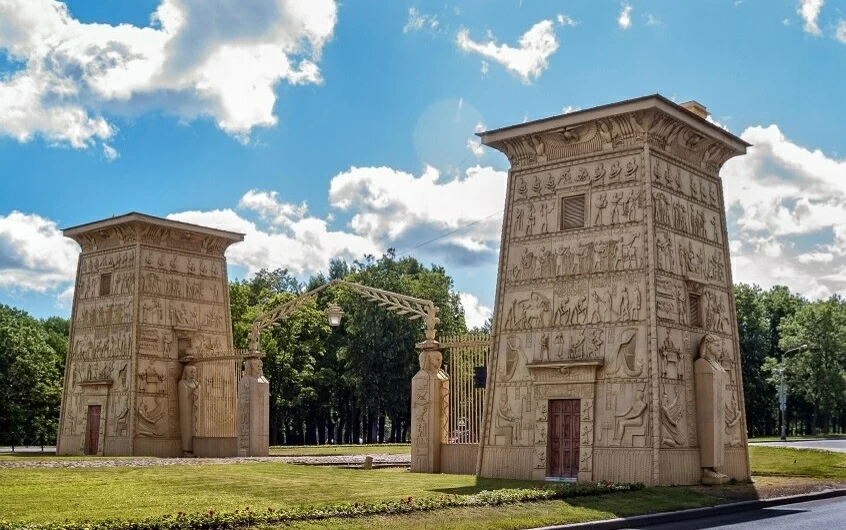
عند أحد مداخل مدينة بوشكين، في ضواحي سان بطرسبورغ، يقف معلم معماري يبدو للوهلة الأولى وكأنه انتقل من أرض الفراعنة إلى روسيا. إنها (البوابات المصرية)، الواقعة عند مدخل حديقة ألكسندر في مجمع (تسارسكوي سيلو) الإمبراطوري السابق، فما الذي جاء بها إلى هناك؟
بوابة فرعونية عند القصور
شُيدت البوابة بين عامي 1827 و1830 على يد المعماري الاسكتلندي آدم مينيلاس، الذي عمل في روسيا وشارك في تنفيذ عدد من المنشآت في تسارسكوي سيلو. وكان الإمبراطور نيقولاي الأول قد أقرّ مشروعها في ديسمبر 1826، لتُعرف في بداياتها باسم (البوابات الكوزمينية)؛ نسبة إلى الطريق القادم من قرية كوزمينو.
لكن اختيار المظهر المصري لم يكن مجرد قرار جمالي عابر. فقد شهدت أوروبا، خلال القرن التاسع عشر، موجة واسعة من الاهتمام بالحضارة المصرية القديمة، خصوصًا بعد الحملة الفرنسية على مصر، التي ساهمت في لفت أنظار الفنانين والمهندسين والباحثين إلى آثارها وفنونها.
وصل هذا التأثير إلى روسيا أيضًا، فظهرت مبانٍ ومنشآت استلهمت عناصر من العمارة المصرية؛ من بينها أبو الهول والزخارف الفرعونية والتكوينات المعمارية ذات الطابع المصري. وفي تسارسكوي سيلو تحديدًا، تداخلت اتجاهات معمارية متعددة، فإلى جانب التأثير المصري ظهرت مبانٍ مستوحاة من الطرز الكلاسيكية والقوطية والصينية وغيرها.
نابليون وراء الحكاية المصرية
وتحمل البوابة كذلك صدى تاريخيًا غير مباشر، إذ ارتبط عهد ألكسندر الأول، شقيق نيقولاي الأول، بالحرب التي خاضتها روسيا ضد نابليون وانتهت بانتصار الروس عام 1812. وكان نابليون قد قاد قبل ذلك بسنوات حملته على مصر، في حدث ترك أثرًا واسعًا على الاهتمام الأوروبي بآثار الحضارة المصرية.
وتتألف البوابة من برجين ضخمين شُيدا من الآجر، ثم غُطيت واجهاتهما بألواحٍ من الحديد الزهر تحمل زخارف مستوحاة من الفن المصري القديم. وتضم تلك الزخارف مشاهد وشخصيات ورموزًا مرتبطة بالحياة والمعتقدات المصرية القديمة، بما فيها تصورات العالم الآخر والآلهة في الميثولوجيا المصرية.
ولم تُبتكر هذه التفاصيل من الخيال وحده، بل استند تصميمها إلى رسوم ودراسات أوروبية وثقت آثار مصر القديمة؛ ومن بينها الأعمال التي أعدها الفنانون والعلماء المشاركون في الحملة الفرنسية، والتي جُمعت لاحقًا ضمن المؤلفات الضخمة التي وثقت آثار مصر وطبيعتها وحضارتها.
بوابة للحراسة وذاكرة الحرب
ورغم مظهرها الزخرفي اللافت، لم تكن البوابة مجرد تحفة للعرض، فقد احتوى البرجان على غرف مخصصة للحراسة، بينما أُغلقت المنطقة الواقعة بينهما ببوابات وسياج حديدي، لتجمع المنشأة بين الوظيفة الأمنية والطابع المعماري الاستثنائي.
وخلال الحرب العالمية الثانية، تعرّض مجمع تسارسكوي سيلو لأضرار جسيمة أثناء الاحتلال الألماني، ولم تنجُ البوابات المصرية من آثار الحرب، إذ لحقت بها أضرار كبيرة، لكنها بقيت قائمة ولم تختفِ من المشهد.
وبعد انتهاء الحرب، خضعت البوابة لأعمال ترميم، وظلت في مرحلة من تاريخها مطلية بالأخضر الداكن، قبل أن يعود إليها لاحقًا اللون الرملي الفاتح الذي يعزز مظهرها المستوحى من العمارة المصرية.
وفي عام 2004، اكتملت عملية ترميم واسعة هدفت إلى إعادة تفاصيلها التاريخية، لتواصل (البوابات المصرية) حضورها اليوم كواحدة من أبرز معالم مدينة بوشكين، وكأنها قطعة من ذاكرة مصر القديمة استقرت، على نحو غير متوقع، عند أبواب القصور الإمبراطورية الروسية.
At one of the entrances to the city of Pushkin, on the outskirts of St. Petersburg, stands an architectural landmark that at first glance seems to have moved from the land of the pharaohs to Russia. It is the (Egyptian Gates), located at the entrance to Alexander Park in the former imperial complex of (Tsarskoye Selo). But what brought it there?
A Pharaonic Gate at the Palaces
The gate was built between 1827 and 1830 by the Scottish architect Adam Menelas, who worked in Russia and participated in the construction of several structures in Tsarskoye Selo. Emperor Nicholas I approved its design in December 1826, and it was initially known as the (Kozmin Gates), named after the road coming from the village of Kozmino.
However, the choice of the Egyptian appearance was not just a fleeting aesthetic decision. Europe witnessed, during the 19th century, a widespread wave of interest in ancient Egyptian civilization, especially after the French campaign in Egypt, which helped draw the attention of artists, architects, and researchers to its monuments and arts.
This influence also reached Russia, where buildings and structures inspired by elements of Egyptian architecture emerged; among them were the Sphinx, pharaonic decorations, and architectural compositions with an Egyptian character. In Tsarskoye Selo specifically, multiple architectural trends intertwined, with buildings inspired not only by Egyptian influences but also by classical, Gothic, Chinese, and other styles.
Napoleon Behind the Egyptian Tale
The gate also carries an indirect historical echo, as the reign of Alexander I, brother of Nicholas I, was associated with the war that Russia fought against Napoleon, which ended with the Russian victory in 1812. Years before that, Napoleon had led his campaign in Egypt, an event that left a significant impact on European interest in the monuments of Egyptian civilization.
The gate consists of two massive towers made of brick, which were then covered with cast iron plates adorned with decorations inspired by ancient Egyptian art. These decorations include scenes, characters, and symbols related to ancient Egyptian life and beliefs, including concepts of the afterlife and deities in Egyptian mythology.
These details were not merely products of imagination; their design was based on European drawings and studies that documented the monuments of ancient Egypt, including works prepared by artists and scholars involved in the French campaign, which were later compiled into extensive publications documenting the monuments, nature, and civilization of Egypt.
A Gate for Guarding and a Memory of War
Despite its striking decorative appearance, the gate was not merely a display piece; the towers contained rooms designated for guarding, while the area between them was enclosed by gates and an iron fence, combining the security function with exceptional architectural character.
During World War II, the Tsarskoye Selo complex suffered significant damage during the German occupation, and the Egyptian Gates did not escape the effects of the war, as they sustained considerable damage, yet they remained standing and did not disappear from the scene.
After the war, the gate underwent restoration work and was painted dark green for a period of its history, before later returning to the light sandy color that enhances its appearance inspired by Egyptian architecture.
In 2004, a large-scale restoration process was completed aimed at restoring its historical details, allowing the (Egyptian Gates) to continue to stand today as one of the most prominent landmarks of the city of Pushkin, as if it were a piece of ancient Egyptian memory that unexpectedly settled at the gates of the Russian imperial palaces.