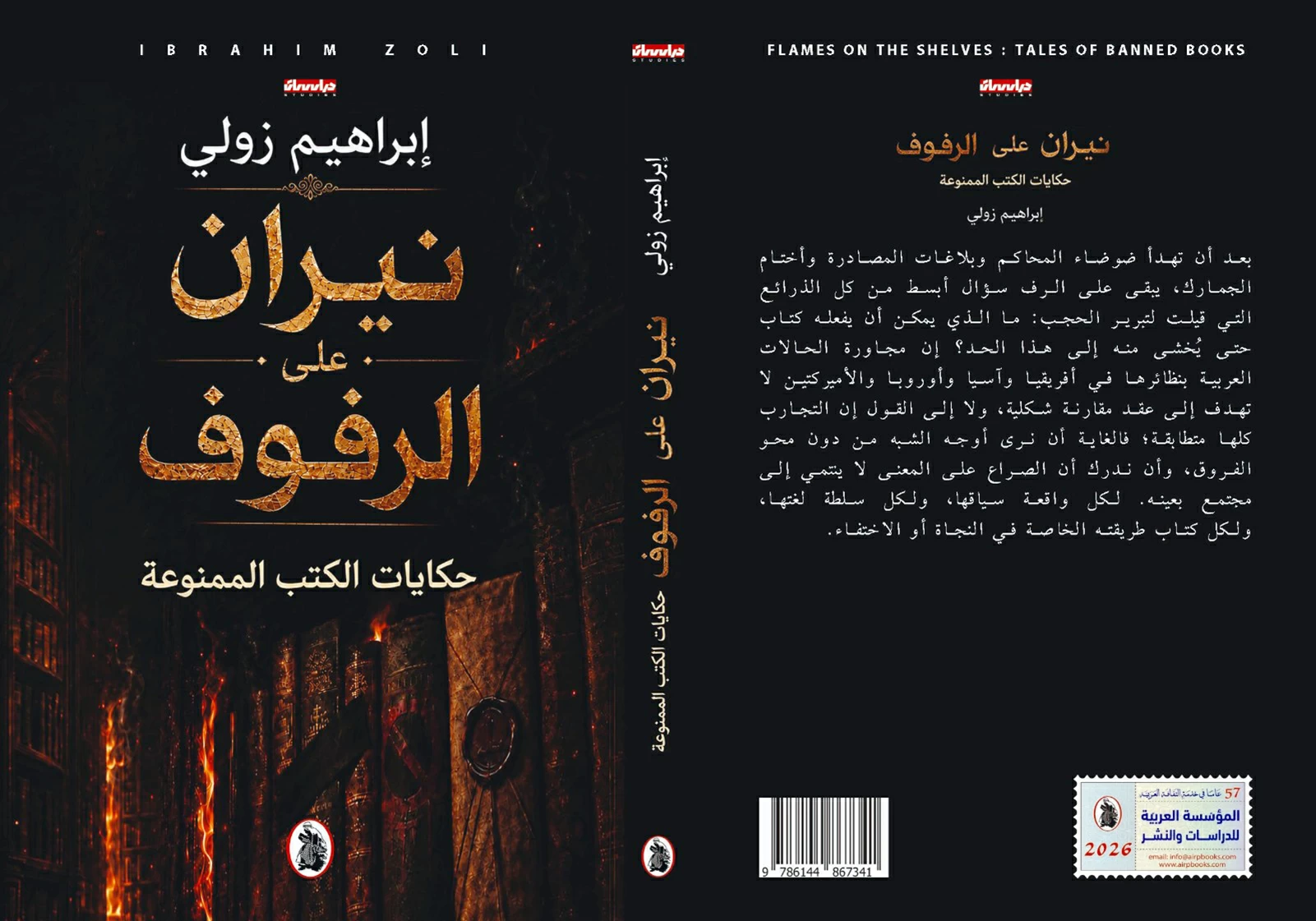
يذهب بنا الكاتب إبراهيم زولي في إصداره الأحدث «نيران على الرفوف: حكايات الكتب الممنوعة»، إلى السيرة الإضافية للنص المحجوب؛ والتي تبدأ عندما يغادر الكتاب يد مؤلفه، ويجد نفسه في مواجهة قارئ أو مؤسسة أو محكمة أو جهاز رقابي، يعتقد أن في صفحاته ما يستدعي الإقصاء.
يدخل زولي إلى منطقة ظلت دائماً مثيرة للفضول: الكتب التي اصطدمت بالجهات الرقابية، أو الأخلاق السائدة، أو المؤسسات الدينية والتعليمية، أو أنظمة النشر والتوزيع، ويبدأ من تجربته الشخصية مع الكتاب، ومن ذاكرة طفولة وشباب كان فيها تداول بعض العناوين سراً سبباً كافياً لتضاعف الرغبة في الوصول إليها. تلك الخبرة المبكرة لا تتحوّل إلى حنين، بل إلى مدخل لسؤال الكتاب الأساسي: ما الذي يعنيه أن نقول إن هذا الكتاب أو ذاك كان ممنوعاً؟
ويجيب: هناك فرق بين منع رسمي شامل ومصادرة شحنة، وبين محاكمة كاتب ومنع عمله من التداول، وبين استبعاده من مكتبة مدرسية أو معرض كتاب وبين حظره قانونياً. ومن هنا يحرص زولي على التمييز بين درجات الرقابة وصورها، محاولاً ألا تتحوّل شهرة بعض الوقائع إلى حقيقة بديلة عن الوثيقة.
ويكشف المنهج عن وجه آخر للكتاب؛ فهو لا يحتفي بالممنوع لكونه ممنوعاً، ولا يفترض أن قرار الحجب يمنح العمل شهادة تفوق. القيمة الأدبية والفكرية، في نظره، شيء، وتاريخ المنع شيء آخر. إلا أن التاريخ يظل قادراً على الكشف عن طبيعة المجتمع والمؤسسة واللحظة التي رأت في نص ما ما يستوجب الخوف أو الاحتراز.
وضرب أمثلة بكتب عدة منها «القوقعة» لمصطفى خليفة و«نقد الخطاب الديني» لنصر حامد أبو زيد، و«الحرب القذرة» لحبيب سويدية مع «سفينة حنان إلى القمر» لليلى بعلبكي، و«الحريم السياسي» لفاطمة المرنيسي، ومع «الجنقو مسامير الأرض» لعبدالعزيز بركة ساكن، و«تاريخ الكويت» لعبدالعزيز الرشيد، و«الأوزان الباكية» لثريا قابل، و«كريستال» لجلبار نقاش، و«دادابا» لحسن مطلك، وصولاً إلى «ألف ليلة وليلة»، بما تمثله من تاريخ طويل في الجدل حول السرد واللغة والأخلاق.
ويؤكد أن الأسباب تتبدل من بلد إلى آخر ومن عصر إلى آخر، كما تتغير المؤسسات التي تتولى فعل المنع. وما يجمع تلك الأعمال ليس جنسها الأدبي، وإنما اللحظة التي خرج فيها النص من حيز القراءة إلى حيز القضية العامة.
وقارب بين العرب والغرب إذ عانت «مزرعة الحيوان» لجورج أورويل، و«أزهار الشر» لشارل بودلير، و«شيفرة دافنشي» لدان براون، و«الإخوة كارامازوف» لدوستويفسكي، و«فهرنهايت 451» لراي برادبري، وجان جاك روسو بكتابه «إميل»، وأرونداتي روي بـ«إله الأشياء الصغيرة»، وهنري ميلر بـ«مدار السرطان»، وإدواردو غاليانو بـ«الشرايين المفتوحة لأمريكا اللاتينية»، إلى جانب نغوغي وا ثيونغو وألين غينسبيرغ وميغيل أنخل أستورياس وإيزابيل الليندي وأليكس هالي.
وأوضح أن الكتاب يتخطى الرقابة الكلاسيكية؛ في زمن المنصات والمتاجر الرقمية والخوارزميات، إذ لم يعد الحجب يحتاج دائماً إلى قرار ورقي، أو موظف جمارك. إلا أنه ربما يصبح التضييق أقل وضوحاً وأكثر فعالية: سحب كتاب من منصة، الحد من الوصول إليه، الضغط على الناشر، أو دفع الكاتب إلى مراقبة نفسه قبل أن يراقبه الآخرون.
وينتهي «نيران على الرفوف» إلى فكرة بسيطة في ظاهرها وشديدة الدلالة في جوهرها: الكتاب يمكن نقده وتفنيده والاختلاف معه، لكن البداية العادلة تظل أن يصل إلى القارئ. فالمعركة الحقيقية ليست بين كتاب ورقيب فحسب، وإنما بين حقين متعارضين: جهة رقابية تريد أن تختار للقارئ، وقارئ يطالب بأن يختار بنفسه.
The writer Ibrahim Zoli takes us in his latest release "Fires on the Shelves: Tales of Banned Books" to the additional biography of the censored text; which begins when the book leaves the hands of its author and finds itself facing a reader, institution, court, or regulatory body that believes there is something in its pages that warrants exclusion.
Zoli enters a realm that has always been intriguing: books that have collided with regulatory bodies, prevailing morals, religious and educational institutions, or publishing and distribution systems. He starts from his personal experience with books, and from a childhood and youth memory where the circulation of certain titles in secret was a sufficient reason to multiply the desire to access them. That early experience does not transform into nostalgia, but rather serves as an entry point to the book's fundamental question: what does it mean to say that this book or that was banned?
He answers: there is a difference between a comprehensive official ban and the confiscation of a shipment, between prosecuting a writer and preventing their work from circulating, between excluding it from a school library or a book fair and legally banning it. From here, Zoli is keen to distinguish between degrees and forms of censorship, attempting to ensure that the fame of certain incidents does not become an alternative truth to the document.
The methodology reveals another aspect of the book; it does not celebrate the banned simply for being banned, nor does it assume that the decision to censor grants the work a certificate of superiority. The literary and intellectual value, in his view, is one thing, and the history of the ban is another. However, history remains capable of revealing the nature of society, the institution, and the moment that saw in a text something that warranted fear or caution.
He cites several examples of books, including "The Shell" by Mustafa Khalifa, "Critique of Religious Discourse" by Nasr Hamid Abu Zayd, "Dirty War" by Habib Sweidiah, along with "Hanan's Ship to the Moon" by Leila Baalbaki, "Political Harem" by Fatima Mernissi, "Jinquo: Nails of the Earth" by Abdulaziz Baraka Sakin, "History of Kuwait" by Abdulaziz Al-Rashid, "The Weeping Weights" by Thuraya Qabil, "Crystal" by Jalbar Naqash, "Dadaba" by Hassan Matlak, and reaching "One Thousand and One Nights," which represents a long history of debate about narrative, language, and ethics.
He emphasizes that the reasons change from one country to another and from one era to another, as do the institutions responsible for the act of banning. What unites these works is not their literary genre, but the moment when the text moved from the realm of reading to the realm of public issue.
He draws parallels between the Arab world and the West, noting how "Animal Farm" by George Orwell, "The Flowers of Evil" by Charles Baudelaire, "The Da Vinci Code" by Dan Brown, "The Brothers Karamazov" by Dostoevsky, "Fahrenheit 451" by Ray Bradbury, Jean-Jacques Rousseau's "Emile," Arundhati Roy's "The God of Small Things," Henry Miller's "Tropic of Cancer," and Eduardo Galeano's "The Open Veins of Latin America," alongside Ngũgĩ wa Thiong'o, Allen Ginsberg, Miguel Ángel Asturias, Isabel Allende, and Alex Haley, have all faced similar challenges.
He clarifies that the book transcends classical censorship; in the age of platforms, digital stores, and algorithms, censorship no longer always requires a paper decision or a customs officer. However, the pressure may become less obvious and more effective: withdrawing a book from a platform, limiting access to it, pressuring the publisher, or pushing the writer to self-censor before others monitor them.
"Fires on the Shelves" concludes with a seemingly simple yet profoundly significant idea: a book can be critiqued, refuted, and disagreed with, but the fair starting point remains that it reaches the reader. The real battle is not just between a book and a censor, but between two opposing rights: a regulatory body that wants to choose for the reader and a reader who demands to choose for themselves.