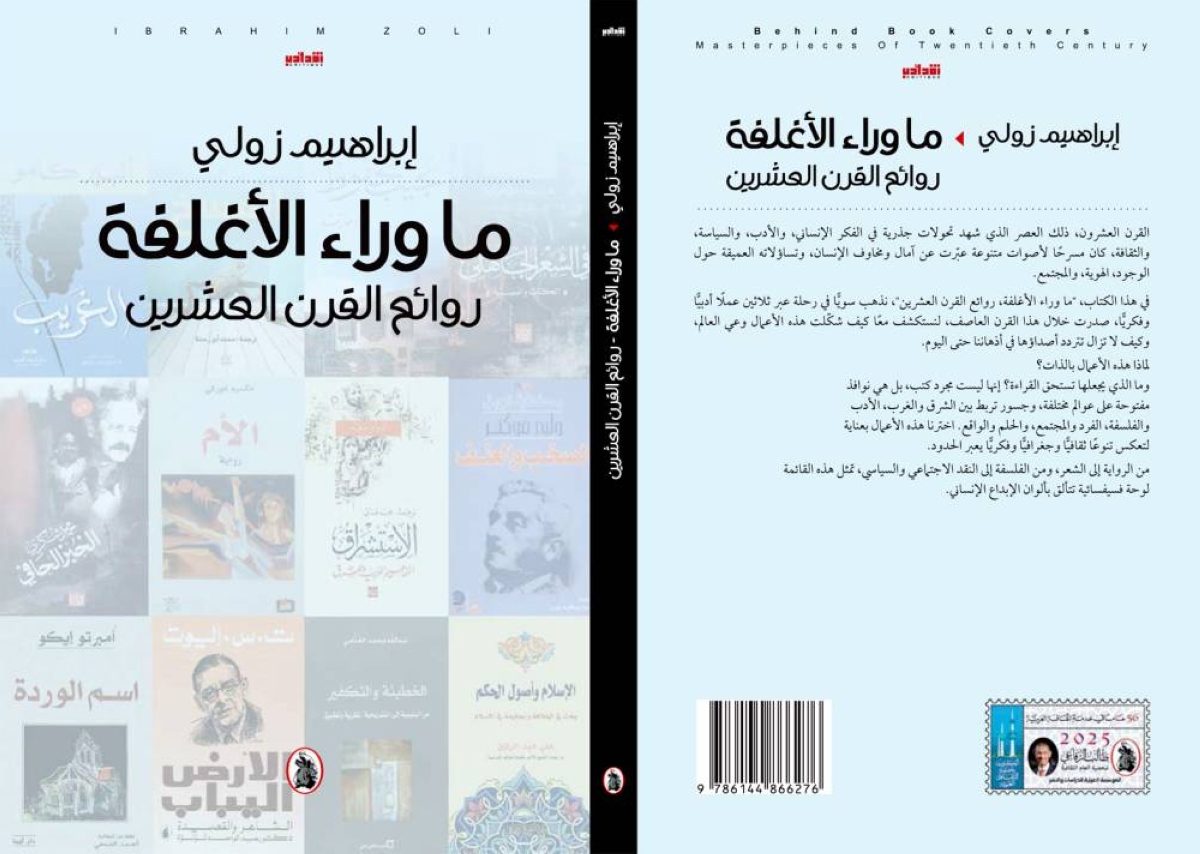

أصدر الشاعر إبراهيم زولي كتابه الاستقصائي «ما وراء الأغلفة، روائع القرن العشرين»، قرأ فيه تحولات جذرية في الفكر الإنساني، والأدب، والسياسة، والثقافة، عبر ثلاثين عملاً أدبياً وفكرياً، صدرت خلال القرن العاصف؛ الذي كان مسرحاً لأصوات متنوعة، عبّرت عن آمال ومخاوف الإنسان، وتساؤلاته العميقة حول الوجود، الهوية، والمجتمع.
واستثمر زولي، بحكم مهارة قرائية نوعية، شغف قرائه ليأخذهم في رحلة استكشاف، إلى روائع، شكّلت وعي العالم، ولا تزال تتردد أصداؤها في أذهاننا إلى اليوم.
ويرى في كتابه الاستقرائي الصادر عن المؤسسة العربية للدراسات والنشر، بيروت، أن الكتب التي تناولها ليست مجرد كتب، بل نوافذ مفتوحة على عوالم، وجسور تربط بين الشرق والغرب، والأدب والفلسفة، والفرد والمجتمع، والحلم والواقع.
ولفت إلى أنه اختار الأعمال بعناية، لتعكس تنوعاً ثقافياً وجغرافياً وفكرياً يعبر الحدود، من الرواية إلى الشعر، ومن الفلسفة إلى النقد الاجتماعي والسياسي، في لوحة فسيفسائية تتألق بألوان الإبداع الإنساني؛ منها «تفسير الأحلام» لسيغموند فرويد، و«في الشعر الجاهلي» لطه حسين، إلى غابرييل غارسيا ماركيز في رائعته «مئة عام من العزلة»، ونجيب محفوظ في «أولاد حارتنا»، و«1984» لجورج أورويل، و«الغريب» لألبير كامو، و«الاستشراق» لإدوارد سعيد، و«تكوين العقل العربي» لمحمد عابد الجابري، و«تاريخ الجنون» لميشيل فوكو، و«عوليس» جيمس جويس، و«زينب» لمحمد حسين هيكل، و«بدرو بارامو» لخوان رولفو، و«الأم» لمكسيم غوركي، و«زوربا» لنيكوس كازنتزاكي، و«الإسلام وأصول الحكم» لعلي عبدالرازق، و«البروسترويكا» لميخائيل جورباتشوف.
ويرى أن القرن العشرين، بكل ما شهده من حروب عالمية، وثورات، وتحولات اجتماعية، كان بمثابة مختبر للأفكار، وما تنبأ به من صعود الأيديولوجيات الكبرى وانهيارها، وتفكك الإمبراطوريات، وظهور حركات التحرر في العالم الثالث، ما يمنح «روائع القرن العشرين» قدرة على التقاط الروح الإنسانية في أوج تناقضاتها، وفي فترة تحول جذري، بما أنجز من الحداثة وما بعد الحداثة، وتفكيك الأطر التقليدية، ودعا قارئه إلى الاشتباك مع النصوص، ليعيش تجاربها، ويتأمل في أسئلتها، كونها أعمالاً لا تقدم إجابات نهائية، بل تفتح أبواباً للحوار والتفكير، وذهب إلى أن الكتاب محاولة للاحتفاء بالإبداع الإنساني في أحد أكثر العصور ديناميكية.
ويتميّز زولي بأنه قارئ مبدع في قراءته، شأن كتاباته، وذاكرته الفولاذية لا تزال تحتفظ بكنوز من الروائع.
لخّص 30 عملاً وعدّها روائع القرن العشرين
إبراهيم زولي يلامس شغف القُرّاء بـ«ما وراء الأغلفة»
1 أغسطس 2025 - 02:45
|
آخر تحديث 1 أغسطس 2025 - 02:45


تابع قناة عكاظ على الواتساب
علي الرباعي (الباحة) Al_ARobai@
The poet Ibrahim Zouli has released his investigative book "Beyond the Covers: Masterpieces of the Twentieth Century," in which he explores radical transformations in human thought, literature, politics, and culture through thirty literary and intellectual works published during the tumultuous century; a stage for diverse voices that expressed human hopes and fears, as well as profound questions about existence, identity, and society.
Zouli, leveraging his qualitative reading skills, has engaged his readers in a journey of exploration into masterpieces that have shaped the world's consciousness and continue to resonate in our minds to this day.
In his inductive book published by the Arab Foundation for Studies and Publishing in Beirut, he asserts that the books he discusses are not merely books, but open windows to worlds and bridges connecting the East and West, literature and philosophy, the individual and society, and dreams and reality.
He pointed out that he carefully selected the works to reflect a cultural, geographical, and intellectual diversity that transcends borders, from novels to poetry, and from philosophy to social and political criticism, in a mosaic that shines with the colors of human creativity; including "The Interpretation of Dreams" by Sigmund Freud, "On Pre-Islamic Poetry" by Taha Hussein, Gabriel Garcia Marquez in his masterpiece "One Hundred Years of Solitude," Naguib Mahfouz in "Children of Our Neighborhood," "1984" by George Orwell, "The Stranger" by Albert Camus, "Orientalism" by Edward Said, "The Formation of the Arab Mind" by Mohammed Abed al-Jabri, "History of Madness" by Michel Foucault, "Ulysses" by James Joyce, "Zainab" by Mohamed Hussein Heikal, "Pedro Páramo" by Juan Rulfo, "Mother" by Maxim Gorky, "Zorba" by Nikos Kazantzakis, "Islam and the Foundations of Governance" by Ali Abdul Razek, and "Perestroika" by Mikhail Gorbachev.
He believes that the twentieth century, with all its global wars, revolutions, and social transformations, served as a laboratory for ideas, predicting the rise and fall of major ideologies, the disintegration of empires, and the emergence of liberation movements in the Third World, which gives "Masterpieces of the Twentieth Century" the ability to capture the human spirit at the height of its contradictions and during a period of radical transformation, with the achievements of modernity and postmodernity, and the dismantling of traditional frameworks. He invited his readers to engage with the texts, to experience their journeys, and to reflect on their questions, as these works do not provide definitive answers but rather open doors for dialogue and thought. He concluded that the book is an attempt to celebrate human creativity in one of the most dynamic eras.
Zouli is distinguished as a creative reader in his reading, much like his writings, and his steel-like memory still holds treasures of masterpieces.